
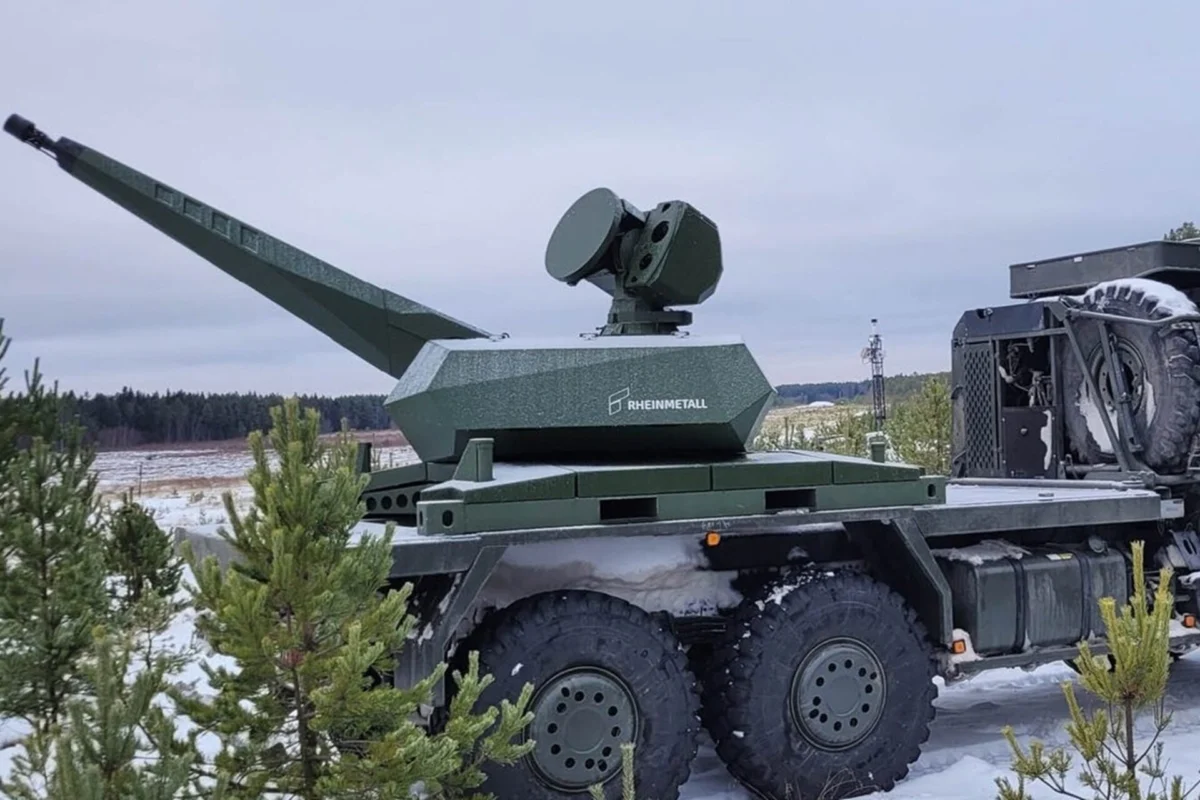
Rheinmetall Air Defence showcased its counter-drone capabilities during a Finnish Armed Forces exercise, highlighting the growing attention European militaries are giving to protecting airspace from small unmanned aerial systems.
The demonstration took place during the Ground-based Air Defence (GBAD) Demo Days 2025 at the Lohtaja training area in western Finland from November 25 to 27, 2025. Organized by the Inspector of Air Defence, Colonel Mano-Mikael Nokelainen, the event allowed armed forces and industry to evaluate new air defense technologies under realistic operational conditions.
Skyspotter tested against various drone threats

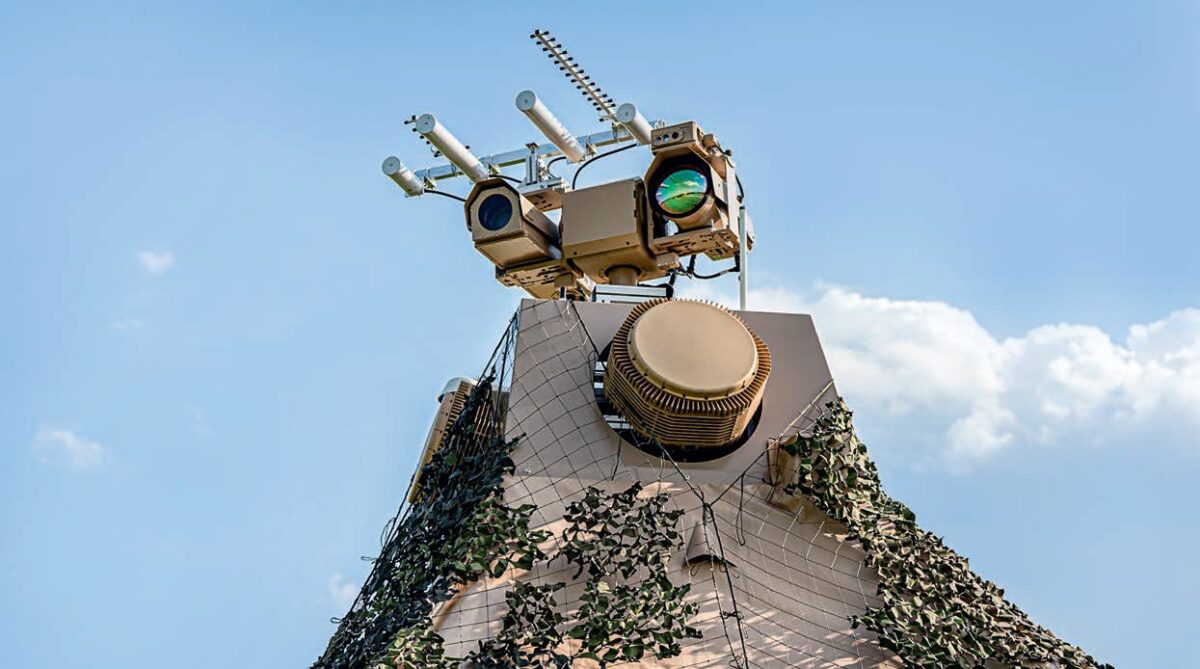
Rheinmetall focused its demonstration on Skyspotter, a drone detection and reconnaissance system designed to protect critical infrastructure and wide areas against small unmanned threats.
According to the company, the system detected, classified, and tracked a range of aerial targets, including fast-flying drones and small quadcopters. Skyspotter combines S-band and X-band radars, with detection ranges of approximately 5 km and 7.5 km respectively, supported by an electro-optical verification system integrating daylight and thermal imaging cameras alongside a laser rangefinder. Automatic acquisition, tracking, and identification are supported by AI-assisted processing, including in cluttered environments.
A mobile configuration mounted on a Rheinmetall HX truck was also presented, emphasizing deployability and support for maneuver forces. Sensors and counter-UAS jammers are integrated into a 10-foot container and designed for rapid deployment, including the use of a scissor-lift platform. Sensors and command elements were distributed, allowing operators to manage detection and response from a protected distance.
Focus on integration, survivability, and networked defense
The setup included remotely deployed passive emitter locator sensors and a mobile command-and-control shelter, reflecting an emphasis on survivability in contested environments.
Rheinmetall said Skyspotter’s command-and-control software supports sensor data fusion, automated threat evaluation, and weapon assignment, generating a local air picture and enabling connectivity to higher-echelon air defense networks through standard military interfaces. The system is also designed to integrate into Rheinmetall’s wider Skynex architecture, positioning it as part of a layered short-range air defense ecosystem rather than a standalone counter-drone solution.
Skyspotter can be connected to a range of counter-UAS measures, including electronic warfare systems, interceptor drones, and kinetic solutions. These include Rheinmetall’s Skyranger short-range air defense system, which combines radar and electro-optical sensors with a 30mm cannon to engage low, slow, and small aerial targets. The company also referenced future hard-kill options, including cannon-based solutions using programmable kinetic-energy time-fuze ammunition.

Counter-UAS moves to the center of air defense planning
The Finnish trials come amid heightened concern over drone spillovers linked to the war in Ukraine, particularly in frontline NATO states. Poland and the Baltic countries have reported repeated incidents involving unidentified drones, navigation interference, and airspace violations, reinforcing fears that low-cost unmanned systems could be used for reconnaissance, disruption, or provocation beyond the immediate conflict zone.
These concerns have accelerated investment in counter-UAS capabilities across Northern and Eastern Europe, where protecting critical infrastructure, military bases, and border regions has become a pressing operational requirement rather than a theoretical risk.
They also highlight a broader shortage of affordable short-range air defense capabilities following decades of divestment across Western militaries. Legacy platforms such as Germany’s Gepard have proven effective against drones in Ukraine but are no longer in production, pushing armed forces to seek modern alternatives.
In this context, systems such as Rheinmetall’s Skyranger reflect a renewed focus on gun-based SHORAD, pairing rapid-firing cannons with modern sensors and networked command systems. These are increasingly complemented by electronic warfare tools and interceptor drones, which offer a lower-cost layer for countering saturation attacks by loitering munitions and small UAVs.