
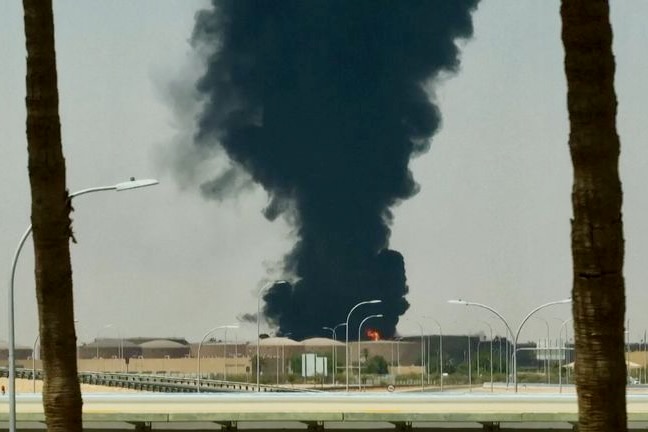
Flights were disrupted at Riyadh’s King Khalid International Airport (RUH) following an attack claimed by Yemen’s Houthi rebels, as a fire at a fuel storage depot sent black smoke over the airport.
The Houthis said they attacked the Saudi capital with missiles and drones on September 19, 2026, while Saudi authorities reported intercepting incoming threats.
Riyadh residents received alerts urging them to remain indoors shortly before 03:00 local time. Two explosions were heard before authorities lifted the warning about half an hour later. Saudi officials later said the country intercepted a ballistic missile headed toward the capital and thwarted attacks against other cities, including the Red Sea oil-export hub of Yanbu.
The attacks add to concerns about the security of energy supplies as airlines contend with sharply higher fuel bills.
Russia’s oil infrastructure also came under attack over the weekend, as Ukraine launched a massive drone assault overnight into September 20, with Russian authorities reporting 1,110 drones intercepted nationwide and at least 450 directed toward Moscow.
The attack damaged Moscow’s main refinery and grounded flights at the capital’s three main airports.
Damage to refineries, storage facilities and export routes can restrict the supply of finished fuels even when crude oil remains available. Further disruption could put additional pressure on carriers already paying more to keep their aircraft flying.
The International Air Transport Association’s fuel monitor showed an average global refinery price of $181.46 per barrel for jet fuel, up 6.1% from the preceding week. That figure predates the most recent attacks.
Airlines have already begun cutting flights in response to fuel costs. American Airlines temporarily suspended selected routes during August and September, citing jet fuel cost as the reason. The carrier said affected passengers would receive alternative travel arrangements or refunds.
AirBaltic filed for US Chapter 11 bankruptcy protection this month, citing geopolitical instability and rising fuel costs among the pressures on its business. It secured financing to continue operating during its restructuring.
Ryanair has cut its annual passenger target by two million to limit its exposure to expensive winter fuel. The airline warned that some competitors with less protection against price increases could struggle to maintain their schedules or survive the winter.