
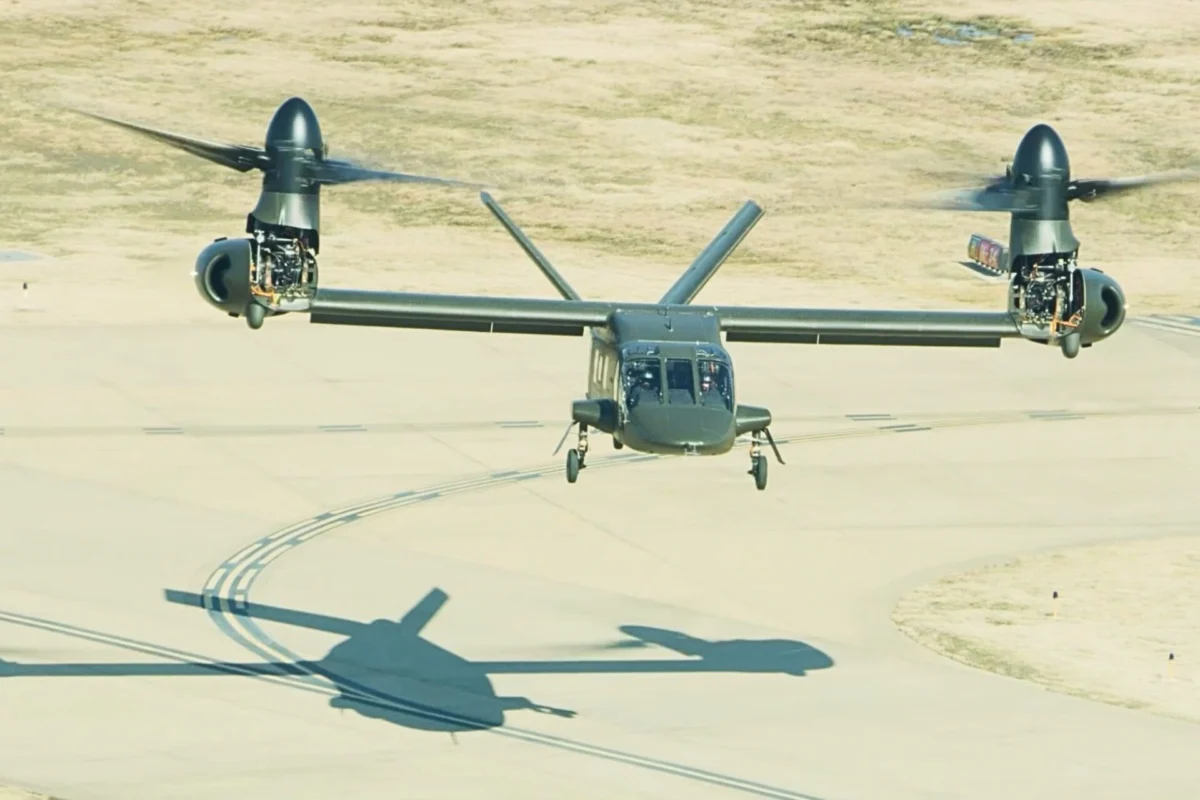
RTX announced that its Collins Aerospace business has been selected by Bell Textron, a Textron company, to supply existing or modified versions of five key aircraft systems for the US Army’s newest rotorcraft, the MV-75 Cheyenne.
The systems include main power generators, drive shafts and couplings, air data sensors, aircrew seating, and ice detection and protection systems.
The Cheyenne is meant to represent a major leap forward for military aviation, but much of what will make it fly reliably has already logged years of service in commercial skies.
RTX said that the approach reflects a broader effort within the Army to control costs by relying on commercial technology that has already been tested at scale, rather than developing entirely new systems from scratch.
Proven components, new mission
Each of the five systems Collins is providing has a substantial track record outside the military.
The company’s power generators reportedly accumulate close to 500,000 flight hours across commercial aircraft every day worldwide. The drive shaft and coupling systems are used on more than 75 aircraft platforms, including the V-22’s full drive system. Collins’ SmartProbe air data system, which feeds critical flight information to the cockpit, is currently active on more than 25 aircraft types.
The seating being adapted for the Cheyenne is designed to be both armored and ergonomic, drawing on testing cycles from commercial cockpits and design principles used in business jets. The aircraft’s ice detection and protection system builds on decades of engineering work aimed at keeping aircraft operational in difficult weather conditions.
According to Collins Aerospace, pairing military-grade requirements with commercial technology allows the Army to modernize its fleet more quickly while still supporting the aircraft over a long service life. A company representative described the strategy as one that combines advanced performance with manufacturing and service networks already in place worldwide.
Why commercial technology matters to defense acquisition
For more than three decades, the US Congress and the Department of War have encouraged using commercial products in defense applications to boost competition, cut costs, and speed up access to new technology.
Under the Federal Acquisition Regulation’s Part 12 framework, products considered commercial “of a type” can retain that classification even with military modifications, letting the Department of War deploy them and future upgrades faster and at lower cost. Supporters say the approach also lowers barriers for companies entering the defense market.
For the MV-75 Cheyenne, the strategy is meant to reduce risk from the outset. By relying on systems with extensive commercial histories, Bell and Collins aim to shorten the path to fielding the aircraft while giving the Army more predictable maintenance and support over its expected decades of service.
It will likely take further testing and eventual deployment to show whether this strategy pays off. But for now, the aircraft’s development offers a case study in how the Army is trying to balance next-generation ambitions with the practical benefits of well-established technology.