
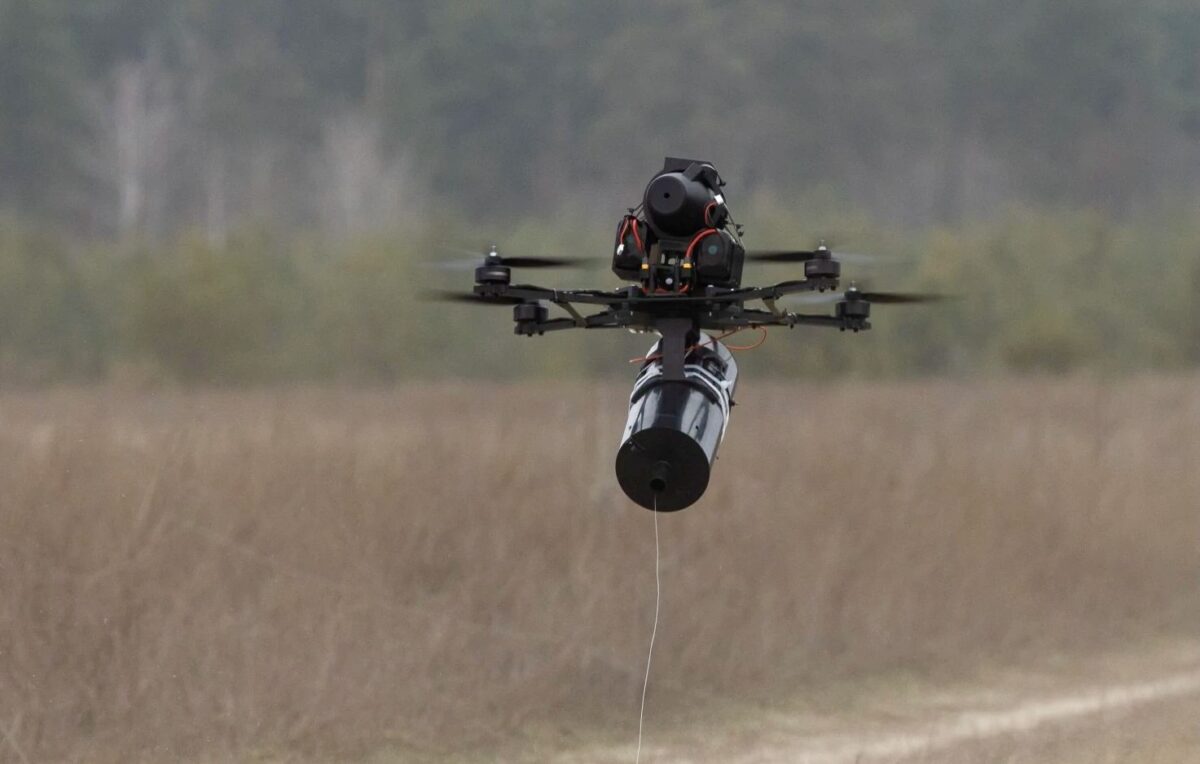
Russia’s Federal Security Service (FSB) said on October 26, 2026, that it had arrested two men accused of preparing a close-range drone attack on part of Moscow’s missile-defense system and an electricity facility, with the aircraft to be launched inside Russia and controlled remotely from Ukraine.
The FSB alleged that the men were working for Ukraine’s SBU security service and had retrieved first-person-view (FPV) drones and explosive components from hidden caches in the Smolensk and Kaluga regions. They were instructed to prepare the aircraft, transport them to the Moscow region and activate them before operators in Ukraine took control, according to the agency’s statement carried by Russian state news agency TASS.
Russian authorities described the suspects as men from the South Caucasus, born in 1991 and 1998, but did not disclose their citizenship or names. Both men were jailed pending trial on terrorism-related charges, The Moscow Times reported.
The FSB did not name the targets or say how the drones would be controlled from Ukraine.
TASS separately reported that the FSB released footage showing a suspect giving a confession and scenes purportedly depicting drone assembly and preparation.
The announcement follows repeated drone attacks that have disrupted air traffic around the Russian capital. On October 23, 2026, all four airports serving Moscow suspended arrivals and departures as Russian air defenses engaged approaching drones, marking their second simultaneous closure in two days.
Restrictions affected Sheremetyevo, Domodedovo, Vnukovo and Zhukovsky airports. Sheremetyevo directed passengers into shelters, including people aboard aircraft parked on the airfield.
Ukraine’s attacks on Russian oil infrastructure have also become a point of contention with Washington. The US has pressed Kyiv to stop striking refineries, arguing that the attacks contribute to higher energy prices.
Ukrainian President Volodymyr Zelenskyy has resisted an unconditional halt. In an interview aired on October 25, 2026, he said Ukraine could stop the attacks if Russia ceased striking Ukrainian electricity infrastructure. He also outlined alternatives involving satellite connectivity over Russian missile-launch sites or additional Patriot interceptor missiles.
Russia, meanwhile, has expanded its use of jet-powered Shahed attack drones. Their greater speed and operating altitude have been putting Ukrainian mobile air-defense teams at a disadvantage, with crews describing much shorter engagement windows than against propeller-driven aircraft.
Ukraine’s Air Force said an overnight Russian attack on October 9-10 involved 160 drones, including 110 jet-powered Shaheds. By the morning, it reported shooting down or jamming 117 aircraft, including 82 of the jet-powered drones, while strikes were recorded at 14 locations, according to Ukrainska Pravda.