
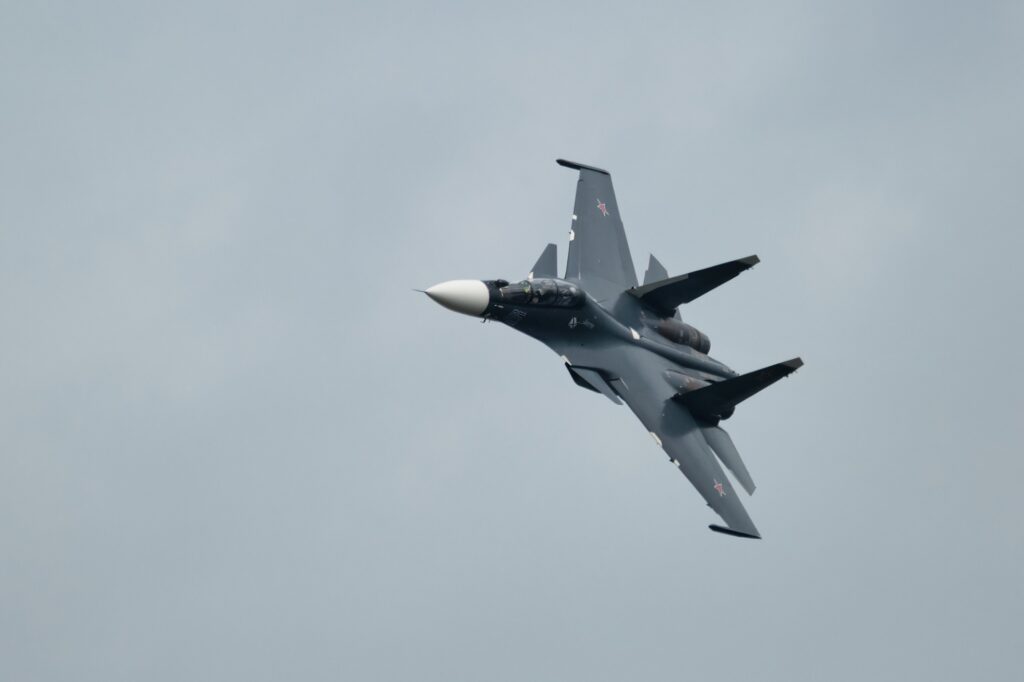
A Russian Su-30 fighter jet briefly entered Estonian airspace near Vaindloo Island on March 18, 2026, prompting a response from an Italian Air Force unit deployed to Ämari Air Base as part of NATO’s Baltic Air Policing mission.
Estonia’s Ministry of Foreign Affairs said the aircraft remained inside Estonian airspace for about one minute. On March 19, 2026, Tallinn summoned the Russian Embassy’s chargé d’affaires to hand over a diplomatic protest note. Estonian Foreign Minister Margus Tsahkna said the incident posed no threat to Estonia’s security.
According to Estonian authorities, the violation took place in the area of Vaindloo Island in the Gulf of Finland. The Estonian Ministry of Defense reported that the aircraft did not file a flight plan and was not in two-way radio contact with Estonian air traffic services at the time of the incident.
While brief, the incident adds to a pattern of recurring Russian military air activity around Estonia’s borders, particularly near Vaindloo, a small island that has repeatedly featured in past airspace incidents.
This was the first recorded violation of Estonian airspace by a Russian aircraft in 2026. However, it follows several similar incidents in 2025, including a September 7 breach by a Russian Mi-8 helicopter and a September 19 incursion by three Russian MiG-31 fighters, which Estonia described at the time as an unusually serious provocation.
Both incidents also took place near Vaindloo Island, underlining how this stretch of airspace has become a recurring point of tension on NATO’s northeastern flank.
NATO’s Baltic Air Policing mission has been safeguarding Baltic airspace since the Baltic states joined the alliance in 2004. Estonia’s Ämari Air Base has been part of that mission since 2014, following Russia’s illegal annexation of Crimea in Ukraine. The current Ämari rotation, running from August 1, 2025, to March 31, 2026, is being carried out by the Italian Air Force with F-35s and Eurofighter Typhoons.