
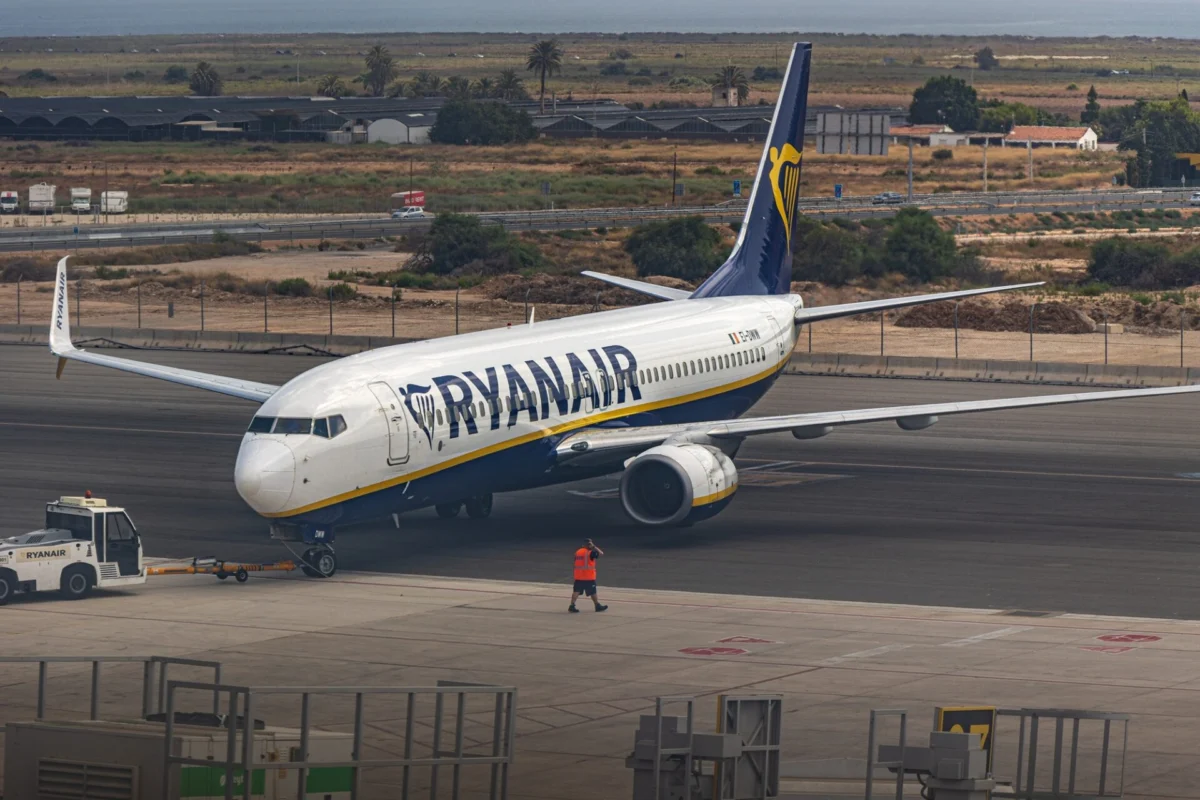
Ryanair has laid out several options that it could deploy to help address the elevated jet fuel prices caused by the Middle East conflict and the global fallout.
On November 2, 2026, Ryanair posted its latest financial results indicating a 15% decline in profits in the first six months of the financial year (began April 2026) despite a 6% increase in passengers.
According to the Irish low-cost-carrier, profits after tax (PAT) reached €2.15 billion ($2.41 billion) in the first six months of the financial year, compared to €2.44 billion ($2.73 billion) over the same period last year.
Revenue increased by 3% to €10.08 billion ($11.3 billion) in the first half compared to 9.82 billion ($13.17 billion) in the previous year. The average fare customers paid dropped by 4%.
‘Price of unhedged jet-fuel doubled’ – Ryanair
Ryanair said its jet-fuel for the financial year is 80% hedged at $67bbl while financial year 2028 is 25% covered at $95bbl.
“Ryanair’s FY27 jet-fuel prices have widened our cost advantage over other EU competitors and helped insulate current year earnings,” Ryanair CEO, Michael O’Leary, said. “While oil prices remain volatile, the Group has extended FY28 hedge cover on recent price dips to 25% at c.$95bbl.”
The carrier said, “unless there is a swift resolution of the Middle East conflict, we expect jet-fuel prices to remain elevated well into 2027”.

“European short haul airfares will increase materially to reflect these much higher jet-fuel prices and competitor capacity reductions, this is still unlikely to provide a full offset for an estimated c.€2bn increase (based on current forward prices) in our FY28 fuel bill,” a spokesperson for the airline said.
To help address this, Ryanair said it is reviewing costs with a particular focus on “airport churn negotiations as the Boeing MAX 10s begin arriving from Spring 2027“.
Other focus areas include maturing labor agreements (which may require temporary pay freezes), lowering crewing ratios, and increasing use of AI to help operational and back-office productivity.
Outlook ‘remains highly sensitive to adverse external developments’
In its outlook, Ryanair said across the rest of the financial year traffic is expected to grow 3% to 214 million passengers.
“The final FY27 PAT remains highly sensitive to adverse external developments, incl. conflict escalation in the Middle East and Ukraine, the price of our 20% unhedged jet-fuel, macro-economic shocks and the impact of European ATC disruptions (strikes & mismanagement),” added the spokesperson.
They added: “As is normal at this time of year, we have zero Q4 visibility. It therefore remains too early to provide meaningful FY27 PAT guidance.”
Ryanair said it expects that European short-haul capacity will remain constrained into the early 2030s as Airbus and Boeing “remain well behind on their production targets”. The airline added that Pratt & Whitney engine delays continue.
Despite all the challenges, Ryanair believes it is better placed that its competitors to weather the storm and still aims for “profitable growth to over 300m passengers p.a. by FY34”.
The latest full financial results are available to read on the Ryanair website.