
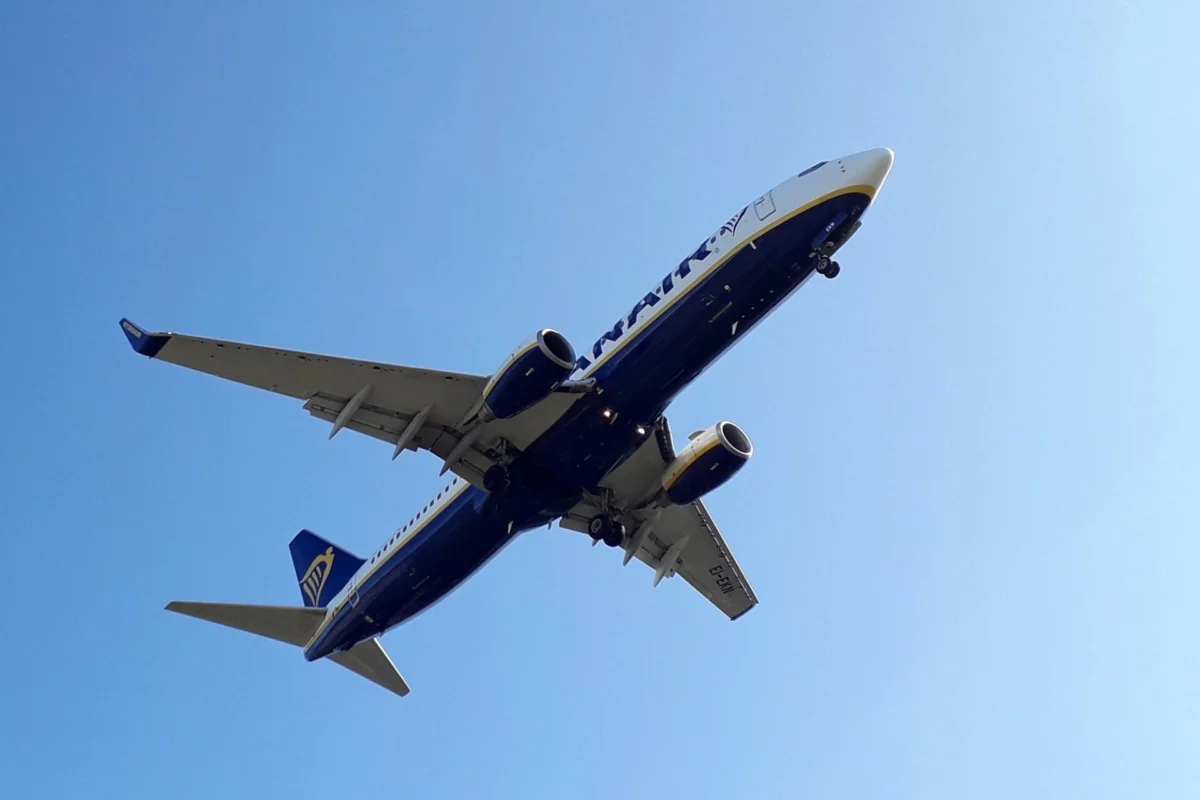
Low-cost-carrier giant Ryanair has declared that “travel demand remains robust” despite the current Middle East conflict, with the company posting a record $2.63 billion (€2.26 billion) in profit.
On May 18, 2026, the Irish airline delivered its full year results, which saw passenger numbers continue to grow with a 4% rise.
Group revenue rose 11% to $18 billion (€15.54 billion) with 10% higher fares, therefore recovering last year’s 7% fare decline.
Ryanair CEO Michael O’Leary said that, despite conflict in the Middle East creating “economic uncertainty”, Europe “remains relatively well supplied with jet-fuel, with significant volumes sourced from West Africa, the Americas and Norway”.
“Global jet-fuel spot prices have, however, spiked to over $150bbl and are expected to remain elevated versus pre-conflict levels for some months. Ryanair’s conservative jet-fuel hedging strategy (80% of FY27 jet-fuel is hedged at approx. $67bbl – to April 2027) will insulate Group earnings in the current very volatile oil markets and widen the cost advantage over EU competitors for the remainder of FY27,” O’Leary explained.
Ryanair FY26 Results = €2.26BN profit after tax (+40% vs FY25)
— Ryanair (@Ryanair) May 18, 2026
✈️ Traffic up 4% to record 208M
✈️ Rev. per pax up 7%
✈️ Earnings insulated; cost advantage reinforced with 80% of FY27 jet fuel hedged at $67/bbl.
Ryanair said that unprofitable airlines were having to reduce capacity due to unhedged fuel costs, making its own much lower costs hard to compete with.
“Industry capacity constraints, combined with our widening cost advantage, strong balance sheet, low-cost (fuel-efficient) aircraft orderbook and industry leading ops resilience will, we believe, facilitate Ryanair’s profitable growth to over 300m passengers p.a. by FY34,” the low-cost-carrier said.
In reference to supply, O’Leary noted that Pratt & Whitney engine repair delays are still ongoing, and that Boeing and Airbus “remain well behind on aircraft deliveries”.
On a positive note, Ryanair said that, as of March 31, 2026, it had received all 210 Boeing 737 MAX 8200 ‘Gamechangers’. The airline also highlighted that Boeing expects to deliver its first 15 737 MAX 10s in Spring 2027.
Negotiations over a new contract for O’Leary have “almost concluded”. His current agreement is due to end in 2028, and discussions are taking place to extend this until April 2032.
Outlook for the year ahead
While travel demand remains robust, Ryanair said that bookings are closer-in than last year, which reduces visibility.
“Pricing in recent weeks has eased somewhat in response to economic uncertainty caused by higher oil prices, the fear of fuel shortages and the risk of inflation adversely impacting consumer spending,” said the airline.
While 80% of Ryanair’s jet-fuel requirements are hedged at 67bbl (lower than prior year), the price of its unhedged 20% has spiked due to the Middle East conflict.

The airline added that with “zero H2 visibility and significant fuel price/potential supply volatility it is far too early to provide any meaningful FY27 profit guidance at this time”.
“The final FY27 outcome remains heavily exposed to adverse external developments, incl. conflict escalation in the Middle East and Ukraine, risks to fuel supply shortages, higher for longer fuel prices on our unhedged 20%, macro-economic shocks and European ATC strikes & mismanagement. We hope to be able to give shareholders a clearer picture on H1 pricing and fuel costs during our Q1 results release in late July,” said O’Leary.