
Safran raised its full-year financial outlook after reporting record profitability in the first half of 2026, supported by accelerating LEAP engine production, strong demand for civil engine spare parts and higher defense deliveries.
The French aerospace group generated adjusted revenue of €17.57 billion ($19.97 billion) during the six months ending June 30, 2026, an increase of 19% compared with the same period last year. Organic growth, excluding currency movements and changes in the company’s scope, reached 20.2%.
Adjusted recurring operating income rose 29% to €3.24 billion ($3.68 billion), lifting Safran’s operating margin by 1.4 percentage points to a record 18.4%. Free cash flow reached €2.62 billion ($2.98 billion), while adjusted net income increased 21% to €1.92 billion ($2.18 billion).
“Buoyed by strong demand for civil engine spare parts, Safran delivered an outstanding first half in 2026,” Chief Executive Officer Olivier Andriès said.
LEAP deliveries pass 1,000 engines
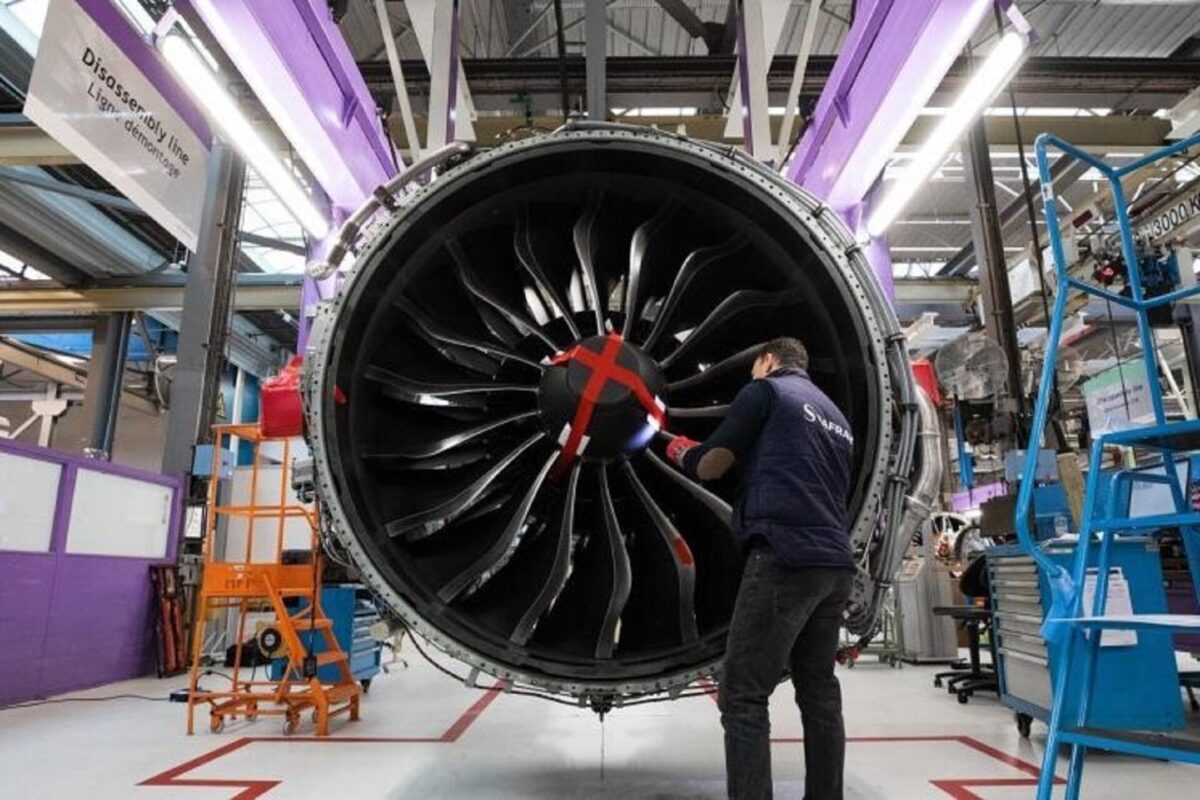
Safran delivered 1,030 LEAP engines through CFM International, its joint venture with GE Aerospace, during the first half of 2026. The total represented a 41% increase from the corresponding period in 2025.
Second-quarter deliveries reached 510 engines, up 24% year on year. It was the fourth consecutive quarter in which CFM delivered more than 500 LEAP engines.
The LEAP family powers all Boeing 737 MAX aircraft and competes with Pratt & Whitney’s PW1000G geared turbofan on the Airbus A320neo family. It also powers the COMAC C919.
Safran now expects full-year LEAP deliveries to grow by nearly 20% compared with 2025, upgrading its previous forecast of approximately 15% growth.
The production increase comes as CFM continues to secure major orders, including a memorandum of understanding covering more than 1,000 LEAP-1A engines for IndiGo announced at the Farnborough International Airshow 2026.
Civil engine services climb 40%
Higher new-engine deliveries were accompanied by continued growth in Safran’s aftermarket business.
Civil engine spare-parts revenue increased 27.9% in US dollar terms, largely due to demand for the older CFM56 engine and a favorable mix of maintenance work.
Civil engine services revenue climbed 40.4%, supported primarily by LEAP rate-per-flight-hour maintenance contracts. Safran said an increasing number of LEAP shop visits performed by third-party maintenance providers also contributed to the growth.
The company has been expanding its global LEAP support network as the installed fleet matures. Safran and SIA Engineering Company agreed in June 2026 to establish a new LEAP engine overhaul facility in Singapore.
The Propulsion division recorded organic revenue growth of 27.7%. Recurring operating income rose 28% to €2.25 billion ($2.56 billion), giving the division an operating margin of 24.5%.
Safran said the earnings contribution from increased LEAP production was partly offset by a declining proportion of higher-value spare engines and the growing cost of servicing LEAP engines covered by long-term flight-hour agreements.
M88 engine deliveries more than triple

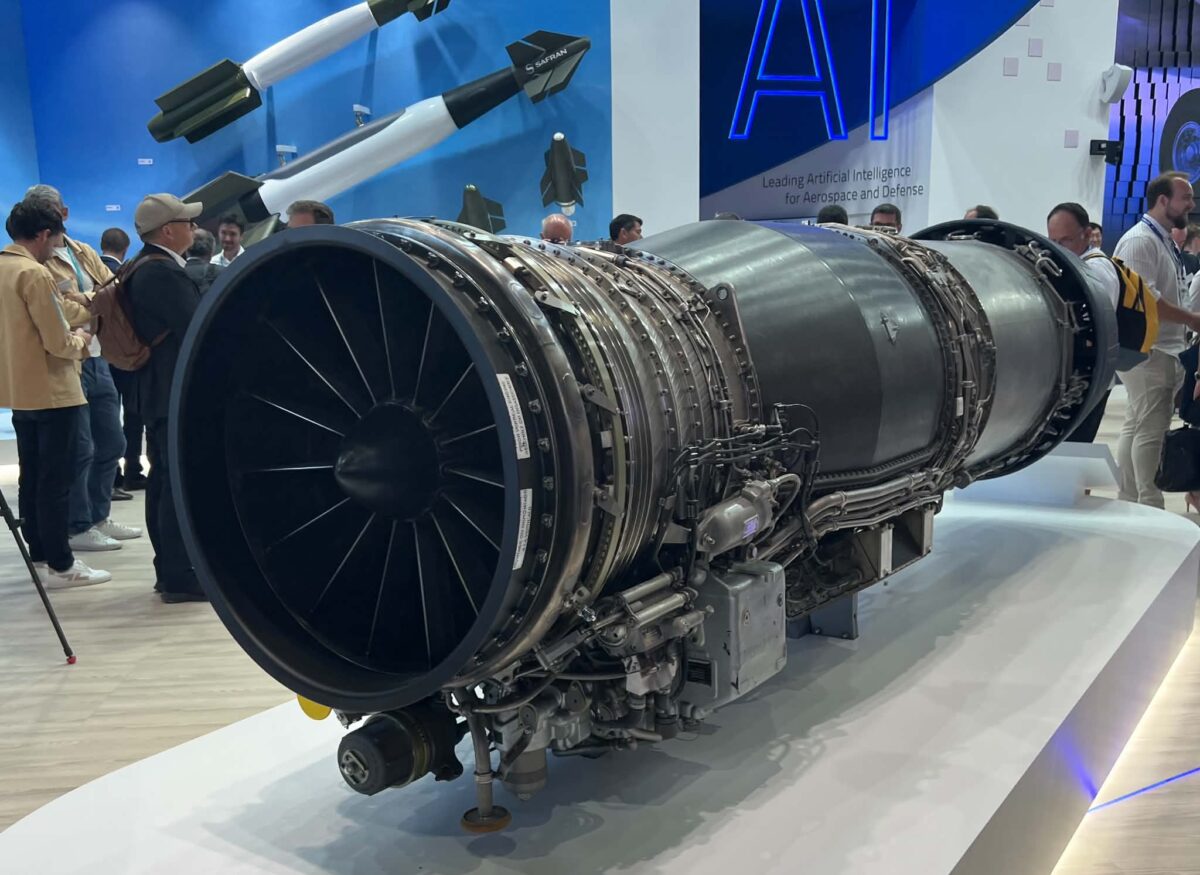
Safran also reported increased activity across its defense portfolio.
Deliveries of the M88 engine used by the Dassault Aviation Rafale reached 33 units during the first half of 2026, more than three times the number delivered during the corresponding period in 2025.
The increase comes as Dassault works to accelerate Rafale production to meet a large international order backlog. The aircraft manufacturer delivered 26 Rafale fighters in 2025, narrowly exceeding its annual target.
Military engine revenue increased due to the higher M88 delivery volume, a favorable customer mix and robust aftermarket activity. Safran also recorded increased missile-propulsion deliveries.
Safran unveiled the M88 T-REX, a higher-thrust evolution intended to power future Rafale upgrades, at the Paris Air Show in June 2025.
Defense electronics and weapons support growth
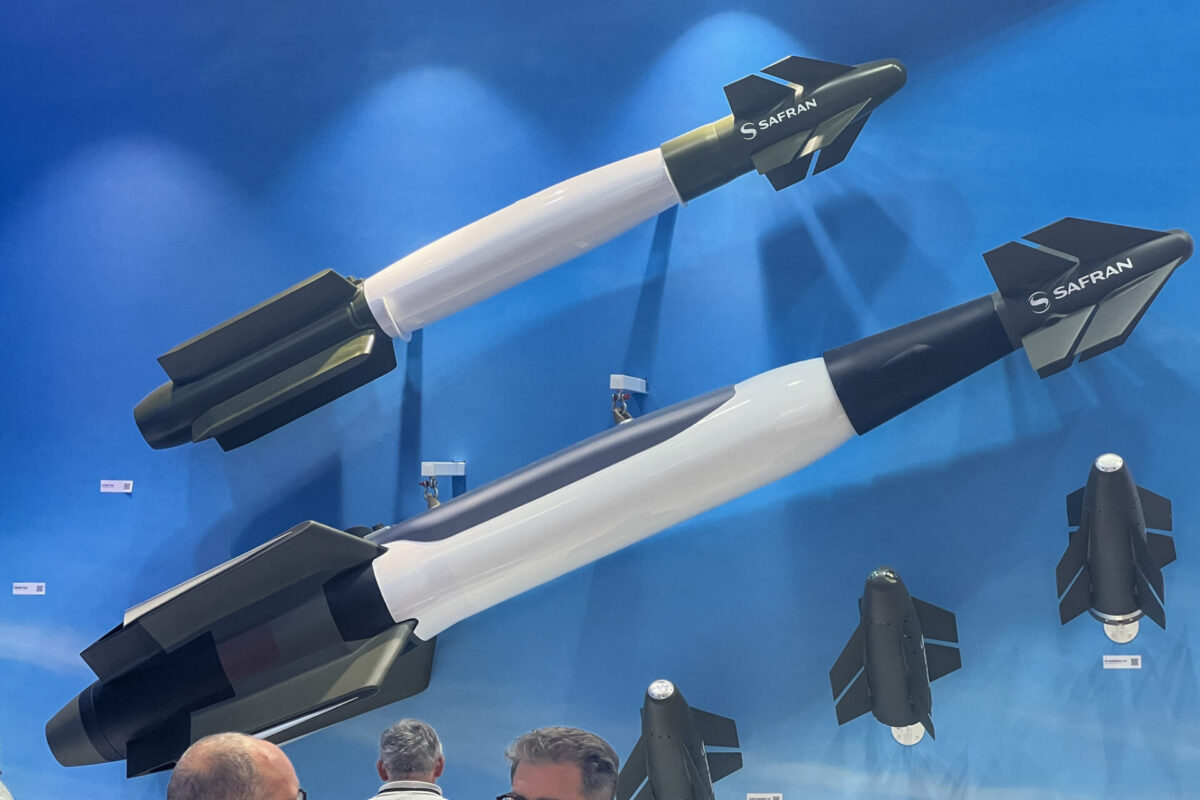
Revenue in the Equipment & Defense division grew organically by 14%. Original-equipment sales increased 15%, supported by demand for inertial navigation systems, optronics and AASM Hammer air-to-surface weapons, as well as civil aircraft nacelles and electrical systems.
Safran has been expanding production of the Hammer, including through an agreement to manufacture the precision-guided weapon in India.
The division’s recurring operating income increased 29% to €907 million ($1.03 billion). Its operating margin rose to 13.1%, helped by higher deliveries of defense electronics and growth in both original-equipment and aftermarket activities.
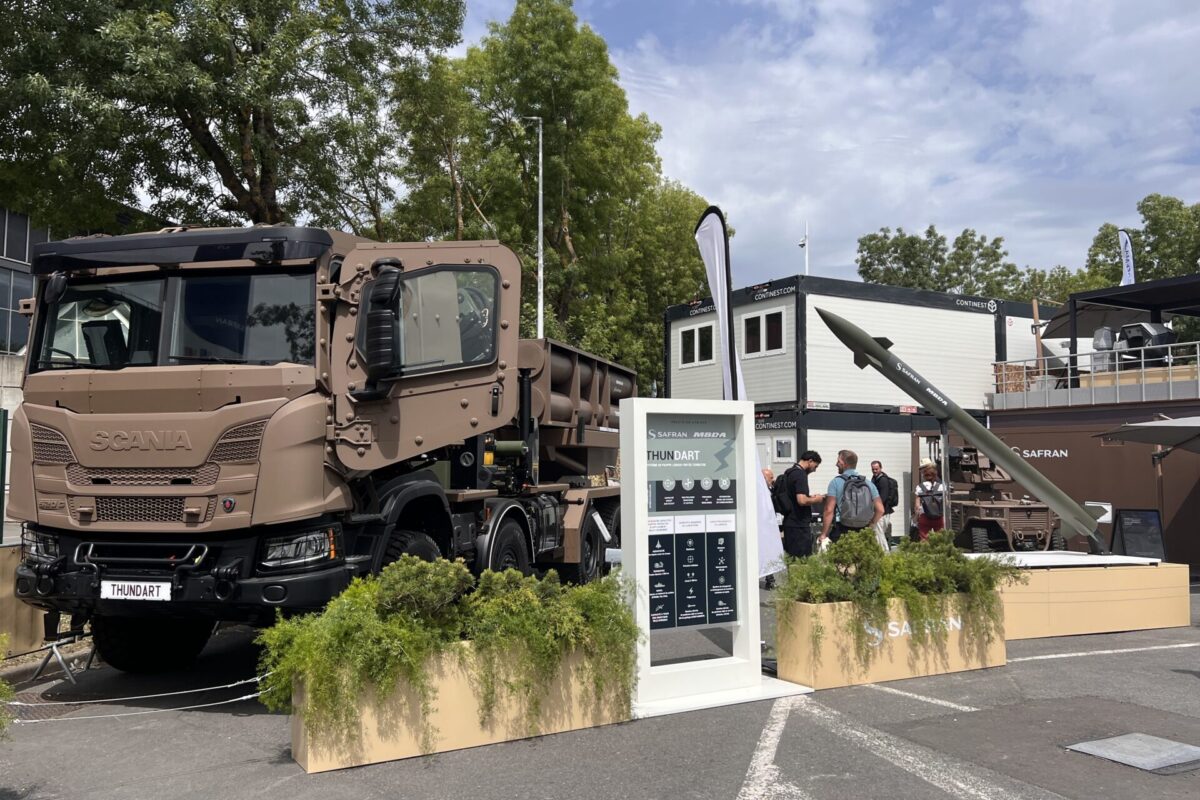
Safran’s missile activities are also expanding. France selected the company’s joint proposal with MBDA in June 2026 for the Thundart deep-strike rocket system, which is intended to replace the French Army’s aging LRU launchers.
Safran increases production investment
Safran invested €980 million ($1.11 billion) during the first half of 2026, up from €788 million ($896 million) one year earlier. The expenditure was directed primarily toward expanding engine maintenance capacity and original-equipment production across both civil aerospace and defense activities.
In April 2026, the company announced plans to acquire a 30,000-metric-ton hydraulic press capable of producing 14,000 engine parts annually.
Total research and development spending reached €1.11 billion ($1.26 billion), compared with €967 million ($1.10 billion) in the first half of 2025.
Self-funded research and technology expenditure increased to €364 million ($414 million), with much of the funding directed toward decarbonization work under the Revolutionary Innovation for Sustainable Engines, or RISE, technology program.
CFM reported a series of recent advances for the program at Farnborough 2026, saying its confidence in the proposed open-fan RISE architecture had increased following several successful tests.
Aircraft Interiors remained Safran’s weakest division by margin but continued its recovery. Revenue grew organically by 6.6%, while recurring operating income doubled from €27 million ($30.7 million) to €54 million ($61.4 million). The division’s operating margin increased by two percentage points to 3.7%.
Full-year guidance updated
Following the stronger-than-expected first half, Safran now expects revenue to grow by 15% in 2026. Its previous guidance called for growth in the 10 to 15% range.
The company raised its recurring operating income forecast from between €6.1 billion and €6.2 billion ($6.93 billion and $7.05 billion) to between €6.4 billion and €6.5 billion ($7.27 billion and $7.39 billion).
Expected free cash flow increased from between €4.4 billion and €4.6 billion ($5.00 billion and $5.23 billion) to between €4.7 billion and €4.9 billion ($5.34 billion and $5.57 billion).
Safran also upgraded its expectations for civil engine spare parts and services revenue. Both are now expected to grow by 25% in US dollar terms. The previous forecasts were 15% growth for spare parts and approximately 20% for services.
The company identified supply-chain production capacity and the potential effects of the conflict in the Middle East as the principal risks to its updated outlook.