
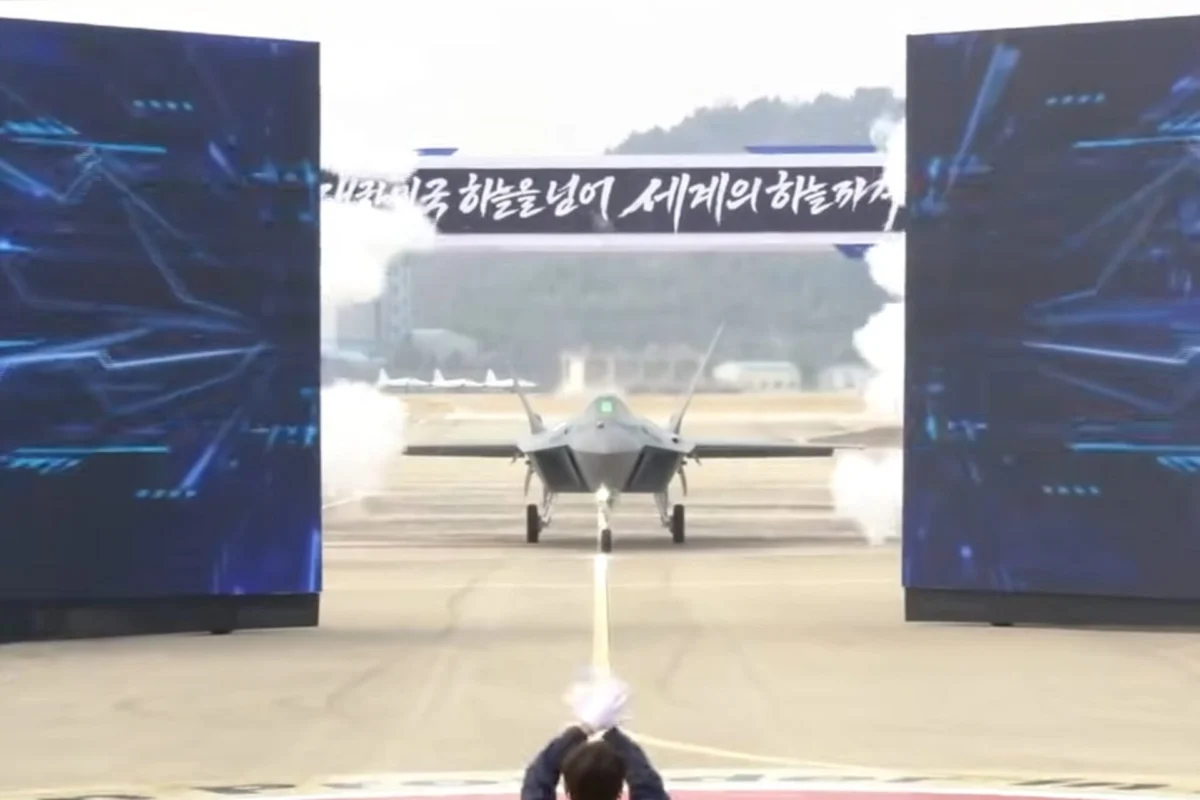
South Korea’s Defense Acquisition Program Administration (DAPA) announced on May 7, 2026, that the KF-21 Boramae, the country’s first domestically designed and assembled fighter jet, has met all criteria of its final combat suitability evaluation. This marks the last formal step before the end of the jet’s development phase.
DAPA said the aircraft had been judged “fully combat suitable” after roughly three years of additional testing that followed the provisional combat suitability assessment granted in May 2023. With this new approval, formal system development is set to conclude in June 2026, clearing the KF-21 to be deployed on actual operational missions. The first mass-produced aircraft is scheduled to be delivered to the Republic of Korea Air Force (ROKAF) in the second half of the year.
The decision concerns the KF-21 Block I, the air-to-air variant of the fighter, and follows the completion of the flight test campaign reported by DAPA in January 2026, as well as the rollout of the first mass-produced airframe at Korea Aerospace Industries (KAI) facilities in Sacheon on March 25, 2026.
A development effort more than two decades in the making
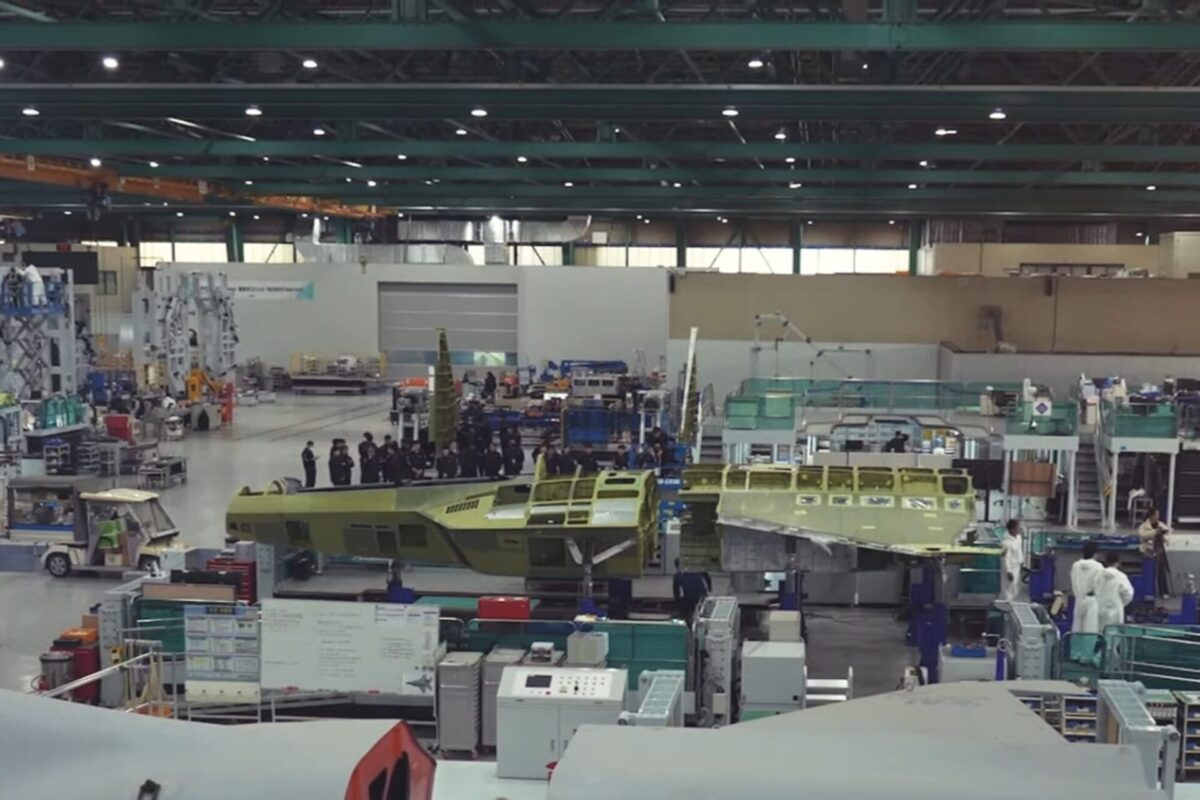
The KF-X program, which produced the KF-21, was originally launched in 2001 under the administration of then-president Kim Dae-jung. Concerns over cost and persistent doubts about the project’s viability accumulated into more than a decade of delays, and seven separate feasibility studies were conducted before the program took its current shape. Full-scale development of an aircraft intended to replace the ROKAF’s aging F-4 Phantom II and F-5 Tiger II fleets only began in earnest in December 2015.
Estimated at 8.8 trillion won (approximately $6.06 billion), the program produced its first prototype in April 2021. According to DAPA, more than 1,600 test flights have since been conducted, validating around 13,000 individual test conditions ranging from aerial refueling to weapons release. The flight-test campaign was carried out across six prototypes without a recorded accident.
Performance, sensors, and acquisition plan

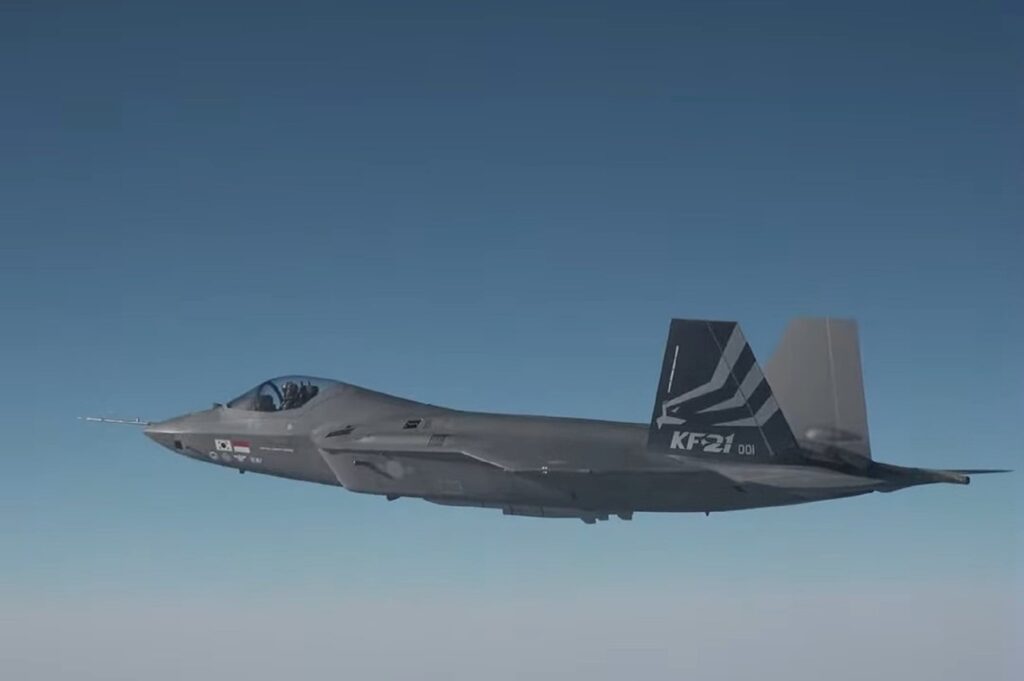
Classified as a 4.5-generation fighter, the KF-21 has demonstrated a top speed of Mach 1.81 and an operational range of approximately 2,900 kilometers. The aircraft is powered by two General Electric F414 engines, the same powerplant used on the Boeing F/A-18E/F Super Hornet and the Saab JAS 39 Gripen E/F. Its sensor suite includes a domestically-developed active electronically scanned array (AESA) radar, produced by Hanwha Systems.
The ROKAF plans to acquire 120 KF-21s in total. Under the current schedule, 40 Block I aircraft, optimized for air-to-air missions, are to be delivered by 2028. They will be followed by 80 Block II aircraft, equipped with expanded air-to-ground and anti-ship capabilities. In August 2025, DAPA approved an acceleration of the Block II strike timeline, bringing the introduction of strike-capable airframes forward to early 2027.
Beyond meeting domestic ROKAF requirements, Seoul has positioned the KF-21 as a candidate for export, with the United Arab Emirates among the prospects mentioned by DAPA. The program has also been marked by tensions with Indonesia, the original development partner, which contributed only a fraction of its initial financial commitment.
The combat suitability decision marks the formal transition of the KF-21 from a development program to an operational platform, ahead of its delivery to the ROKAF later this year.