
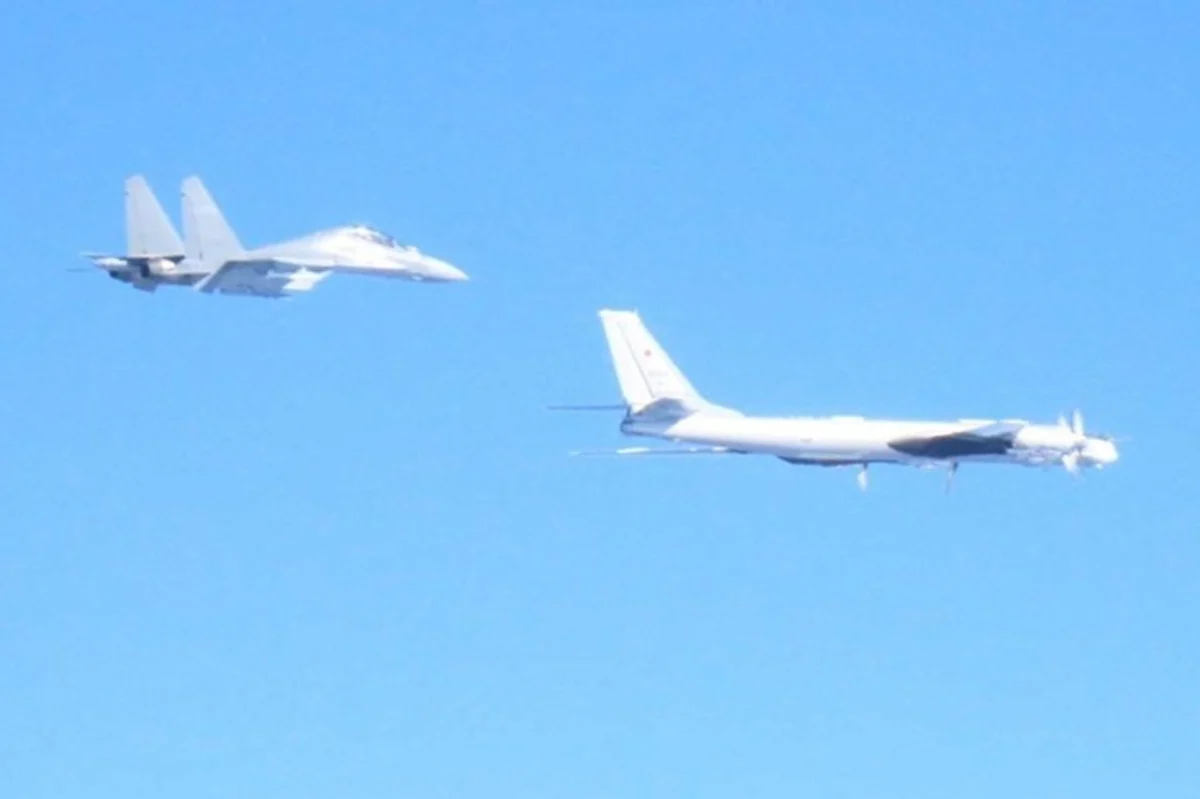
Nine Chinese and Russian military aircraft briefly entered and exited South Korea’s air defense identification zone (ADIZ) on December 9, 2025, prompting the country’s Air Force to scramble fighter jets, according to Seoul’s Joint Chiefs of Staff (JCS).
The JCS said two Chinese military aircraft and seven Russian aircraft entered the South Korean ADIZ in succession at around 10:00 local time over waters east and south of the Korean Peninsula. South Korean fighter jets were dispatched as a precaution to respond to what officials described as a potential accidental incident.
No violation of sovereign airspace
South Korea’s military emphasized that none of the aircraft violated the country’s sovereign airspace. The JCS said it had detected and identified the planes before they entered the ADIZ and monitored them throughout the incident.
An ADIZ is a unilaterally declared region of international airspace that serves as a buffer zone before sovereign airspace. Its primary purpose is to facilitate the swift identification and monitoring of all aircraft entering this designated space.
According to a JCS official, the Chinese and Russian aircraft, including bombers and fighter jets, repeatedly entered and left the ADIZ over a period of about an hour before withdrawing from the area.

Japan details aircraft types involved
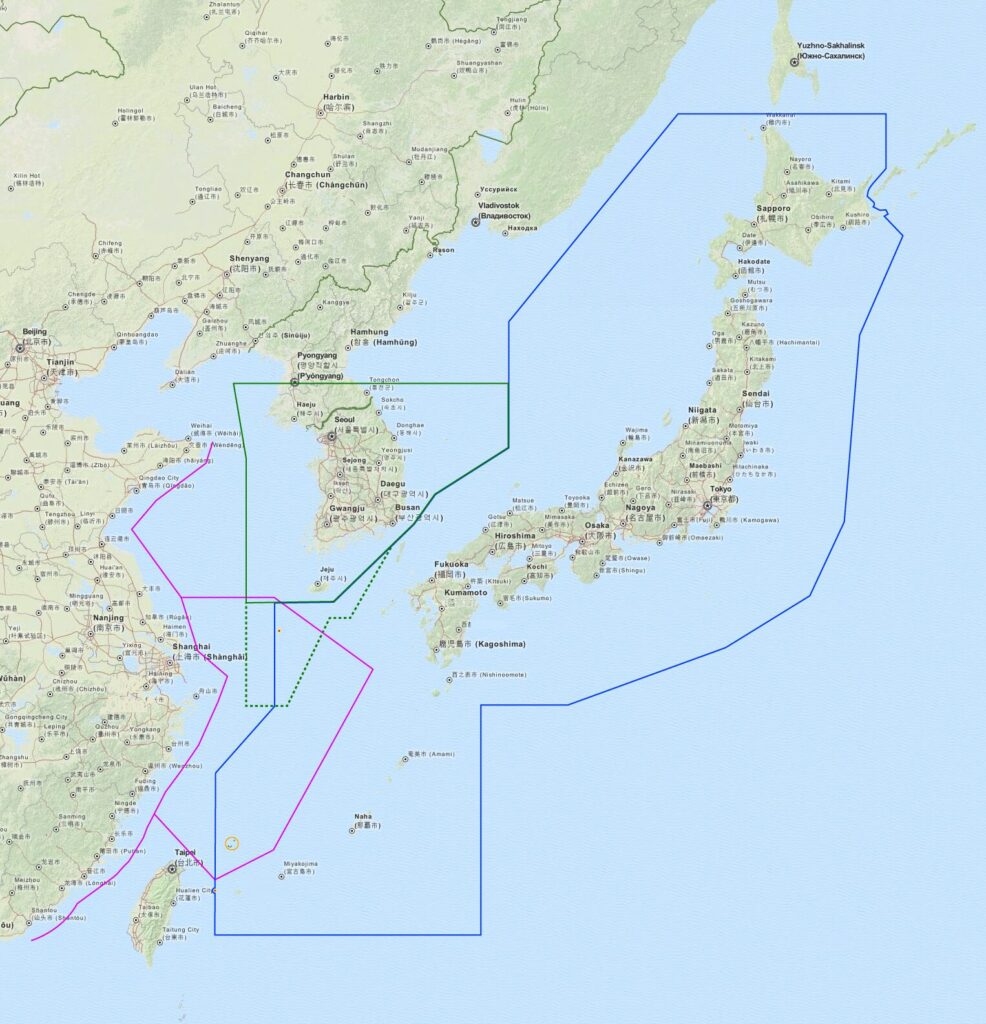
Japan’s Joint Staff said the joint Chinese-Russian flight involved two Russian Tu-95 strategic bombers, two Chinese H-6 bombers, and a fighter escort composed of Chinese J-16s. The aircraft conducted a coordinated long-range mission from the East China Sea into the Pacific Ocean off the coast of Shikoku. Fighter aircraft from the Japan Air Self-Defense Force’s Southwest Air Defense Force were scrambled to monitor the flight, Tokyo said.
12月9日、ロシアの爆撃機(Tu-95)2機と中国の爆撃機(H-6)2機などが東シナ海で合流し、東シナ海から四国沖の太平洋にかけて長距離にわたる共同飛行を実施したことを確認し、 これらに対して #航空自衛隊 の南西航空方面隊等の戦闘機を #緊急発進 させ対応しました。#スクランブル pic.twitter.com/yDr93zJp5N
— 防衛省統合幕僚監部 (@jointstaffpa) December 9, 2025


Part of a recurring pattern of joint flights
Such flights have become a recurring feature around the Korean Peninsula. Since 2019, China and Russia have conducted joint or coordinated air operations that enter the ADIZ once or twice a year, typically without prior notice to South Korea.
The most recent comparable incident occurred in November 2024, when 11 Chinese and Russian military aircraft entered the zone together towards the Dokdo islets off South Korea’s eastern coast.
Comparable coordinated Chinese and Russian long-range aviation activities have also been observed in other regions, including near the Alaska Air Defense Identification Zone. In the most recent case, in July 2024, US and Canadian NORAD fighter aircraft intercepted joint Chinese and Russian military aircraft operating within the Alaska ADIZ.
More recently, on December 6, 2025, Japan’s Ministry of Defense reported that Chinese Navy Shenyang J-15 fighters, launched from the carrier CNS Liaoning, locked their fire-control radars onto Japanese F-15J fighters during two encounters over international waters southeast of Okinawa.