
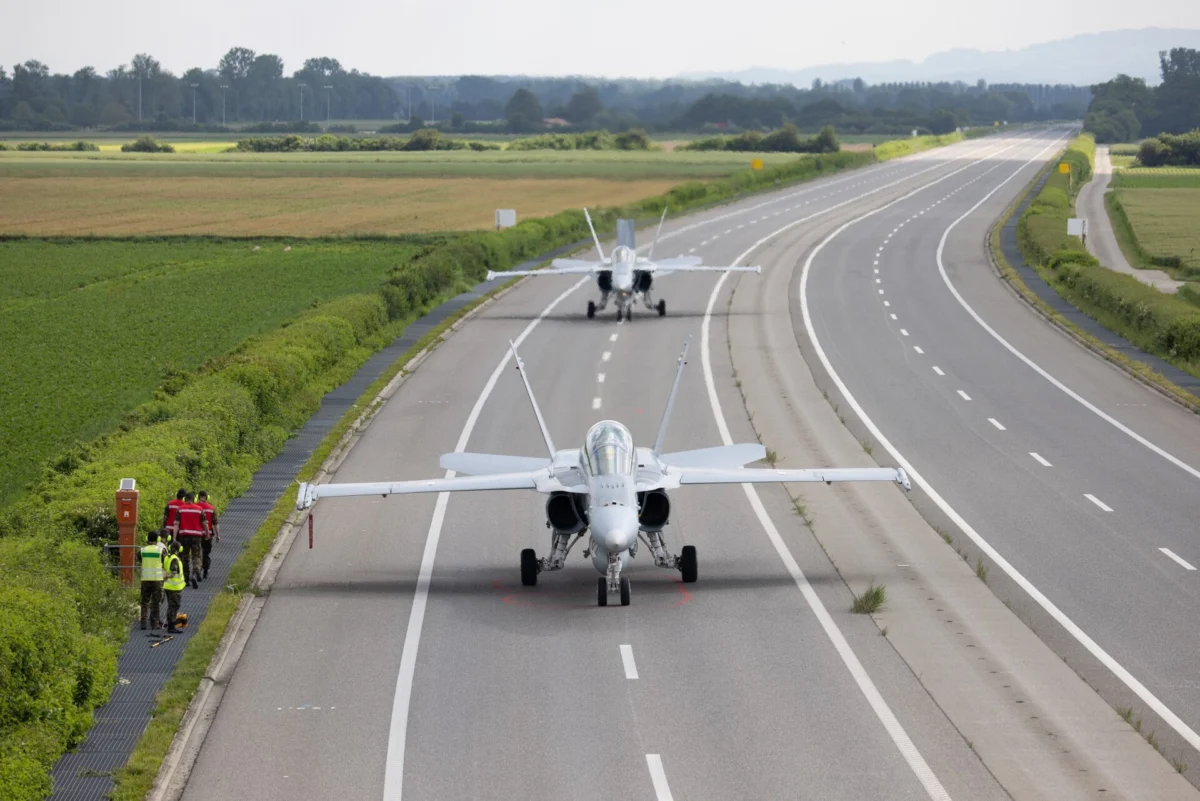
Switzerland’s new Air Force Commander, Major General Christian Oppliger, has warned in stark terms that the country cannot defend itself against modern air threats, describing the situation as a “fight against time” as key procurement programs face delays and cost overruns.
In an interview published by Swiss outlet Blick on April 12, 2026, Oppliger said Switzerland’s responses to airborne threats are “modest and outdated” and that the country has no solution against ballistic missiles.
“We are not defense-ready,” Oppliger said. “That is uncomfortable, but it has to be clearly stated.”
Oppliger, who took command of the Swiss Air Force in October 2025 after leading the F-35A introduction effort, addressed several of the most pressing challenges facing Switzerland’s air arm, from delayed Patriot deliveries and a reduced F-35 order to aging radar infrastructure and pilot retention.
F-35 fleet cut to around 30

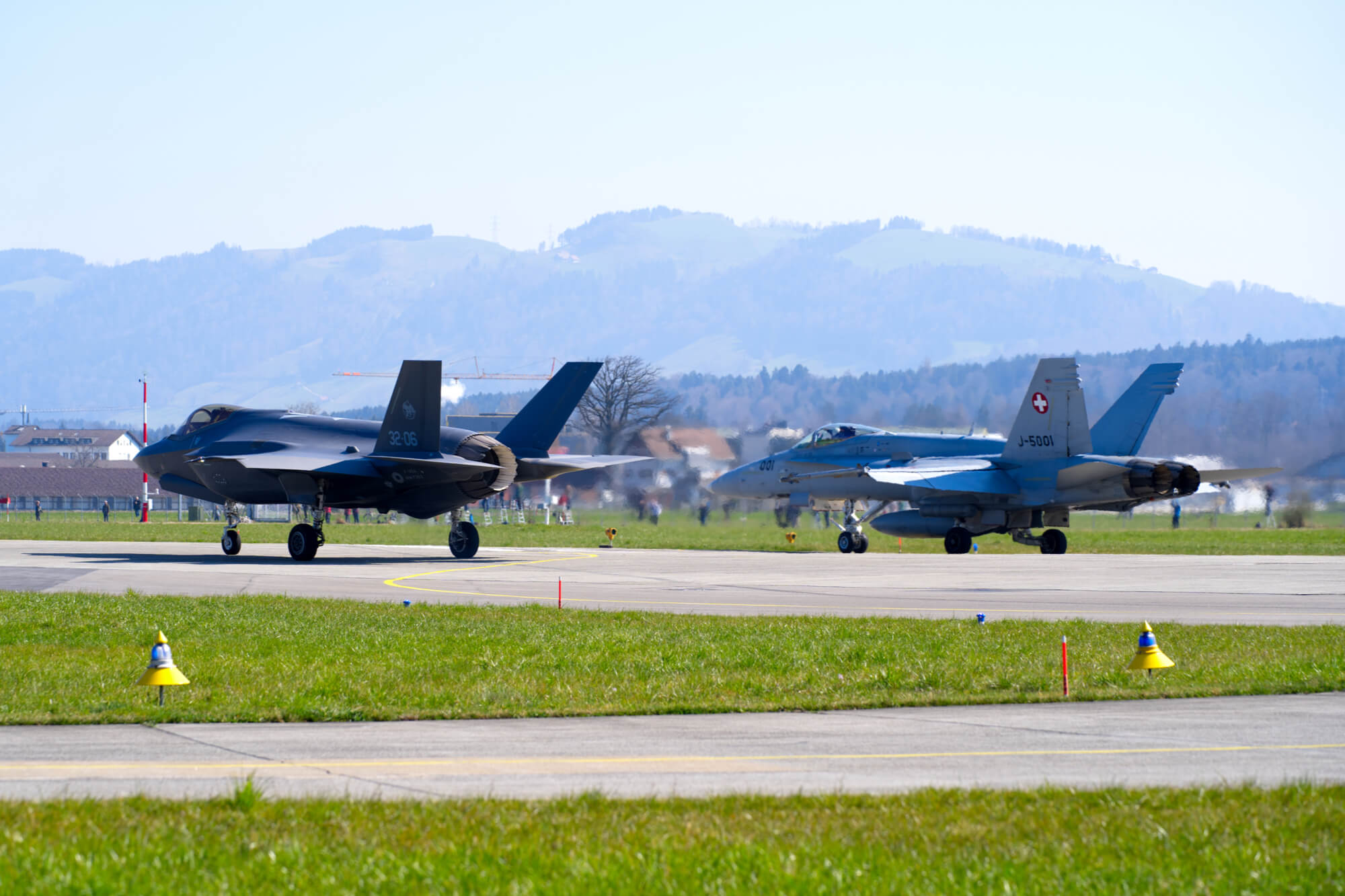
On September 27, 2020, Swiss voters narrowly approved, by 50.1%, the procurement of new fighter jets for the air force, setting a budget ceiling of CHF 6 billion ($6.8 billion). The government selected the Lockheed Martin F-35A in 2021, planning to acquire 36 aircraft to replace its aging McDonnell Douglas F/A-18C/D Hornets and remaining Northrop F-5 Tigers. But rising costs on the US side have pushed the program beyond the voter-approved ceiling, forcing the government to scale back rather than seek additional funding that would risk reopening a politically sensitive debate. Oppliger confirmed that Switzerland now aims to procure around 30 aircraft, with the exact number still dependent on ongoing negotiations with Washington.
The air force commander said the first F-35 bearing Swiss markings is expected to fly in the second half of 2027 in the United States. The first eight aircraft will be delivered there, with Swiss pilots and ground crews receiving initial training at US facilities before the program shifts to Switzerland in the third quarter of 2028.
Oppliger acknowledged that the Swiss Air Force’s own assessments had called for 55 to 70 combat aircraft to sustain a credible air defense posture in a conflict. With around 30 jets, Switzerland will fall well short of that figure, but Oppliger framed the investment in a fifth-generation platform as a long-term strategic necessity.
“From a military perspective, we need that number of aircraft to be able to continuously counter airborne threats in a conflict,” Oppliger said, adding that the priority now is to introduce a fifth-generation capability that will protect Switzerland for decades.
Oppliger also acknowledged that the Swiss Air Force is losing pilots to commercial carriers and to Skyguide, the country’s air traffic control provider. He declined to give specific numbers but said the losses are painful. He attributed part of the problem to a decline in flying hours compared to when he joined the Swiss Air Force, and said the service needs to improve conditions to keep the profession attractive.
Patriot delays and the search for alternatives

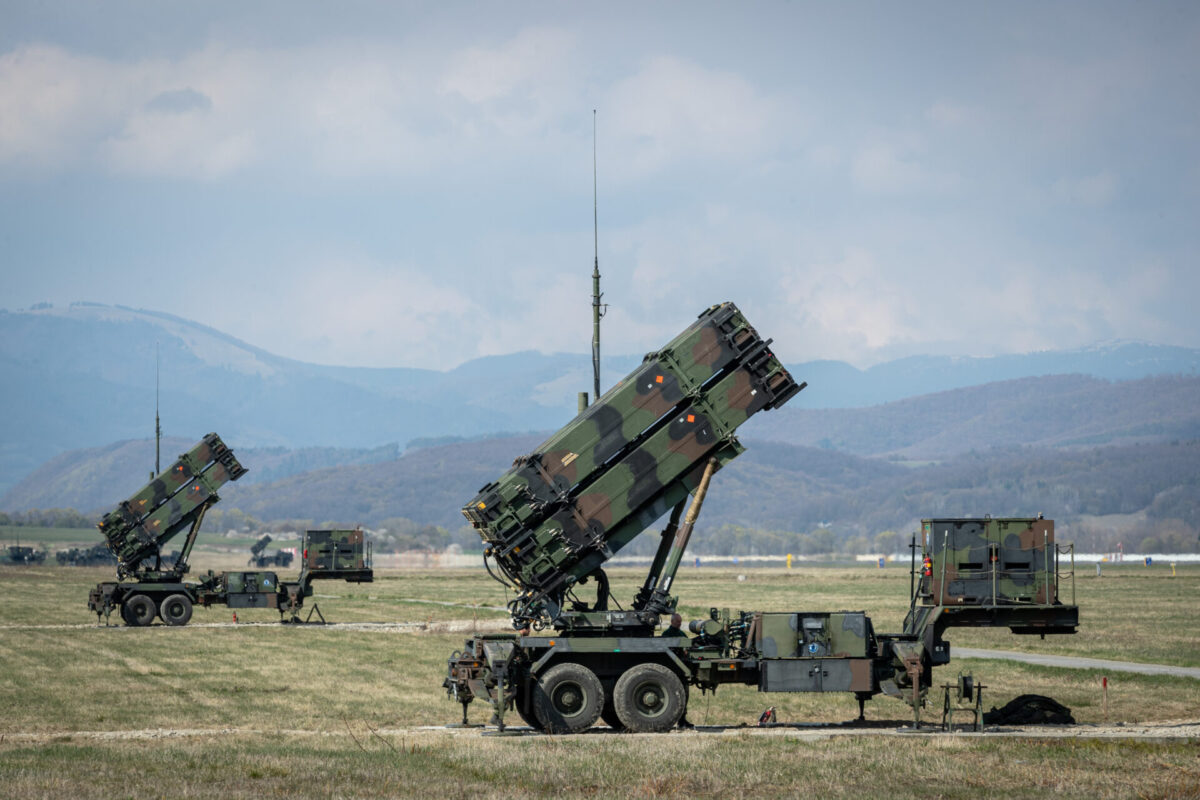
The Patriot ground-based air defense system, which Switzerland contracted alongside the F-35 to form the backbone of its modernized air defense, is facing delays of up to five years. The US originally planned to begin deliveries in 2026, but informed Bern in 2025 that shipments would be pushed back to prioritize Ukraine. The outbreak of the Iran conflict has strained Patriot supply chains even further, with Operation Epic Fury consuming interceptors at a rate that far outpaces production.
Oppliger called Patriot a “key system” and said the contract remains in place but acknowledged that the delay is prolonging a critical capability gap. He said Switzerland is now evaluating options to bring forward a separate system with comparable capabilities that could be available sooner.

In March 2026, Swiss Defense Minister Martin Pfister said the second system should “preferably be produced in Europe” to reduce dependence on a single supply chain.
The Franco-Italian SAMP/T, developed by the Eurosam consortium (a joint venture between Thales and MBDA), has emerged as the leading alternative. According to NZZ am Sonntag, the system’s manufacturers have told Bern that delivery could begin by 2029 if an order were placed now. Denmark selected the SAMP/T NG for its own long-range air defense layer in September 2025, citing in part the shorter delivery timeline compared to Patriot.
When asked whether a second-best system would be preferable to none at all, Oppliger said any alternative would still need to meet specific requirements, and that the choice between a new-generation system and an existing proven platform would depend on a formal evaluation process.
A further vulnerability lies in Switzerland’s Florako command-and-control and radar system, which links the Swiss Air Force’s sensors and coordinates all air operations. The system was due to be replaced by a new Thales-built successor in 2024, but integration challenges have significantly delayed the timeline. Oppliger said the Swiss Air Force now expects the first capabilities from the replacement system around 2030.
“Florako is the heart of our system,” Oppliger said, adding that while the current infrastructure is old, it continues to function.
Drones, the G7, and the Elbit ADS 15
On the drone threat, Oppliger said there is no single solution and that Switzerland needs a layered approach combining fighter aircraft, ground-based air defense systems, and dedicated counter-drone capabilities. He pointed to the Swiss Air Force’s new competence center for drones and robotics and said the service is investing in new countermeasures.

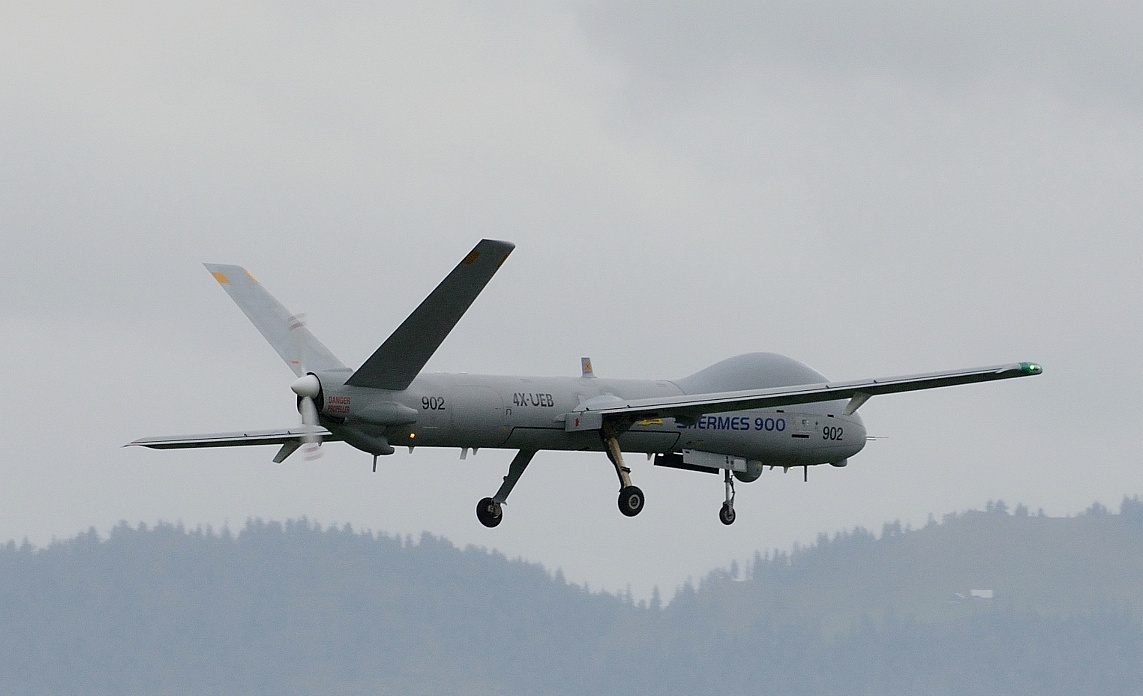
Oppliger confirmed that the Elbit Systems-made ADS 15 reconnaissance drone will be used operationally for the first time at the G7 summit in Evian, France, in June 2026, alongside dedicated counter-drone systems. He said the platform is already flying and undergoing operational testing, and that while some automated functions are not yet available, the Swiss Air Force can compensate manually in most scenarios.
The statement marks an attempt to turn the page on one of Switzerland’s most troubled defense procurements. The ADS 15, a variant of Elbit’s Hermes 900 ‘Kochav’, was contracted in 2015 for around CHF 300 million ($340 million) with delivery originally scheduled for 2019. The program was repeatedly derailed by technical failures, a crash during Israeli test flights in 2020, the COVID-19 pandemic, and geopolitical disruptions.
A core promise was that the drone would fly autonomously in Swiss civilian airspace, navigating Alpine terrain and avoiding obstacles such as paragliders without human intervention. That capability was never delivered. An obstacle-detection system developed indigenously by the Swiss firm RUAG also failed to meet the requirements. In January 2025, Switzerland’s parliamentary finance committee warned that the unresolved issues posed “significant risks regarding technical feasibility, approval, and costs.”
By September 2025, the defense ministry formally dropped three key functionalities from the contract, including autonomous obstacle avoidance. Under the revised terms, the drones cannot fly in icing conditions or ground fog and must be escorted by other aircraft in uncontrolled airspace during the day. Armasuisse said up to four of the six drones may never fully meet certification requirements.
Swiss Defense Minister Martin Pfister had publicly considered canceling the purchase but ultimately decided to proceed with the reduced configuration rather than absorb an estimated CHF 300 million ($380 million) in sunk costs and risk a protracted legal dispute with Elbit.
A wider reckoning for neutral Europe
Oppliger’s admission places Switzerland alongside a growing number of European states forced to confront gaps in their air defenses.
Denmark, whose selection of the SAMP/T NG was mentioned earlier, retired its HAWK ground-based air defense batteries in 2004 and went two decades without any surface-to-air missile capability, a gap its own general staff called a “vulnerability.” Copenhagen is now spending DKK 25 billion to rebuild from scratch, layering SAMP/T NG, NASAMS, and VL MICA systems into a network it did not possess a year ago.
Ireland presents an even starker case. Dublin has not operated combat aircraft since retiring its Fouga Magisters in 1998 and has relied on a secret bilateral arrangement under which the Royal Air Force intercepts threats in Irish airspace. Former Air Corps head General Ralph James has described Ireland as “probably the most vulnerable” state in Europe. The government is now planning its first fighter jet purchase in over 50 years, with a preferred fleet of 12 to 14 aircraft and total investment potentially reaching €2.5 billion, alongside a primary radar system the country has never possessed.