
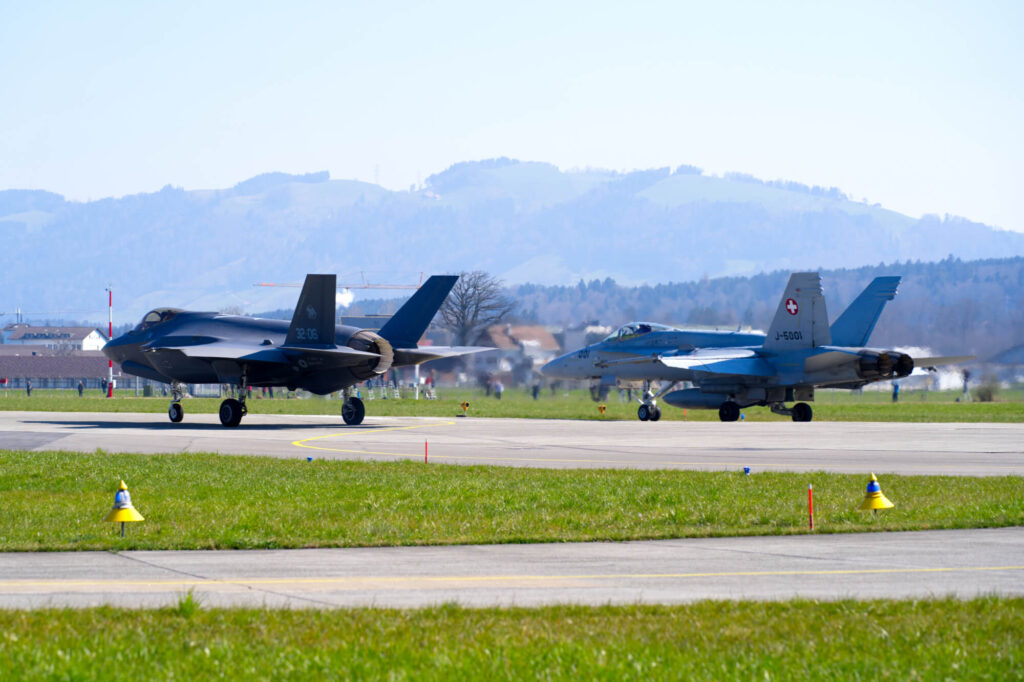
Switzerland has decided to reduce its planned purchase of Lockheed Martin F-35A fighter jets, citing rising costs and budget constraints linked to price increases on the US side.
On December 12, 2025, the Swiss Federal Council announced that it will no longer acquire 36 F-35As as originally planned with the CHF 6 billion ($6.8 billion) budget approved by voters in a 2020 referendum.
“Due to foreseeable additional costs, it is not financially possible to retain the originally planned number of 36 F-35As,” the statement reads. “The Federal Council’s decision avoids any additional credits and responds to the will of the people.”
The government has yet to specify how many aircraft will now be ordered.
Bern selected the F-35A in July 2021 as part of its Air2030 program to replace the Swiss Air Force’s aging F/A-18C/D Hornets and F-5 Tigers. At the time, Swiss authorities maintained that the aircraft would be acquired under a fixed-price arrangement.
However, the US government later disputed that interpretation, warning that inflation, higher raw material prices and other cost factors could push the final bill beyond initial estimates.
Fixed-price dispute resurfaces
Cost disagreements have been a recurring source of friction between Bern and Washington. Swiss officials have repeatedly stated that the CHF 6 billion ceiling remains binding, while the US side has argued that only certain elements of the contract were fixed, rather than the overall program cost.
As a result, Switzerland has been forced to revisit the scope of the purchase rather than increase spending. According to the Federal Council, the option of reducing the number of aircraft is preferable to reopening the politically sensitive question of additional funding, which would likely trigger renewed domestic opposition.
The decision follows months of internal assessments and discussions with the US government, after Swiss authorities acknowledged earlier in 2025 that maintaining the full 36-jet order had become increasingly unrealistic.
Trade tensions add political pressure
The F-35 cost issue has unfolded against the backdrop of broader Swiss-US trade tensions. Earlier in 2025, Washington imposed punitive tariffs on Swiss exports as part of a wider trade dispute, a move that fueled political criticism in Switzerland over the optics of a major US defense purchase.
While both sides later agreed to ease the tariff measures, the episode intensified scrutiny of the F-35 deal and strengthened calls from across the political spectrum to reassess Switzerland’s reliance on US defense suppliers.
Opponents of the F-35 program have argued that rising costs undermine the credibility of the original procurement decision. Meanwhile, supporters warn that canceling or delaying the program would leave Switzerland without a credible air policing capability once its current fighter fleet reaches the end of its service life.
Deliveries still planned from 2027

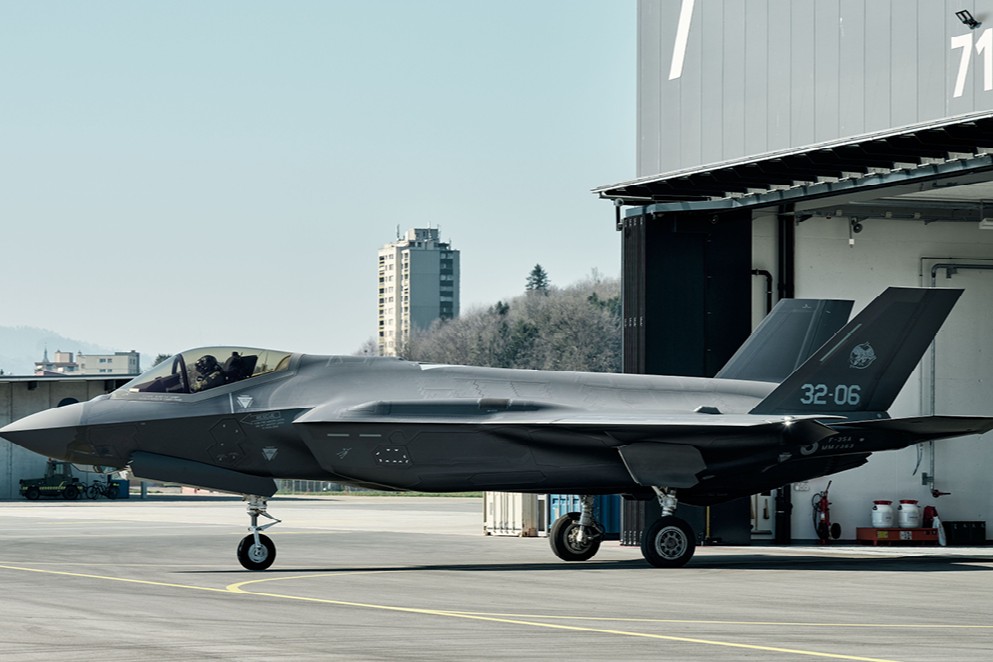
Despite the reduced order, Switzerland’s F-35A introduction timeline remains unchanged. Deliveries are still expected to begin in 2027, with aircraft initially being produced in the US before later jets are assembled at the Cameri final assembly line in Italy.
Swiss defense officials have previously stressed that the F-35 remains central to the country’s long-term air defense strategy, even if the final fleet size is smaller than originally envisioned. The government also left the door open to revisiting future fighter requirements separately, depending on the evolving security environment.