
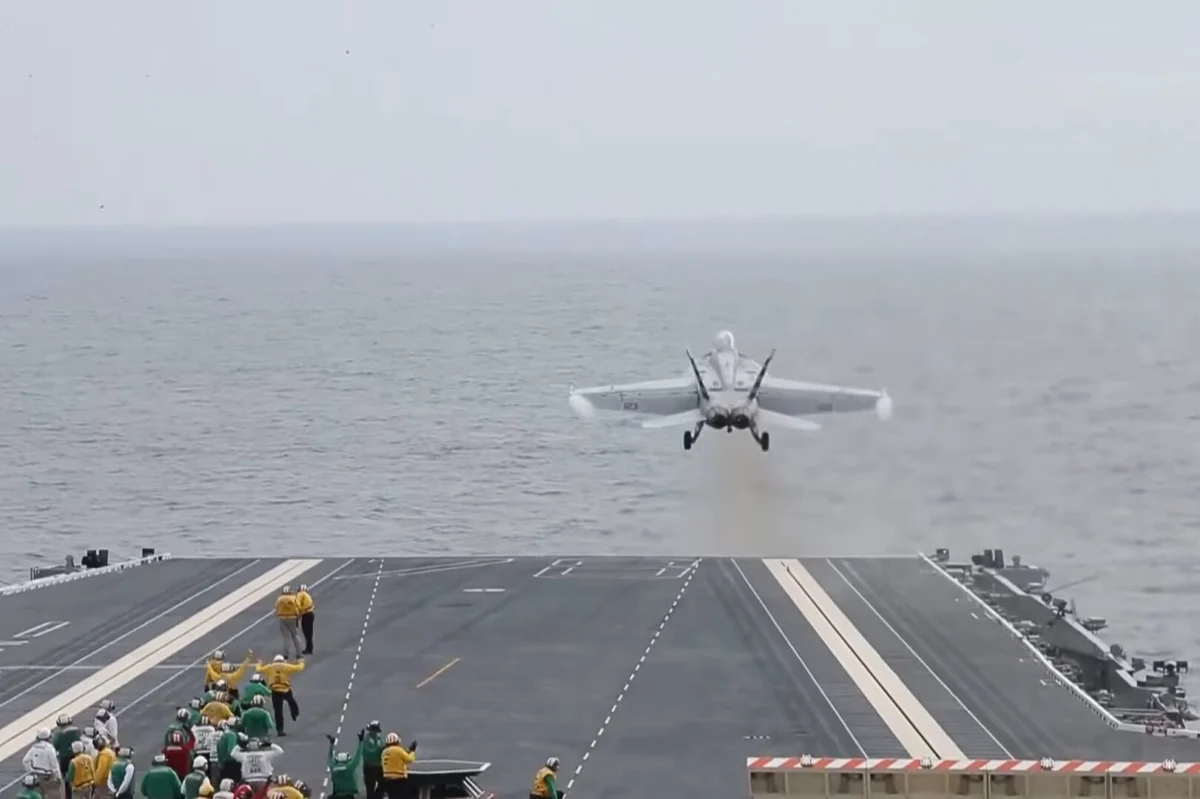
President Donald Trump signed a national security presidential memorandum on August 13, 2026, directing the Pentagon to strip the Electromagnetic Aircraft Launch System (EMALS) from the future USS Doris Miller and to fit steam catapults instead, reversing a launch-technology decision the US Navy made in 2009.
The memorandum, titled “Rebuilding the United States Navy and America’s Shipbuilding Industrial Base,” gives the Secretary of War, the administration’s title for the defense secretary, 60 days to deliver a plan covering measures, timelines and resourcing. It also orders the carrier’s Advanced Weapons Elevators replaced with hydraulic systems.
A redesign ordered mid-production
CVN-81 is the fourth Gerald R. Ford-class carrier, under construction at HII Newport News Shipbuilding. Its keel is due to be laid by the end of 2026, with delivery expected in early 2034. USS Gerald R. Ford and the future John F. Kennedy and Enterprise are unaffected.
General Atomics Electromagnetic Systems announced on June 8, 2023, that Naval Air Systems Command had awarded it the EMALS and Advanced Arresting Gear shipsets for CVN 81. The company told AP the decision not to proceed “warrants careful reconsideration,” adding that with production close to half complete the change would carry cost, schedule and integration risk.

Three systems affected
The elevators carry ordnance from magazines deep in the hull to the flight deck. Ford-class ships have 11, driven by linear synchronous motors rather than cables, and rated at 24,000 pounds and 150 feet per minute, compared to 10,500 pounds and 100 feet per minute on the previous Nimitz class. The US Navy counts that throughput toward the class goal of a 33% higher sortie generation rate.
The memorandum does not mention the Advanced Arresting Gear, the recovery half of the same General Atomics package. AAG replaces the Mk 7 hydraulic system used on Nimitz-class carriers, substituting water twisters and induction motors under digital control for cable-driven pistons, so deceleration is tuned to each aircraft as it lands. Its envelope runs from light unmanned types to fighters of around 55,000 pounds.
EMALS applies the same logic on the launch stroke, replacing a steam piston with a linear induction motor. The US Navy argued in 2009 that it would cut lifecycle costs and maintenance while reducing airframe stress. That range matters for a ship expected to launch the Boeing MQ-25 Stingray tanker and, later, uncrewed aircraft operating alongside crewed fighters.
As of March 2026, USS Gerald R. Ford had completed 36,863 EMALS launches, according to Pentagon figures reported by Reuters. Speaking at the US Army War College on July 15, 2026, Trump said he had no patience for “electric catapults that don’t work.”
US Navy retreats as France and China embrace electromagnetic launch

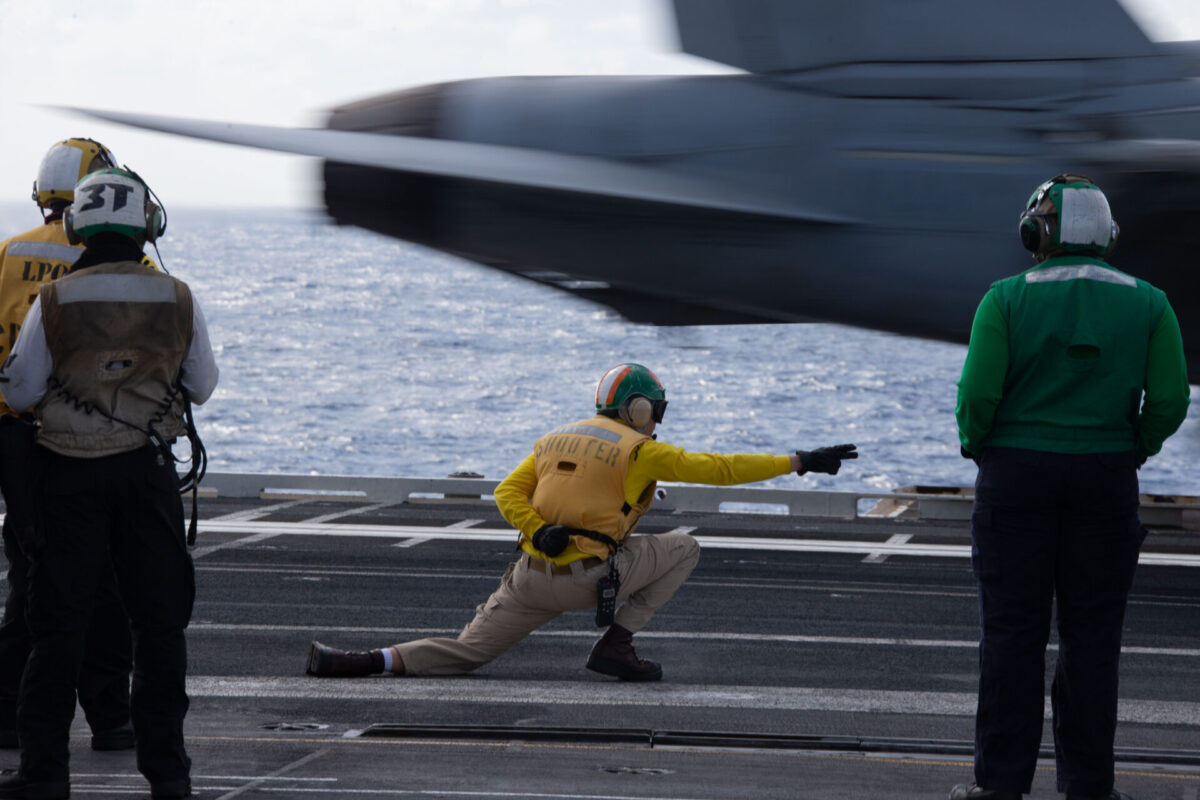
The decision leaves the US Navy alone in walking back electromagnetic launch. France’s PANG carrier, approved by President Emmanuel Macron in December 2025, is designed around three General Atomics EMALS catapults and three AAG systems, a dependency French industry has already flagged. China commissioned the Fujian, its first electromagnetic-catapult carrier, in November 2025.
The memorandum’s opening section blames the US Navy’s shipbuilding record on “overly complex designs and iterative design change procedures.”