
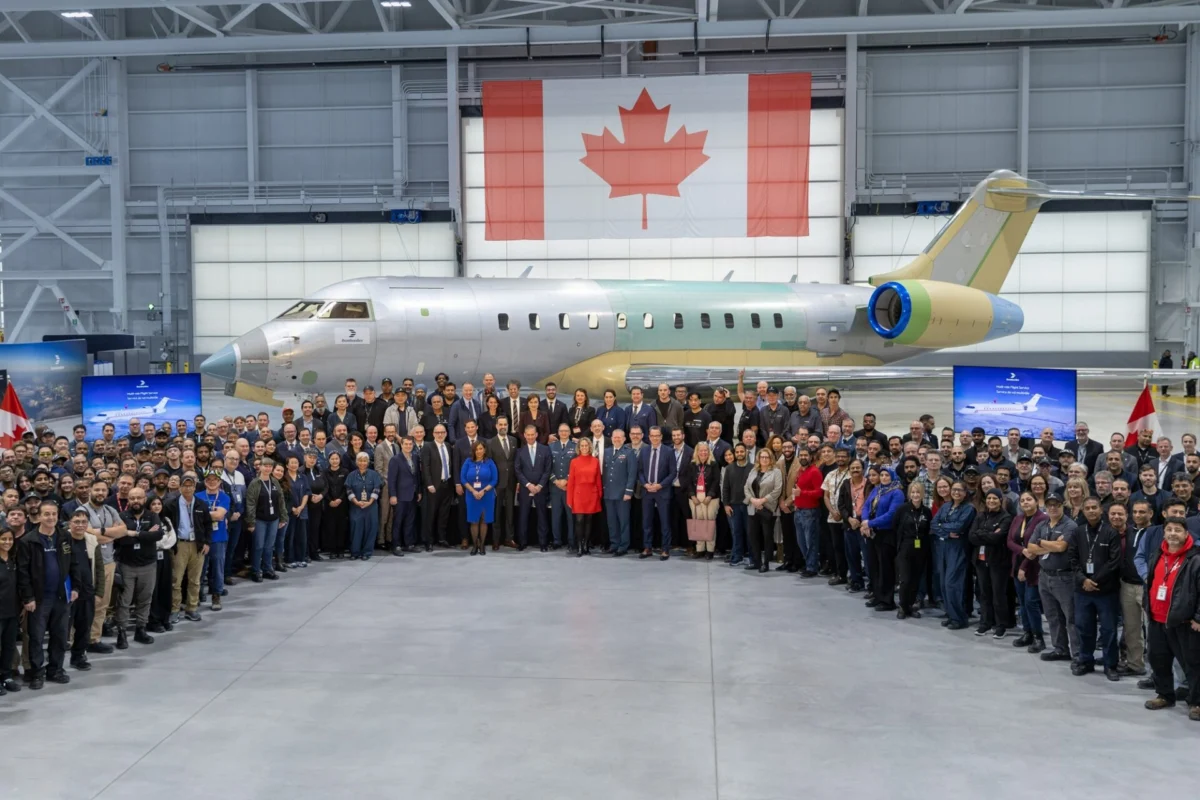
US President Donald Trump has threatened to strip US certification from Bombardier business jets and even “all aircraft made in Canada,” framing the move as retaliation for what he claims is Canada’s refusal to certify several Gulfstream models for the Canadian market.
In a post on Truth Social on January 29, 2026, Trump declared that the US was “decertifying” Bombardier Global Express aircraft and “all aircraft made in Canada” until Gulfstream’s G500, G600, G700, and G800 become “fully certified.” He also threatened a 50% tariff on “any and all aircraft sold into the United States” if the situation is not “immediately corrected”.
Bombardier said that it had taken note of Trump’s statement and was in contact with the Canadian government, warning that the issue could have a “significant impact” on air traffic and passengers if it spirals.
White House official: no move to ground aircraft already flying
While Trump’s wording suggested sweeping action, a White House official told Reuters the president was not suggesting decertifying Canadian-built aircraft already in operation. US airline officials said FAA officials had made similar assurances.
This distinction matters, because the US fleet includes thousands of Canadian-manufactured aircraft across business aviation, regional fleets, and helicopters. According to data provider ch-aviation, 2,188 Bombardier aircraft are currently registered in the US.
How big could the impact be?
A broad decertification threat, even if ultimately limited in scope, has rattled airlines and industry groups because Canadian-built aircraft are deeply embedded within North American aviation.
American Airlines and Delta Air Lines rely on Canadian-made aircraft for regional operations. The uncertainty also extends to aircraft with Canadian production footprints, including Airbus A220s produced in Canada, although many A220s for US operators are assembled in Mobile, Alabama.
The IAM union has warned that Trump’s threats could disrupt the North American aerospace industry and put jobs at risk on both sides of the border, with Bombardier employing about 3,000 people in the United States.
Certification, validation, and what regulators can actually do
Trump’s threat also runs into the reality of how aircraft certification works. Under international practice, the state of design issues the primary type certificate for the design of an aircraft. Other authorities typically validate that approval, sometimes requesting additional data or imposing conditions.
Transport Canada describes this process as “validation of a foreign approval” to obtain a Canadian approval or acceptance. The FAA’s bilateral framework with Canada likewise sets out pathways ranging from streamlined validation to deeper technical validation.
In this case, Gulfstream aircraft are designed in the US, so the FAA is the primary authority. Trump said Canada has refused to certify the G500, G600, G700, and G800. Trump also pointed to the G800, which was certified by both the FAA and EASA in April 2025.
Even if the political pressure escalates, it is not clear whether the FAA has the authority to revoke certifications on economic grounds, with certification actions usually tied to safety.