
The United Kingdom’s 2025 Strategic Defence Review outlines an ambitious roadmap to transform the Royal Air Force (RAF) into a force better equipped for high-intensity conflict, while reshaping the UK’s role within NATO’s evolving deterrence architecture.
The review underscores that air power remains vital to the UK’s ability to strike rapidly and decisively. Yet, the Ministry of Defence warns that dominance in the air can no longer be taken for granted. With state-on-state threats resurgent, the RAF will need to adapt to an era of contested skies, increasingly sophisticated adversaries, and a fundamental shift in air combat toward uncrewed and autonomous platforms.
“The primacy of crewed aircraft is being fundamentally challenged,” the review states, calling for a step-change in agility, readiness, and technological edge.
Key announcements as part of the Review ⬇️ pic.twitter.com/vYUrHlf4fT
— Ministry of Defence 🇬🇧 (@DefenceHQ) June 2, 2025
F-35 expansion and a renewed nuclear strike role?
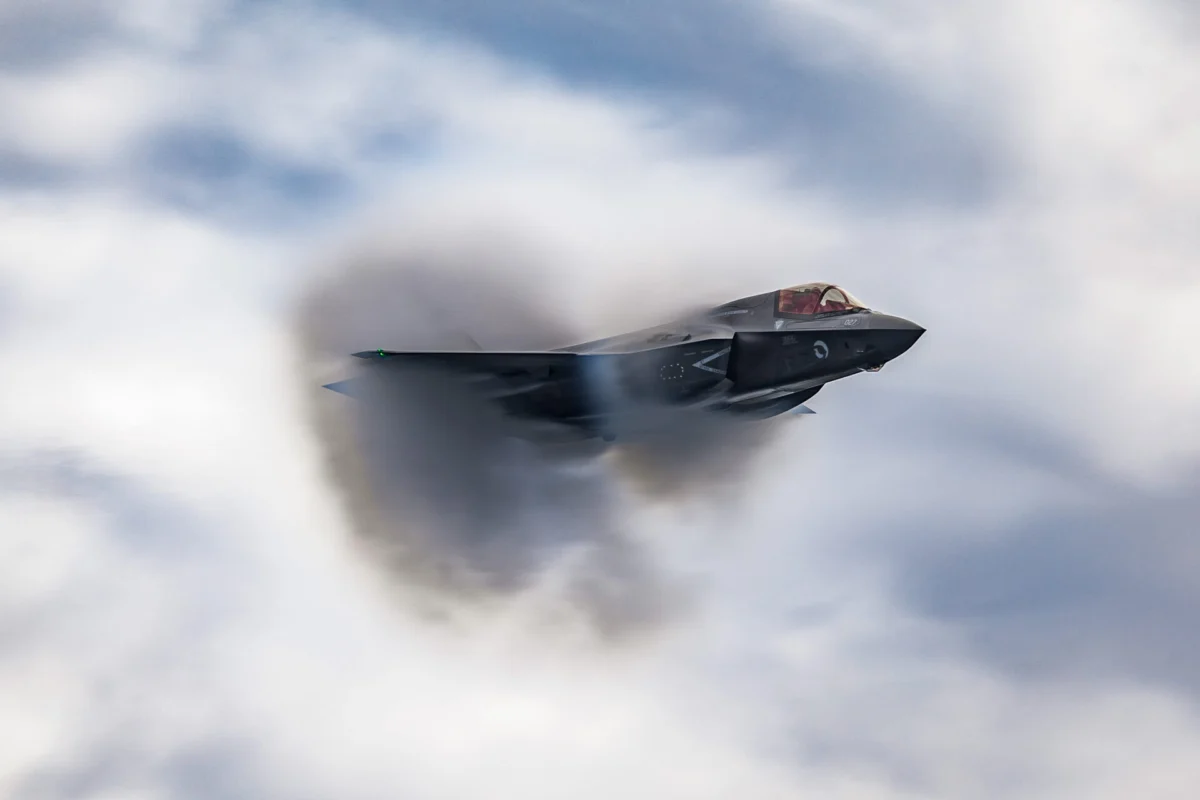
The review confirms that the RAF will require additional F-35 fighters in the coming decade and leaves the door open to acquiring both B and A variants. While the F-35B is operated from the UK’s aircraft carriers, the F-35A is cheaper to operate, capable of longer-range missions… and critically, it is certified to carry the US-designed B61-12 nuclear gravity bomb.
According to The Sunday Times, there is growing interest in acquiring the F-35A to enable the RAF to participate directly in NATO’s tactical nuclear mission. If confirmed, this would mark the RAF’s return to an airborne nuclear delivery role for the first time since 1998.
In line with this changing strategic context, the Defence Review calls for opening discussions with the United States and NATO on “the feasibility of enhanced UK participation in NATO’s nuclear mission.”
This could mark a significant evolution in the UK’s nuclear posture, complementing its submarine-based Trident deterrent.
However, this possible shift comes amid growing uncertainty over the long-term reliability of US security guarantees. During a June 2, 2025, parliamentary debate on the UK’s nuclear deterrent, former Defence Committee chair Sir Julian Lewis remarked:
“If the future of the American commitment to NATO were not in doubt, we would not need to think about tactical nuclear weapons ourselves, because that role has always been fulfilled by US tactical nuclear weapons allocated to the defense of NATO.”
A shift toward autonomous and collaborative platforms
The RAF is also set to accelerate its transition to a Future Combat Air System (FCAS) that combines crewed, uncrewed, and autonomous aircraft. Investment in Autonomous Collaborative Platforms (ACPs) — combat drones designed to fly alongside existing and future fighters — is encouraged alongside the UK’s involvement in the Global Combat Air Programme (GCAP), a sixth-generation fighter initiative with Japan and Italy.
These drones are expected to operate in mixed formations with Typhoons, F-35s, and future FCAS fighters, and should also be capable of launching from UK aircraft carriers.
Boosting ISR, logistics, training, and air defense
Beyond combat jets, the Strategic Defence Review outlines steps to improve air mobility, intelligence gathering, and home defense:
- Airborne Early Warning: The RAF is to maintain its fleet of E-7 Wedgetail AEW&C aircraft, with further acquisitions possible through cost-sharing with NATO.
- Surveillance and Maritime Integration: The MQ-9B Protector drone may be upgraded for maritime surveillance, working alongside P-8 Poseidon aircraft and Type 26 frigates.
- Air Transport: The RAF’s A400M fleet may be expanded, supplemented by civilian charter or sponsored lift solutions to ease strain on military assets.
- Brize Norton: The UK’s main air mobility hub is set for investment via public-private partnerships, with contingencies to legislate alternative commercial options if the base becomes unavailable.
- Integrated Air and Missile Defence (IAMD): The UK will begin investing in more robust IAMD foundations to defend against aerial and missile threats.
- Flight Training: The RAF’s flying training system will be overhauled, with the Hawk T1 and T2 aircraft replaced by a more cost-effective fast jet trainer. The training pipeline will be modernized through increased use of contractors and expanded capacity for international students.
Carrier air wings to go hybrid with drones and missile integration
The Royal Navy’s carrier strike capability is also set for transformation, with a shift toward ‘hybrid’ air wings. Currently centered on the F-35B, future carrier operations are expected to integrate ACPs and expendable, single-use drones alongside crewed fighters. Eventually, this mix could be enhanced with long-range precision missiles launched directly from the carrier deck.