

The UK government is backing Rolls-Royce’s ambition to develop and build a new engine for the next generation of narrowbody aircraft that are expected to enter commercial service in the mid-to-late 2030s.
On October 29, 2026, UK Prime Minister Andy Burnham paid a visit to the Rolls-Royce factory in Derby following the unveiling of plans for a joint 10-year, £2.5 billion ($3.3 billion) research and technology program to develop cutting-edge gas turbine technologies for civil and defense aerospace.
The program would see Rolls-Royce re-enter the narrowbody market as a new alternative to power the high-volume narrowbody market segment.
The program would aim to advance more efficient and lower-emission jet engine technology, beginning with an engine demonstrator project.
Rolls-Royce said the program would also “sustain vital development and testing capabilities, strengthening national resilience by supporting the UK’s critical sovereign capabilities in defense aerospace”.
The development comes as manufacturers such as Airbus and Boeing look to select engine partners over the next few years in “anticipation of potential aircraft launches around the turn of the decade”.
Tufan Erginbilgic, CEO of Rolls-Royce, described the plans as a “landmark moment for the UK’s aerospace industry”.
“This is a once-in-a-generation opportunity to lay the foundations for decades of sustainable economic growth across the UK, creating high-value jobs and transforming the country’s advanced manufacturing supply chain,” Erginbilgic said. “Aerospace is a growing and globally attractive market, and this programme with the Government is vital to enable the UK to compete.”
According to a Rolls-Royce statement, the UK government views the narrowbody market as the single biggest growth opportunity in aerospace over the next 50 years with the potential to add £120 billion ($160 billion) to the UK economy over the lifetime of the program.
“Working together, we can also sustain the nation’s capability to power military aircraft and secure its position as one of only two countries that can design, develop, make and service the jet engines that power the world’s commercial airliners,” Erginbilgic added.
Delivering the initial stages of the plan, which is subject to a final agreement being reached, will support 3,300 UK jobs at Rolls-Royce and supply chain partners by the end of 2029, while securing a UK engine position on new narrowbody aircraft would create tens of thousands more, according to the British manufacturer.
“If Rolls-Royce’s narrowbody engine technologies are chosen by airframers, its stated ambition is to re-enter the market in partnership,” Rolls-Royce said. “It will select sites in the UK for new state of the art facilities for the assembly and test of the new engine and increase its advanced manufacturing capacity to make many of the high-tech components required. These include high pressure turbine blades – which are at the heart of a jet engine – and advanced composite fan blades.”
Rolls-Royce expects to invest significantly more than the UK government across the narrowbody program.
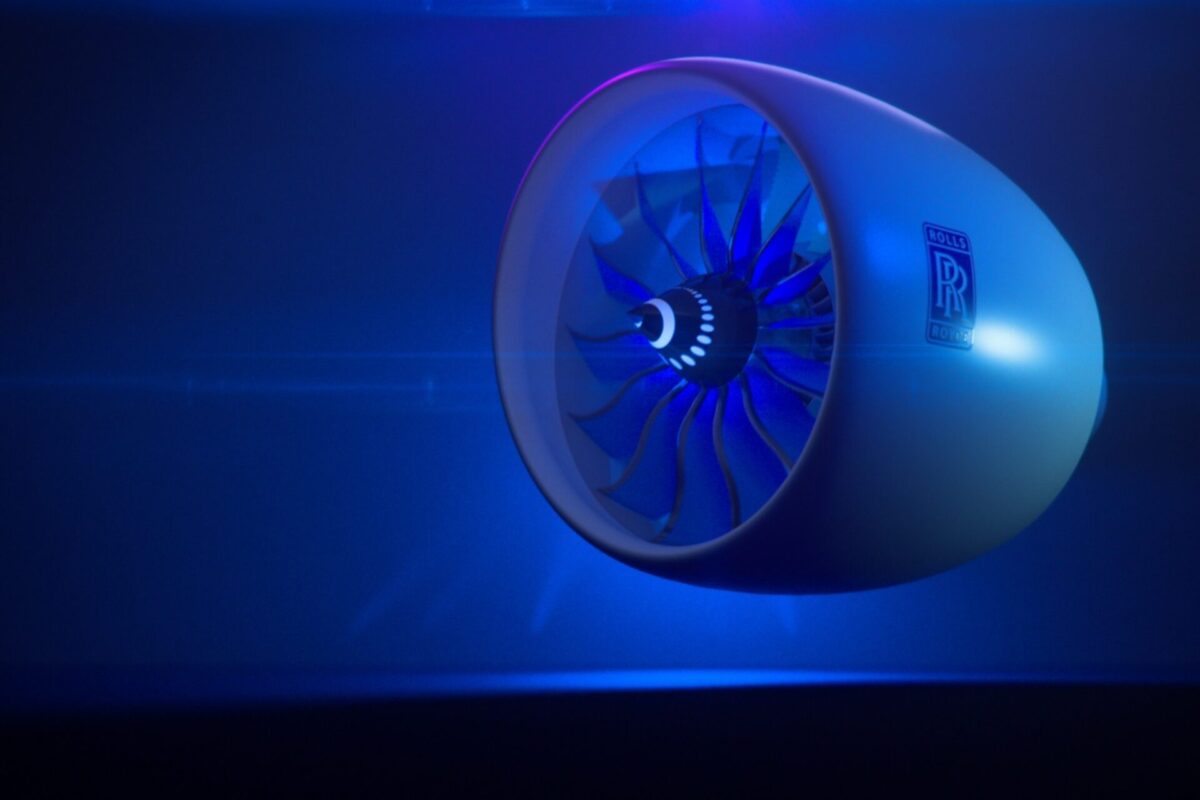
Rolls-Royce’s UltraFan 30 narrowbody engine was unveiled earlier this year. Rolls-Royce publicly set out the company’s intention to re-enter the narrowbody engine market in November 2023.