
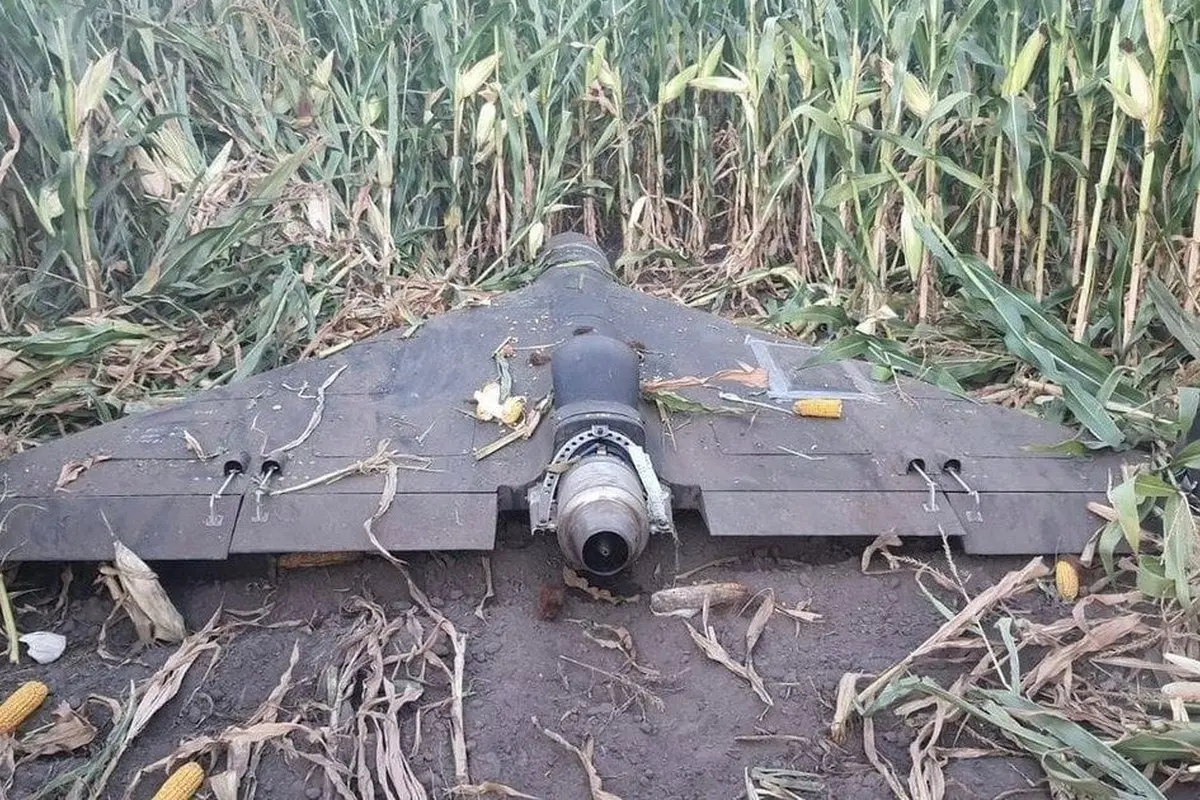
Ukraine has successfully tested a domestically developed interceptor intended to counter jet-powered Shahed attack drones, according to President Volodymyr Zelensky, who added that further technical work remains as testing continues.
In his nightly address on September 15, 2026, Zelensky reported a successful interception by the new Ukrainian system although he did not identify the weapon or its manufacturer.
“But some technical aspects still need to be refined. It will take some more time,” he said, according to the presidency’s official English-language transcript.
Zelensky also said other Ukrainian developers were continuing work on systems to counter the threat. His remarks did not specify whether the interceptor is a drone or missile, how it engages its target, or when it could enter service. He provided no performance figures or production targets.
Reuters reported that Ukraine’s military said it had downed 187 airborne targets overnight. Zelensky put the proportion of Russian drones intercepted that night at 93%, while saying the country needed to do more to protect its citizens.
Those figures describe Ukraine’s overall air defense effort. Zelensky disclosed only one successful engagement involving the new system.
Iran publicly unveiled the jet-powered Shahed-238 in November 2023, building on the design of the propeller-driven Shahed-136. Reports of its use against Ukraine emerged in January 2024. Russia subsequently developed its own version, the Geran-3, with production reportedly starting in 2025.
The Shahed-136 uses a piston engine driving a propeller, while the Shahed-238 and Geran-3 use small turbojet engines. Both are one-way attack drones that carry an explosive warhead to their targets.
Jet propulsion allows substantially higher speeds, giving defenders less time to detect, track and engage the aircraft. Performance varies between versions: the Center for Strategic and International Studies lists speeds of approximately 300-370 km/h for the Chinese-powered Geran-3 and around 600 km/h for the Iranian Shahed-238. The jet-powered models also cost more than their propeller-driven predecessors.
Iran has also used the Shahed-238 in attacks on Gulf countries. Human Rights Watch identified one in a February 28, 2026, strike in Dubai and cited UAE authorities reporting interceptions of the type in early March. Those incidents document Iranian combat use but do not establish when the country first deployed the weapon operationally.
Ukraine has sought less expensive ways to intercept Russian attack drones as it develops its domestic defense industry. The country has also offered its anti-drone expertise to partners, including countries in the Middle East facing Iranian attacks.
Countering jet-powered drones featured in separate talks between Ukrainian and Danish defense officials on September 15. According to Ukraine’s Defense Ministry, the discussions covered interceptor systems and electronic warfare measures, alongside the country’s need for stronger defenses against ballistic missiles.
The two sides also discussed FREYJA, an anti-ballistic project intended to improve Ukraine’s and its partners’ ability to counter missile threats.