
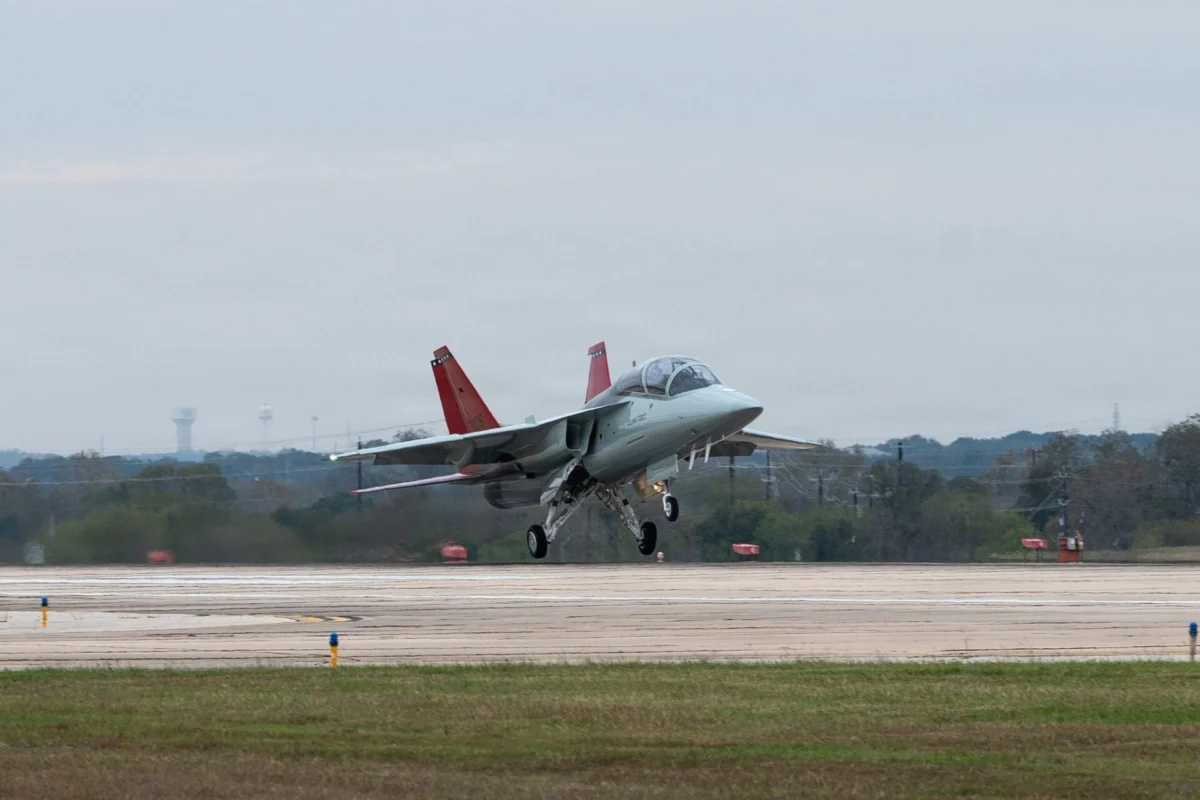
The United States Air Force has cleared the Boeing-Saab T-7A Red Hawk trainer for initial production, approving the first low-rate production lot of aircraft.
The decision, following Milestone C approval on April 23, 2026, allows the service to move forward with a $219 million contract covering the first 14 advanced trainer aircraft, along with spares, support equipment and training from Boeing Defense, Space & Security.
The T-7A is intended to replace the Northrop T-38 Talon, a trainer that has been in US Air Force service for more than six decades. The Red Hawk is scheduled to begin replacing the T-38 within Air Education and Training Command (AETC) in 2027, with Initial Operational Capability targeted for the same year.
“Reaching Milestone C is a testament to the dedicated government and industry teams who have worked diligently to overcome complex technical hurdles,” said William Bailey, Performing the Duties of the Assistant Secretary of the Air Force for Acquisition, Technology, and Logistics. “The T-7A is a pivotal program for the future of our combat air forces, and entering production brings us one step closer to putting this essential capability into the hands of our instructor pilots and students.”
The US Air Force said the approval follows a year of “active management” involving the service, Air Education and Training Command and Boeing, aimed at reducing program and operational risk while moving the aircraft toward production.
The first production decision will not automatically open the way to all early production lots. According to the US Air Force, the T-7A Program Office will seek separate approval for each of the first three low-rate initial production lots. The phased approach is intended to manage concurrency risk by feeding lessons from ongoing developmental testing into later production decisions.
A digitally designed trainer
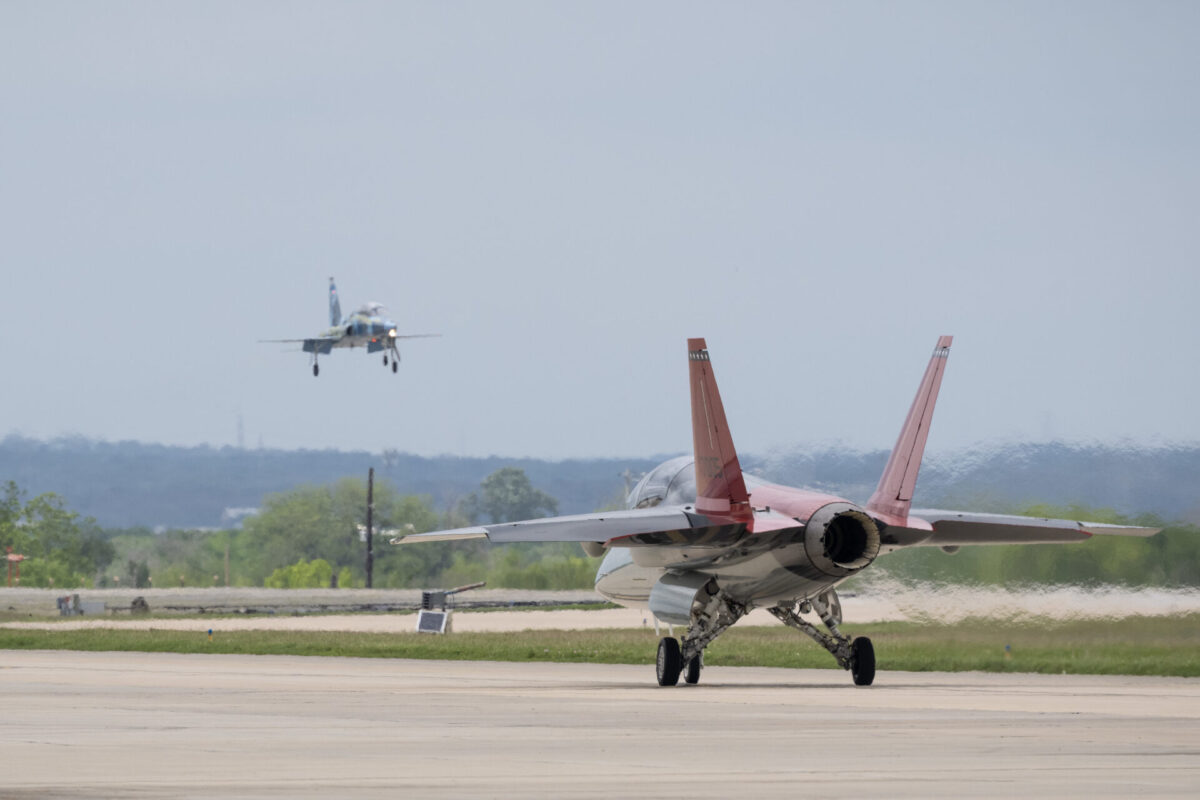
The T-7A Red Hawk was developed by Boeing and Saab under the US Air Force’s T-X program. In 2018, Boeing received a $9.2 billion contract to supply 351 T-7A advanced trainers to replace the T-38 fleet. The broader program of record also includes 46 ground-based training simulators for five AETC bases over the next decade.
The aircraft was marketed as the first US Air Force aircraft designed and built using fully digital methods, with Boeing and Saab presenting the approach as a way to accelerate development, production and sustainment.
Saab manufactures major aft fuselage systems for the aircraft at its facility in West Lafayette, Indiana. The Swedish company received a $101.7 million Boeing contract in late 2023 to support serial production of the aft section.
The program has faced delays and technical issues during development. In 2021, the US Air Force delayed a full-rate production decision after a wing rock issue at high angles of attack was identified during flight testing.