
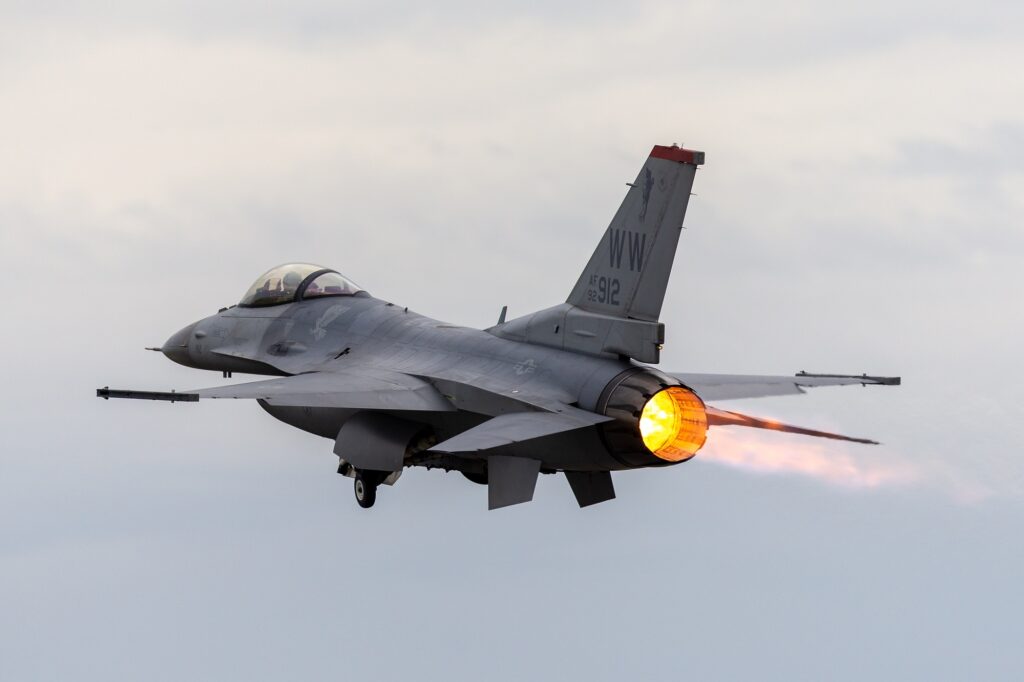
Software company Red 6 has won a contract with the US Air Force (USAF) to integrate its ATARS (Airborne Tactical Augmented Reality System) into the F-16 Fighting Falcon.
On August 15, 2025, Red 6 said that the contract was awarded to the company through Air Combat Command and the Air Force Research Laboratory.
“This milestone positions Red 6 as the first company in the world delivering real-time, in-flight synthetic air combat training directly into the cockpits of operational fighter jets,” said a spokesperson for Red 6.
The contract builds on Red 6’s integration of ATARS into the T-38 Talon. ATARS is already integrated into the MC-130 with the USAF and the BAE Systems Hawk T-2 with the UK’s Royal Air Force (RAF).
“This is more than a contract — it’s a validation of our vision and a signal that the future of air combat training has arrived,” said Daniel Robinson, Co-founder and CEO of Red 6. “ATARS is the only system capable of replicating the cognitive complexity fighter pilots face in real-world engagements — and now we’re delivering it in the cockpit of a frontline tactical jet. The F-16 is just the beginning.”
According to Red 6, ATARS allows pilots to “train against intelligent, maneuvering virtual adversaries in real-time during live flight”.
The system reportedly delivers “immersive, repeatable, and measurable training that blends the realism of live operations with the flexibility of simulation”.
“Built on a low-latency, network-agnostic architecture, ATARS delivers high-resolution, full-color synthetic entities without compromising performance or safety. The system supports next-generation collaborative combat aircraft (CCA) development, enables training in constrained airspace, and generates structured datasets to objectively assess pilot readiness,” added the company spokesperson.
Red 6 also holds active integration partnerships with Boeing, Aeralis, Palantir, SNC, and Northrop Grumman.