
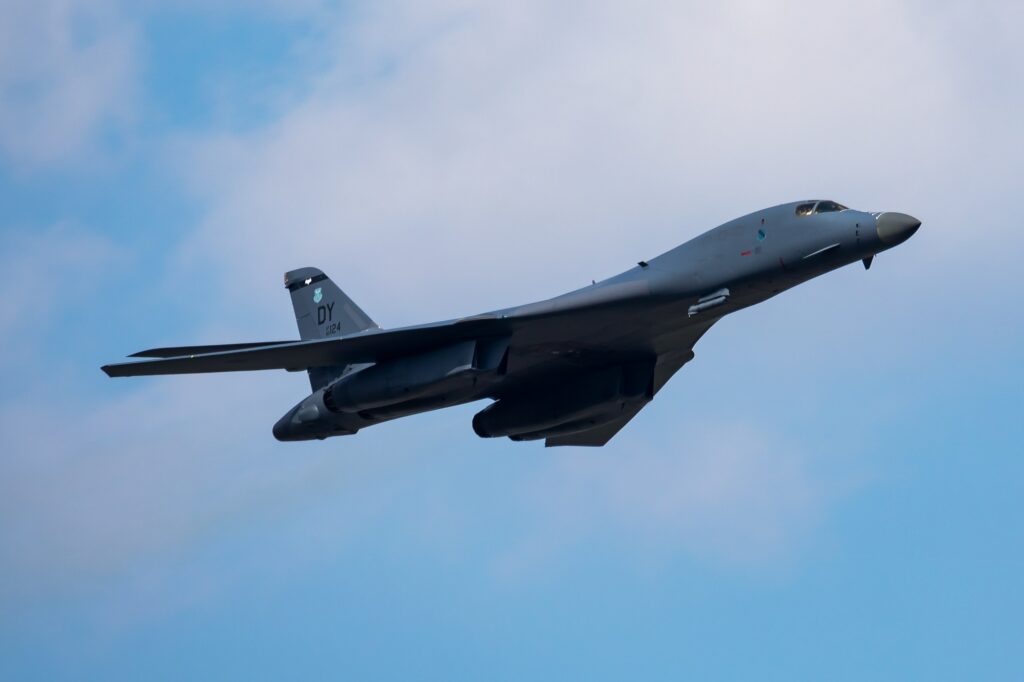
A US Air Force B-1B Lancer that was retired in 2021 has returned to active service after nearly two years sitting dormant in a desert aircraft storage depot, with the service now moving to keep its aging bomber fleet flying into the late 2030s.
The aircraft, tail number 86-0115, recently left Tinker Air Force Base in Oklahoma after maintenance crews had restored it to combat-capable status.
The bomber had been stored at the 309th Aerospace Maintenance and Regeneration Group at Davis-Monthan Air Force Base in Arizona, better known as ‘the boneyard’.
The B-1B returned to Dyess Air Force Base, Texas, where it will serve as the new flagship of the 7th Bomb Wing.
The aircraft has been named Apocalypse II in honor of a World War II B-24J Liberator crew shot down over Burma on December 1, 1942.
The return marks a rare reversal for an aircraft that had already been removed from the active fleet. The Air Force retired 17 B-1Bs in 2021, as it tried to reduce maintenance pressure on the remaining aircraft and prepare for the eventual arrival of the B-21 Raider.
Four of the retired B-1Bs were kept in a condition that allowed them to be restored if needed.
The restoration of tail 86-0115 began in earnest in July 2024, when the aircraft flew from Davis-Monthan to Tinker for depot work. Air Force officials said that the effort required extensive coordination among maintenance teams, engineers and program officials to return the bomber to flying status after years in storage.
The aircraft’s return comes as the air force reassesses how long it will need to keep the B-1B in service. The bomber had been expected to retire in the early 2030s as the B-21 entered the fleet, but recent budget documents show the service now plans to keep at least some B-1Bs flying until 2037.
The B-21 Raider, built by Northrop Grumman, is the US Air Force’s next-generation stealth bomber. The aircraft is designed to carry conventional and nuclear weapons, replace aging B-1B and B-2 bombers over time, and form the backbone of the service’s future long-range strike fleet. The B-21 made its first flight in 2023 and is now in flight testing, but remains years from being deployed in large numbers.
The US Air Force plans to spend hundreds of millions of dollars on B-1 modernization over the next few years as it manages a bomber force under heavy demand.
The B-52 is being upgraded for service into the 2050s, while the small B-2 fleet remains in use and the B-21 is still moving toward operational service.
The B-1B Lancer was built by Rockwell International, whose defense and aerospace business later became part of Boeing. The B-1B first entered service in the 1980s as a supersonic bomber designed for long-range missions.
The aircraft no longer carries nuclear weapons as it once did, but it remains one of the US Air Force’s main conventional strike platforms.