
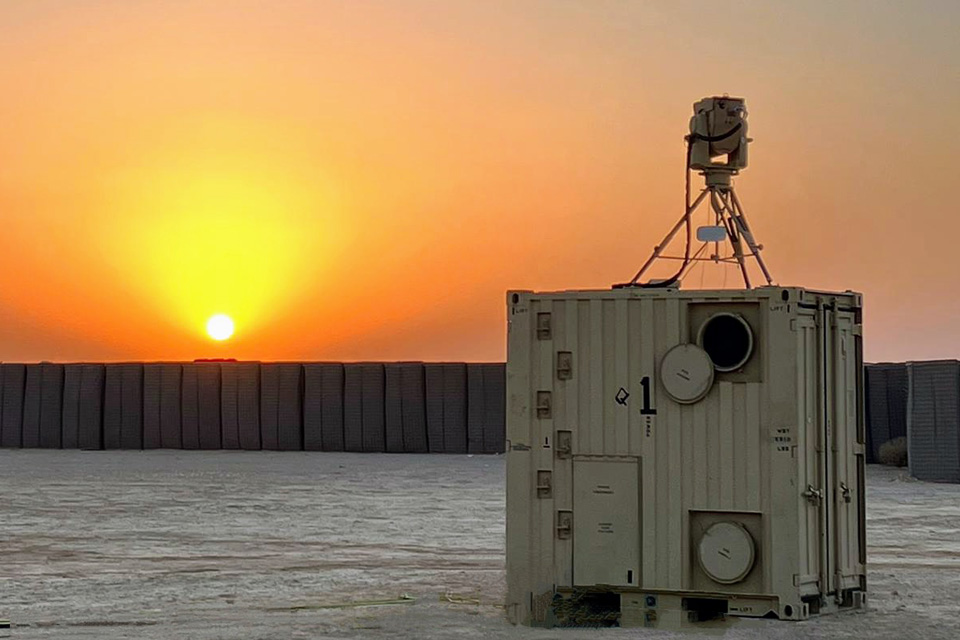
According to congressional aides and US lawmakers, a US Customs and Border Protection (CBP) drone was mistakenly shot down by a US military laser-based counter-drone system near Fort Hancock, Texas, thereby prompting the Federal Aviation Administration (FAA) to expand flight restrictions along the US-Mexico border.
The FAA issued an expanded temporary flight restriction (TFR) around Fort Hancock for “special security reasons,” with the restriction listed as running through June 24, 2026, though such NOTAM timelines can be revised or lifted earlier.
FAA, Pentagon, CBP cite “seemingly threatening” unmanned aircraft
In a joint statement, the FAA, Pentagon, and CBP said that the military used counter-unmanned aircraft authorities to address a “seemingly threatening” unmanned aerial system operating within military airspace, adding the engagement occurred far from populated areas and that no commercial aircraft were in the vicinity.
According to a CBS News report, one US official claimed that a directed-energy weapon, commonly referred to as a laser, was used.
Democratic Representatives Rick Larsen, Bennie Thompson, and André Carson criticized what they described as a lack of coordination between the Pentagon, DHS and the FAA, arguing the incident reflected broader gaps in training and interagency procedures for counter-drone operations.
Senator Tammy Duckworth also called for inspectors general to investigate both the shootdown and earlier airspace disruptions in the region.
Second border laser episode in weeks renews civil aviation concerns
The Fort Hancock event follows a separate airspace disruption around El Paso earlier in February 2026, when the FAA briefly imposed, then lifted, sweeping restrictions. AeroTime previously reviewed what was reported publicly versus what remained unconfirmed about that episode, including claims involving directed-energy counter-drone activity and possible misidentification of a balloon.
US officials have warned that drones are increasingly used along the southern border for surveillance and smuggling.
Similar frictions are increasingly visible in Europe. Lithuania has repeatedly suspended traffic at Vilnius Airport amid recurring balloon incursions from Belarus, with Reuters reporting the airport has been closed more than 10 times since early October 2025 over similar incidents.
In Sweden, on February 26, 2026, a suspected Russian drone was detected during the French aircraft carrier Charles de Gaulle’s port visit to Malmö, with Swedish forces using countermeasures before losing contact with the unmanned aircraft.