
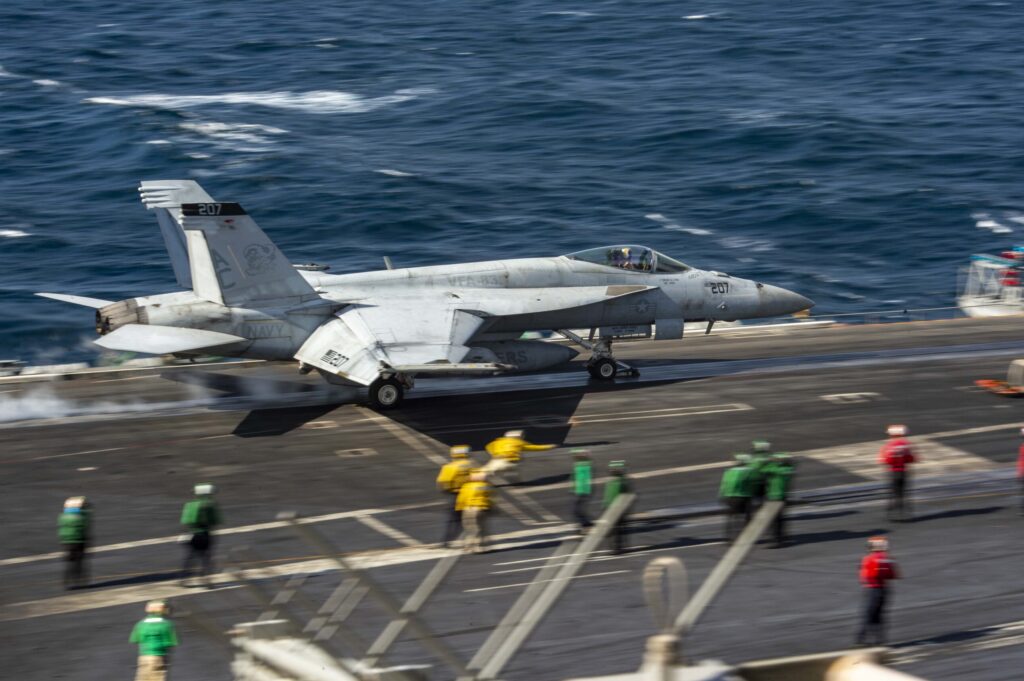
A US Navy F/A-18 Super Hornet disabled an Iranian-flagged oil tanker in the Gulf of Oman on May 6, 2026, after the vessel attempted to violate a US blockade against ships entering or departing Iranian ports, US Central Command said.
CENTCOM said US forces observed the unladen oil tanker M/T Hasna transiting international waters toward an Iranian port. The command said American forces issued multiple warnings and told the vessel it was violating the blockade.
After the crew of the tanker failed to comply, a Navy F/A-18 Super Hornet launched from the aircraft carrier USS Abraham Lincoln (CVN 72) disabled the tanker’s rudder by firing several rounds from the 20mm cannon, CENTCOM said.
The command said Hasna was “no longer transiting to Iran.”
The incident marks a rare use of a carrier-based fighter aircraft to physically disable a commercial shipping vessel. The F/A-18’s M61 cannon is normally associated with air-to-air and air-to-surface engagements. CENTCOM said the aircraft used cannon fire to target the tanker’s rudder rather than sink the vessel.
CENTCOM did not report casualties or say whether US forces boarded the tanker after disabling it. The command also did not say whether the vessel was carrying crew members from Iran or other countries.
The US blockade against vessels attempting to enter or depart Iranian ports remains in effect, CENTCOM said. The command said US forces would continue to act “deliberately and professionally” to ensure compliance.
The tanker incident comes amid heightened tensions in and around the Strait of Hormuz, one of the world’s most important maritime chokepoints. The Associated Press reported that the US fired on the Iranian tanker as President Donald Trump pressured Tehran to accept a deal aimed at ending the US-Iran war and reopening shipping lanes.
The Gulf of Oman sits outside the Strait of Hormuz and connects the Arabian Sea with the narrow waterway leading into the Persian Gulf. Any disruption there can affect commercial shipping, energy markets and military operations across the region.
The F/A-18 Super Hornet remains the US Navy’s primary carrier-based strike fighter.
CENTCOM’s statement did not identify the Super Hornet squadron involved. It also did not provide imagery or video of the engagement.