
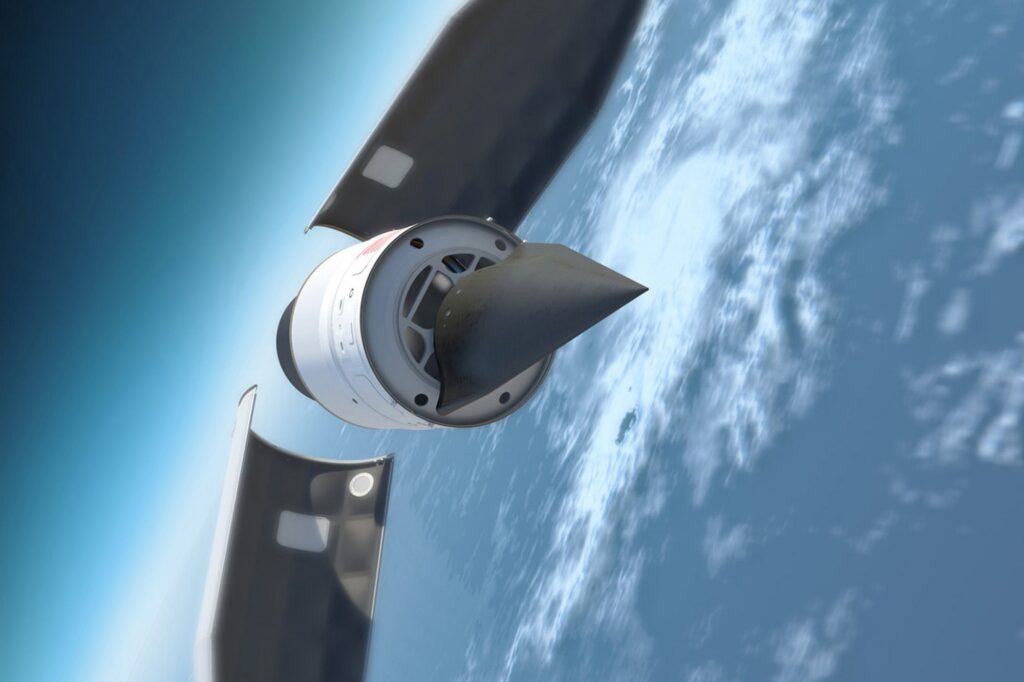
Hypersonic weapons have emerged in the collective consciousness as a significant development in modern warfare, offering unprecedented speed and maneuverability.
From a purely physical point of view, however, hypersonic flight is not new. The first man-made vehicle to reach such speeds was the Bumper sounding rocket, based on the German V-2, which reached 5,150 miles (about 8,300 kilometers) per hour during a test on February 24, 1949. Ballistic missiles have routinely crossed Mach 5 since the 1960s, with intercontinental missiles reaching up to Mach 20 during the re-entry phase of their flight.
Yet for the past decade, and even more so since the outbreak of the invasion of Ukraine by Russia, hypersonic weapons have been regularly featured in headlines as the holy grail of the aerospace and defense industry.
With such a well-established concept, why are hypersonic weapons currently rising to prominence in the military discourse? Here is a comprehensive guide to the history and current significance of hypersonic weapons.
What is a hypersonic weapon?

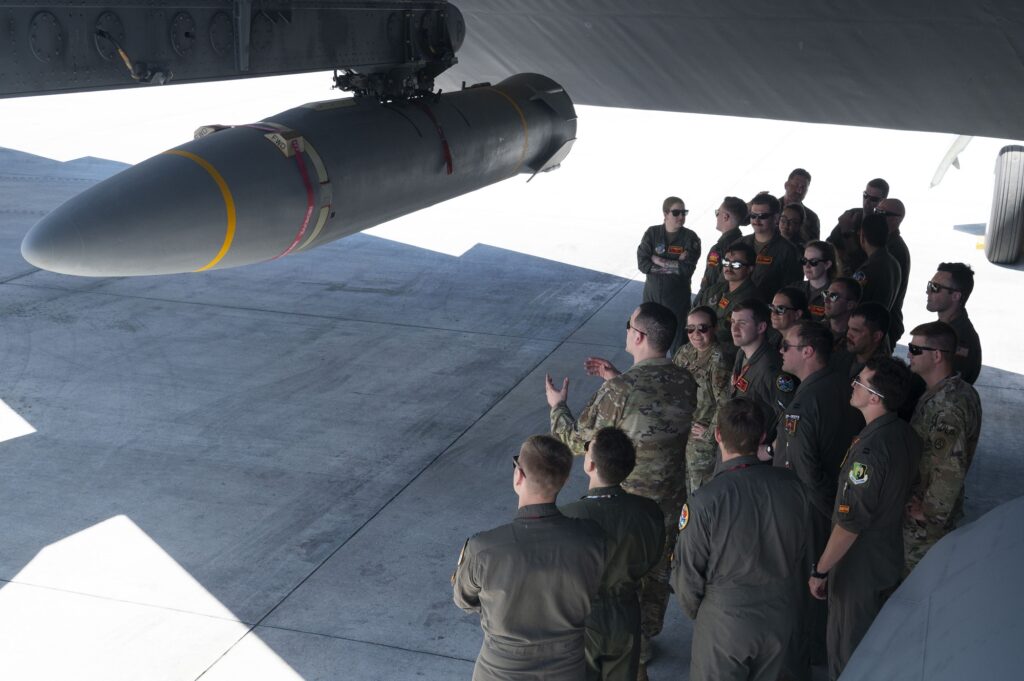
A hypersonic weapon is any weapon system traveling at speeds above Mach 5. At such velocity, these systems can cover long distances rapidly, compressing decision-making time for defenders. But speed also creates challenges. Air friction generates extreme heat, threatening structural integrity, and pushing engineers to develop new materials and thermal-management techniques. This “heat barrier” now sits where the sound barrier once did.
Historically, hypersonic weapons were limited to traditional ballistic missiles flying predictable high-altitude trajectories. Such paths made them detectable early, and, in principle, interceptable, provided defenders had advanced anti-missile systems. Aeroballistic missiles, such as Russia’s Kh-47M2 Kinzhal, follow the same logic. Despite being advertised as “hypersonic,” the Kinzhal’s ballistic nature was exposed when a newly deployed Patriot system reportedly intercepted one over Kyiv in May 2023, demonstrating that raw speed alone does not guarantee invulnerability.
Maneuverable reentry vehicles (MaRV) introduced a degree of unpredictability by allowing limited course adjustments during the terminal phase. China’s DF-21D anti-ship missile is one example. But even MaRVs spend most of their flight on a ballistic path, giving defenders early warning.
The new hypersonic era
So why are hypersonic weapons currently in the spotlight? In recent years, hypersonic weapons have taken center stage in the realm of modern warfare technology, drawing significant attention for their supposed game-changing capabilities.
Two types of hypersonic weapons are currently under development: hypersonic cruise missiles (HCM) and hypersonic gliding vehicles (HGV).
Hypersonic cruise missiles are a faster version of existing cruise missile designs, using an airbreathing scramjet to reach hypersonic speeds in the atmosphere.
Hypersonic gliding vehicles use a boost-glide launch system: first, a rocket propels the weapon to the edge of space before the payload glides back into the atmosphere to its target at hypersonic speed. The glider uses a non-ballistic trajectory known as a skip reentry or a ballistic coast. During this maneuver, the vehicle enters and leaves the high atmosphere once or several times, extending the range and allowing for a lower flight altitude than a ballistic trajectory, thus limiting detection and path prediction.

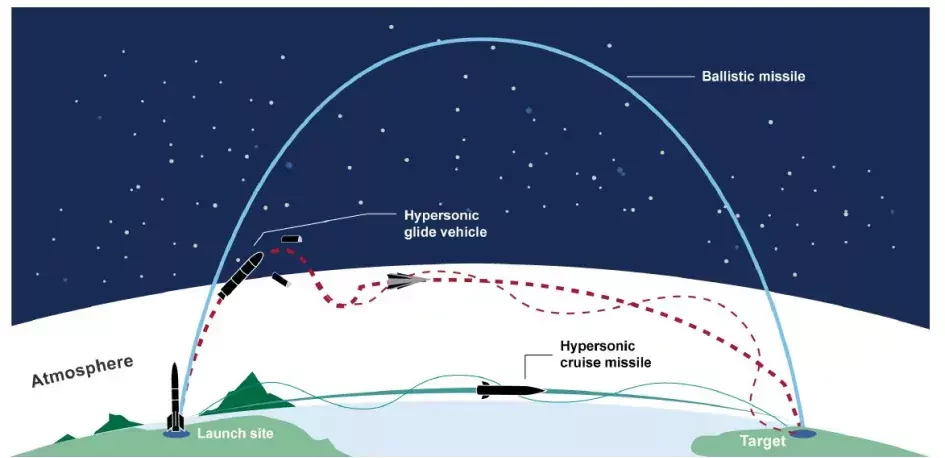
These two types of weapons are designed to operate within a flight domain strategically positioned between endo-atmospheric and exo-atmospheric altitude, a sweet spot where existing defense systems scarcely operate.
Indeed, contemporary defense systems are designed to function within two primary altitude ranges: below 30 km (SM2, PAC3, Aster, S-400) and above 50 km, covering both endo-atmospheric and exo-atmospheric regions (ThAAD, SM3, Arrow 3, A-135).
These new hypersonic weapons also remain under the radar horizon until the final phase of their flight by maintaining a more horizontal trajectory, leaving limited time for terminal air defenses to react. By exploiting this gap and maneuvering late in the flight, they shorten warning times and complicate interception.
Do hypersonic weapons already exist?
Hypersonic weapons have garnered significant attention since Russia’s use of Kinzhal missiles during the conflict in Ukraine. However, the origins of this renewed interest in hypersonic capabilities can be traced back to a time well before the war.
Russia
Russia was the first country to claim to have fielded hypersonic weapons, an announcement that has garnered significant attention from the international defense community. In a lengthy parliamentary address on March 1, 2018, Russian President Vladimir Putin unveiled a range of new weapons aimed at countering NATO’s anti-missile systems and strengthening Russia’s nuclear deterrent capabilities.
The following year, Russia introduced the Avangard, a hypersonic glide vehicle mounted on modified SS-19 ICBMs, and later added the 3M22 Zircon, a scramjet-powered cruise missile said to reach roughly Mach 9. The Zircon entered service aboard the Admiral Gorshkov frigate in 2023 and was allegedly used in a strike on Kyiv in February 2024.

On August 14, 2023, Alexei Rakhmanov, chief executive officer of Russia’s United Shipbuilding Corporation, revealed that the upcoming Yasen M-class nuclear submarines would be equipped with Zircon hypersonic missiles.
Moscow also sought to frame its November 2024 debut of the “Oreshnik” IRBM in hypersonic terms: the missile released six inert warheads over Dnipro in the first wartime use of a MIRV-equipped ballistic missile, which Putin hailed as an “uninterceptable” hypersonic weapon. Since IRBMs are inherently hypersonic, the label underscored how Russia increasingly uses the hypersonic narrative to amplify the perceived novelty or inevitability of its strategic systems.
India
India also joined the hypersonic race by partnering with Russia in 2008 to develop the BrahMos-II, a hypersonic variant of the existing BrahMos supersonic cruise missile based on the Russian P-800 Oniks. However, no information has transpired on the program since the beginning of the invasion of Ukraine.
New Delhi is meanwhile pursuing indigenous systems under Project Vishnu. In November 2024, it successfully flight-tested the ET-LDHCM, a long-range hypersonic cruise missile that covered roughly 1,400 kilometers and executed high-speed maneuvers. India is also advancing the Shaurya family of quasi-ballistic missiles.
China
China’s program is more opaque but no less active. In 2019, the DF-17, which combines a ballistic missile with a hypersonic glide vehicle, the DF-ZF, appeared for the first time in a parade with China’s People’s Liberation Army Rocket Force. Beijing has also begun fielding the YJ-21 anti-ship hypersonic missile and, in 2025, unveiled the CJ-1000, a long-range scramjet missile believed capable of reaching around Mach 6 over thousands of kilometers.
In May 2023, the Chinese authorities made public the results of a simulated wargame in which they claim to have destroyed the US Navy nuclear-powered aircraft carrier USS Gerald R. Ford using 24 hypersonic anti-ship ballistic missiles. The same month, China also announced the successful completion of the JF-22 wind tunnel. The wind tunnel located in the Huairou District in northern Beijing reportedly can simulate speeds of up to 10 kilometers per second, or 30 times the speed of sound, making it the fastest in the world, according to China’s Institute of Mechanics, its operator.
United States
The United States, despite pioneering high-speed research during the Cold War, struggled with setbacks earlier in the 2020s. Two programs have already been canceled. In February 2020, the Hypersonic Conventional Strike Weapon (HCSW) was canceled due to budget constraints.
By mid-decade, however, its programs had gained momentum. The US Army and Navy jointly tested their Common Hypersonic Glide Body in 2024, validating both the Long-Range Hypersonic Weapon (Dark Eagle) and the Navy’s Conventional Prompt Strike system. The Air Force revived the AGM-183A ARRW program in 2025, which had been shelved in 2023 after the boost-glide weapon project undertaken by Lockheed Martin faced multiple setbacks and failed tests. DARPA also accelerated the development of the scramjet-powered Hypersonic Attack Cruise Missile. Overall, US hypersonic funding surged to nearly $4 billion in the FY2026 request.
Other programs
Allies in the Indo-Pacific and Europe are developing their own capabilities. Under AUKUS, Australia, the UK, and the US agreed to conduct joint hypersonic test flights.
Japan is also moving to develop hypersonic weapons. On July 24, 2022, the Japan Aerospace Exploration Agency (JAXA) conducted the first flight test of an indigenous scramjet engine, which reached hypersonic speeds during its descent.
In June 2023, Mitsubishi Heavy Industries received two contracts: one for hypersonic weapons research and another to develop the Hyper Velocity Gliding Projectile (HVGP), slated for deployment in 2026.
Finally, France is also developing both types of hypersonic missiles. It joined the hypersonic club with the 2023 V-MaX demonstrator and is developing the ASN4G nuclear cruise missile to arm the Rafale F5 in the 2030s.
Myth and reality

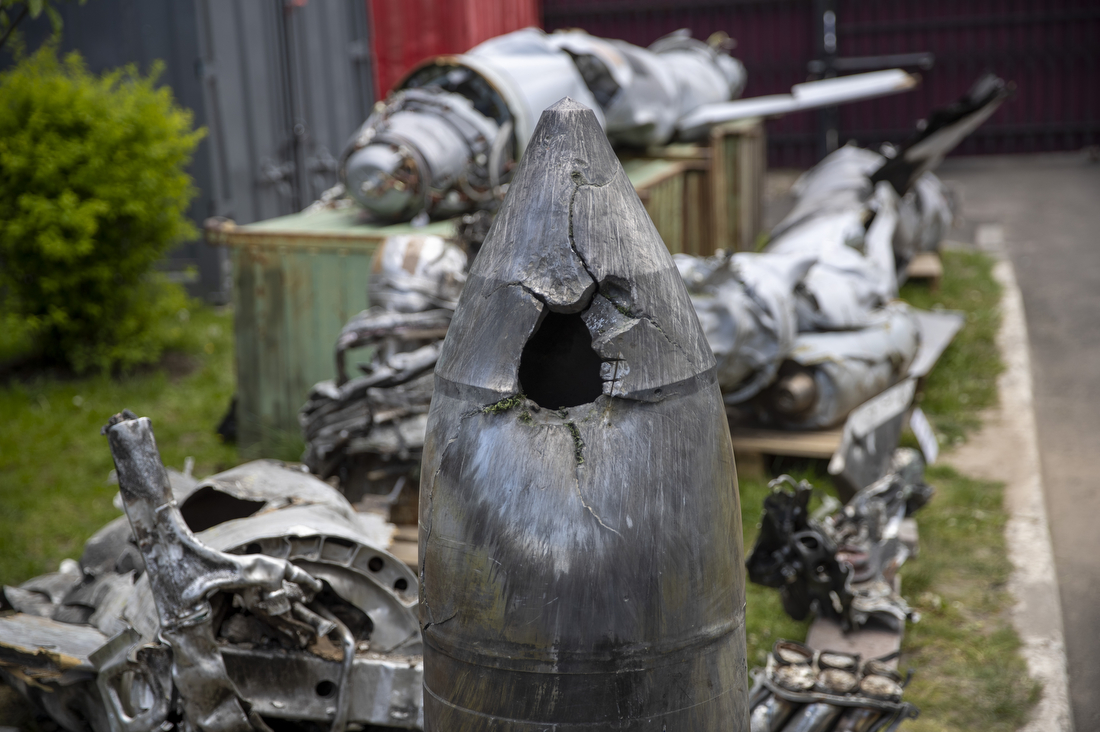
(Credit: Kyiv City State Administration)
Hypersonic weapons are often promoted as unstoppable. Their speed and maneuverability do pose serious challenges, compressing reaction time, and requiring new detection and interception methods. But recent conflicts have shown they are not invulnerable. Ukraine’s interception of a Kinzhal demonstrated that with the right sensors and interceptors, some hypersonic threats can be countered.
Hypersonics also face inherent limitations: extreme thermal loads, plasma-induced communications, blackouts, and energy trade-offs between maneuverability and range. As with past technological leaps, the offense–defense dynamic is already evolving. Space-based sensors, over-the-horizon radars, GPS spoofers, faster interceptors, directed-energy systems, and AI-enhanced tracking models are being developed to close the gap.
Strategically, these weapons raise questions of stability. Because many hypersonic systems can carry either nuclear or conventional warheads, states may struggle to interpret a launch in real time. This ambiguity increases the risk of miscalculation, particularly as warning times shrink. Russia’s use of the Oreshnik IRBM underscored this risk, and Moscow took the careful step of notifying the US in advance to avoid triggering a nuclear alert.
The return of saber-rattling
Warfare has witnessed paradigm shifts in weapon technology; each era being characterized by a dominant ‘Wunderwaffe’ (or wonder weapon). And among all dimensions of modern conflicts, aerospace fostered much hope among leaders seeking a weapon so unilaterally powerful that it would deter any aggression.
As World War 2 was coming to an end, jet fighters revolutionized aerial combat and influenced subsequent generations of combat aircraft. Then, in the late stages of the Cold War, passive stealth aircraft such as the F-117 Nighthawk and the B-2 Spirit emerged as game-changing technology.
The landscape changed temporarily with the onset of counter-insurgency wars in the 1990s and 2000s, during which superpowers faced asymmetric threats, often requiring low-tech solutions to address the challenges posed by guerrilla warfare and terrorism.
However, the current geopolitical climate, marked by the resurgence of great power competition, has ushered in a new era in which hypersonic weapons are emerging as the novelty weapons of high-intensity conflict.
As history has shown, for every ‘unstoppable’ sword, a shield eventually emerges. The actual impact of hypersonic weapons will depend on how wisely or recklessly nations integrate them into their strategies, and whether diplomatic efforts can channel this hypersonic competition into stabilizing frameworks rather than a destabilizing free-for-all.