
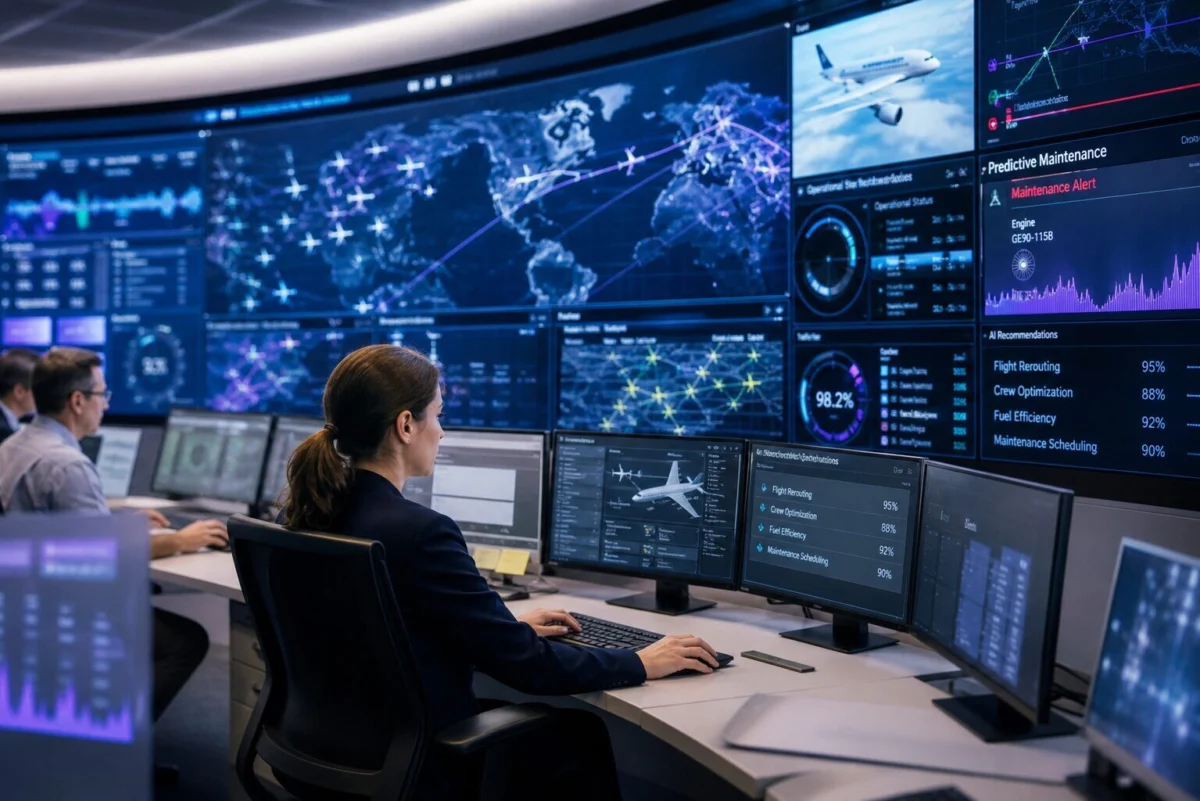
Airline operations are actively being reshaped by Artificial Intelligence (AI), or are they? Organizations are deploying AI to improve a number of services and their overall operations; but rather than replacing roles outright, AI is automating repetitive tasks, while shifting aviation personnel toward higher value work.
AI in airline operations is changing which skills airlines need first: operational data literacy, systems thinking, and AI fluency. When recruiting aviation talent, the opportunity lies in building teams that can work alongside AI, not around it.
Where airlines are using AI first
Operational efficiency is the main driver

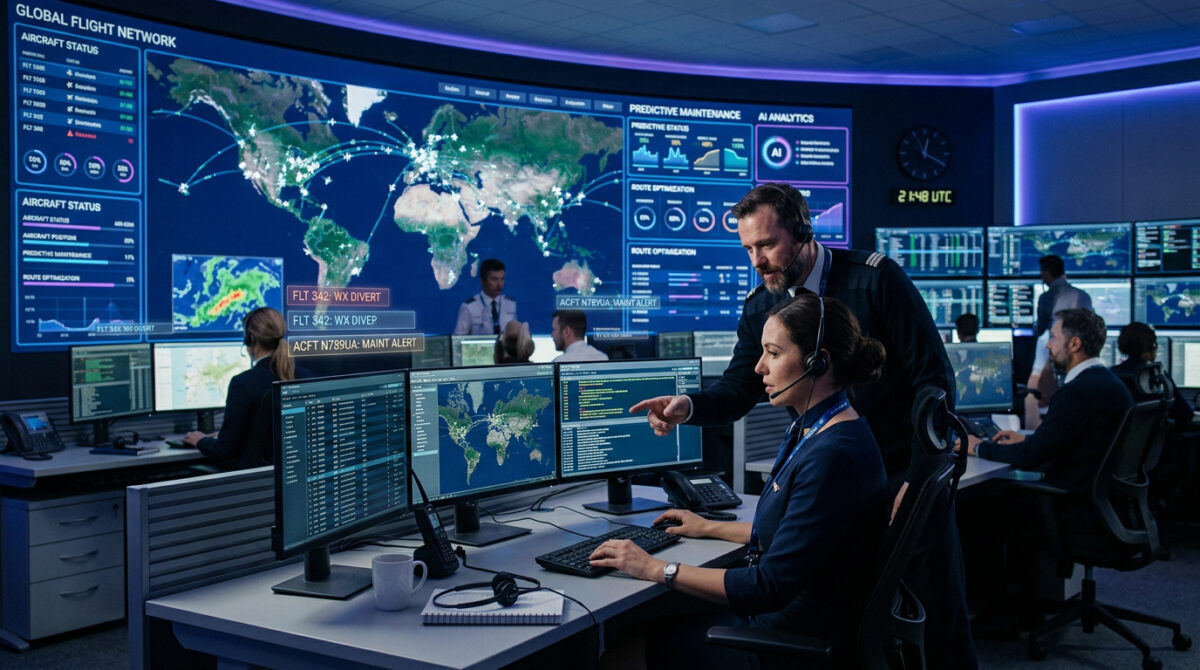
In its ever-growing influence on the aviation industry, AI has made noteworthy changes to airline operations already. In fact, airlines are adopting AI where it can improve speed, consistency, and decision quality. Consequently, some carriers are already training AI systems for route optimization, predictive maintenance schedules, sales efficiency, revenue maximization, and forecasting, while also using chatbots to handle routine customer queries. IATA’s 2026 ground operations conference agenda also frames AI as a practical tool for safer, more efficient, and more resilient ground handling.
Importantly, this has overall positively impacted operational efficiency in reducing block times and increasing turnaround performance. In other instances, applications of AI have boosted maintenance reliability, schedule integrity, baggage flows, and disruption recovery. However, it is crucial to note that AI is being adopted first where those gains are easiest to measure and easiest to operationalize.
The earliest AI use cases are task-based
The first wave of AI in airline operations is centered on repetitive, data heavy, and rules based tasks. That includes document lookup, route planning support, scheduling logic, maintenance forecasting, passenger messaging, baggage coordination, cargo processing, and basic decision support in control center environments.
In other words, job positions in and of themselves have not been replaced totally due to the introduction of AI. Rather, the technology is helping aviation companies process more information faster and with fewer manual handoffs. For the short and medium to long-term, AI is more likely to transform and improve jobs instead of outright eliminating them. Hitherto, a key feature of the technology is that it automates tasks, not entire occupations.
As a consequence, aviation personnel may grow to focus more on higher value activities requiring judgment, creativity, problem-solving, and human interaction. Studies specifically on the use of AI in airline operations seem to back this. Likewise, a 2026 analysis shows that generative AI is augmenting some jobs while automating others. Since the start of AI adoption in the aviation industry, job postings for highly repetitive, structured roles have fallen by about 13%, while demand for analytical, creative, and technical roles that can work alongside AI has grown by roughly 20%.
Jobs changing first in the Aviation Industry
Planning, scheduling, and operations control

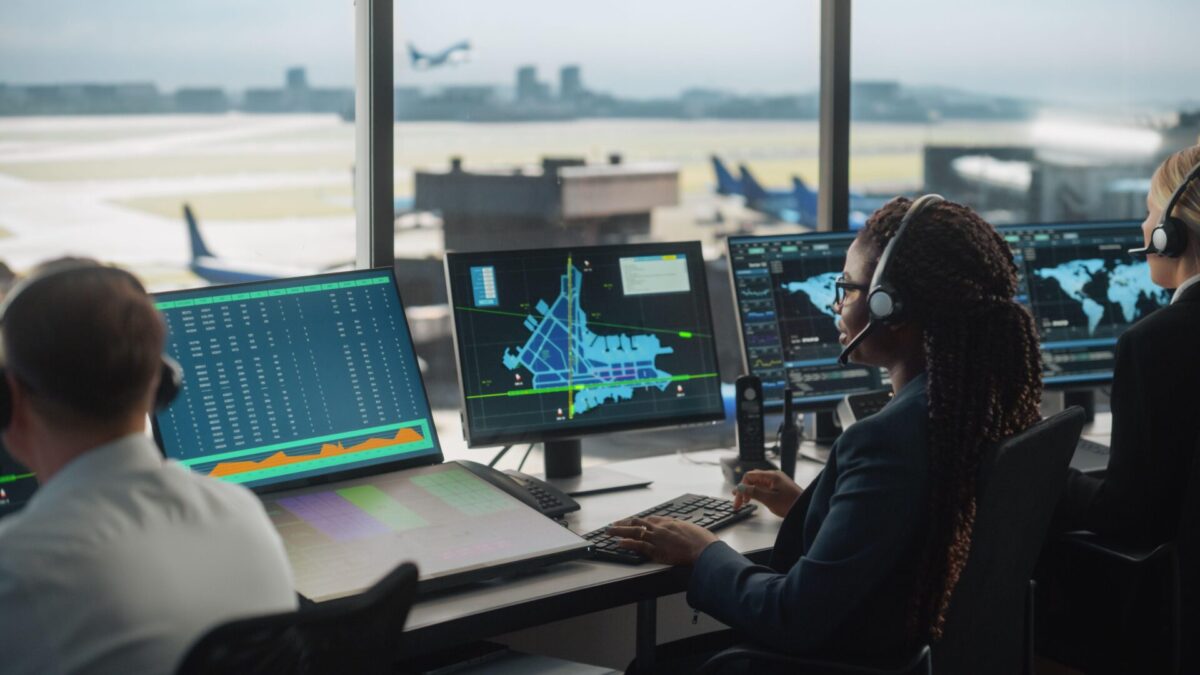
The first jobs to change are the ones closest to planning and coordination. Airline planners, schedulers, and operations teams are already seeing AI support in route optimization, irregular operations recovery, and forecasting. These are highly data driven roles, and AI is well suited to process scenario options faster than manual workflows can.
What changes first is not necessarily the job title, but aviation personnel’s daily workflow and the cognitive inputs. While automation is reducing the need for some repetitive tasks, particularly in areas such as air traffic control, maintenance diagnostics, and routine operational functions; it will simultaneously create demand for new, technology and leadership focused roles.
Maintenance support and technical coordination

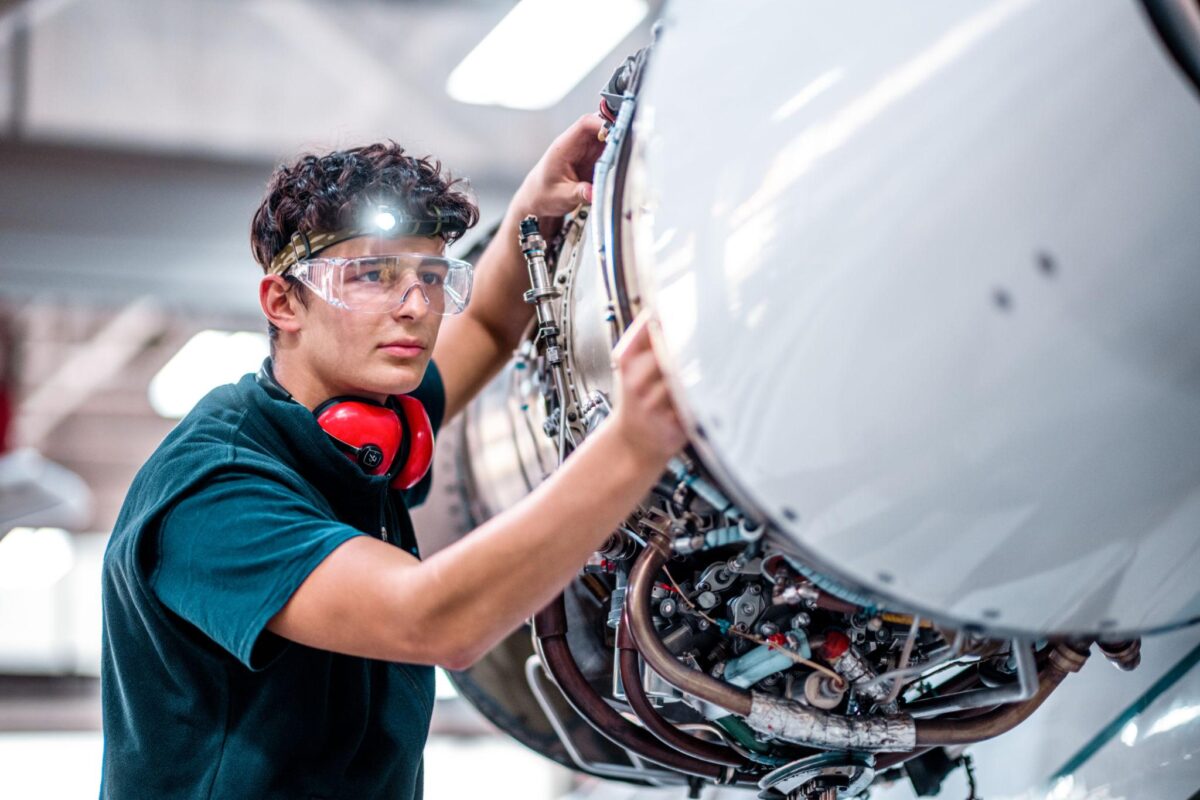
Maintenance support is another early change area within airline operations. In fact, AI is being used for predictive maintenance schedules, work-order support, and planning logic around aircraft availability. In practical terms, fewer purely manual coordination tasks and more reliance on data interpretation, technical judgement, and oversight.
Furthermore, the industry can anticipate growth in positions such as AI and machine learning engineers, data analysts, cybersecurity specialists, autonomous systems managers, drone operators, urban air mobility specialists, electric propulsion engineers, and sustainability managers. Again, crucially, maintenance teams are not envisaging complete elimination, far from it. But they will witness, and probably introduce themselves, AI supporting them more and more. In the end, AI in airline operations should raise the value of people who can work alongside digital systems, spot errors, and keep aircraft on schedule with fewer disruptions.
Customer facing and back-office functions
Airlines are also using AI in customer service and back office functions, especially where work is repetitive and structured. Chatbots can answer routine questions, while automated systems can reduce the burden on human agents for standard issues.
A case in point is Southwest Airlines. In their quest for more proactive IT support across tens of thousands of devices, Southwest uses digital employee experience (DEX) software, automation, and AI to detect and resolve technical issues before employees notice them. In 2025 alone, the airline executed more than 2 billion automated “remote actions”, saving an estimated 23,000 work hours.
What this means for aviation recruitment
The skills airlines will need first
Hiring is shifting from pure headcount to skill mix. The first skills to rise in value are operational data literacy, systems thinking, scheduling competence, maintenance planning support, and familiarity with AI-enabled workflows.
Right now, technical skills such as data science, AI applications, cybersecurity, automation management, and digital systems knowledge are becoming increasingly important. It is essential to keep in mind the human element though; soft skills, including adaptability, critical thinking, problem solving, communication, and continuous learning, will remain essential.
For airlines, aviation talent increasingly needs to be both operationally credible and digitally adaptive. Job postings should not see a uniform decline across the aviation industry due to AI, they are instead likely to shift toward more technical, hybrid, and digitally fluent roles. Partnering up with recruitment experts that understand the next generation of aviation talent and the operational realities behind the roles can become an integral part of an airline’s workforce strategy.
Looking ahead: Aviation personnel recruitment
The strategic takeaway for airlines
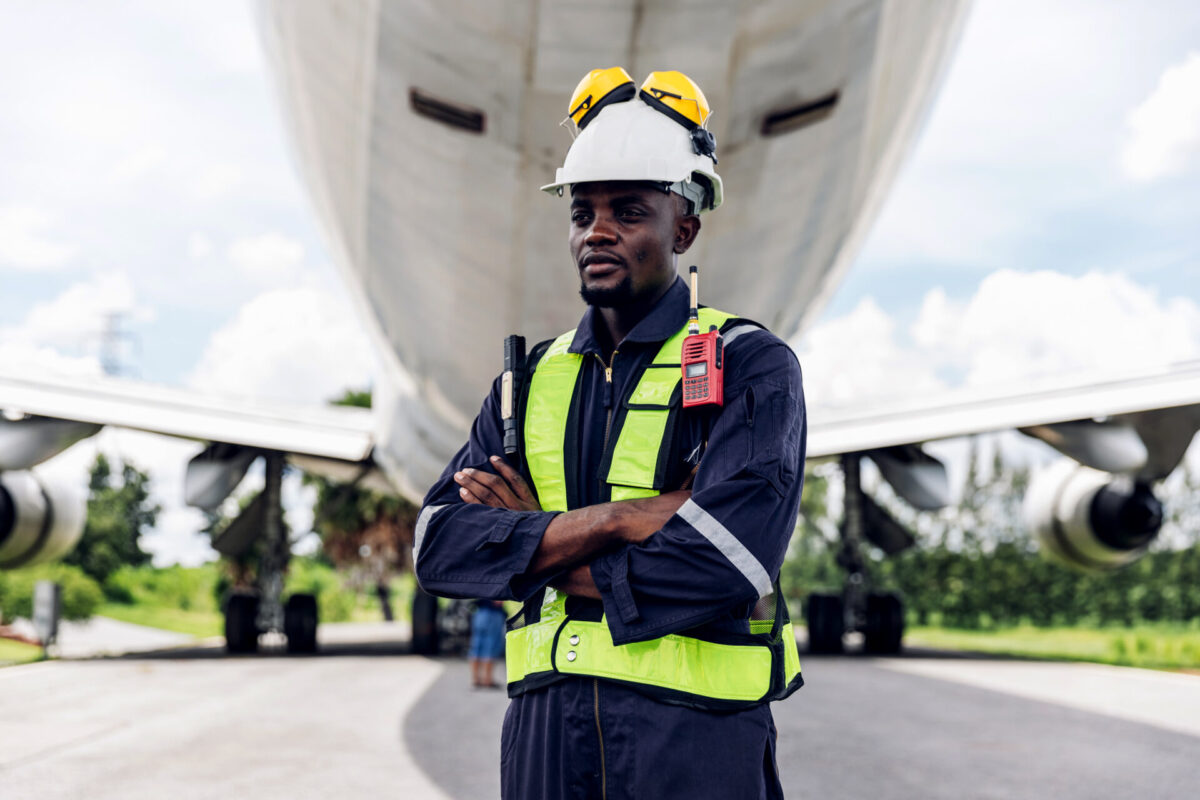
To prepare the workforce, aviation recruitment must evolve. Furthermore, as airlines increase AI use in planning, scheduling, maintenance support, and operational coordination, they need recruiters who understand the changing skills profile, not just the job title.
Aviation organizations should prioritize recruitment strategies, workforce planning, and role mapping. As AI continues to improve operational efficiency, human-AI collaboration is expected to become the dominant model, with professionals increasingly supervising, interpreting, and validating AI-generated insights rather than performing repetitive manual tasks.
The role of expert recruiters in aviation is that of identifying candidates who can work in AI-aware environments, support data-driven airline processes, and bring the mix of aviation knowledge and adaptability that modern operators need. In a market where technology is changing how work gets done, that kind of recruitment insight becomes a competitive advantage.
The main takeaway is that the talent market is moving toward people who can work with AI, not around it. Consequently, aviation companies that adapt their recruitment strategy early will be better positioned to reduce operational friction and strengthen resilience. Conclusively, AI is not replacing people anytime soon. Aviation organizations should treat AI as a workforce redesign issue as much as a technology upgrade. That is where the next hiring advantage will come from.