
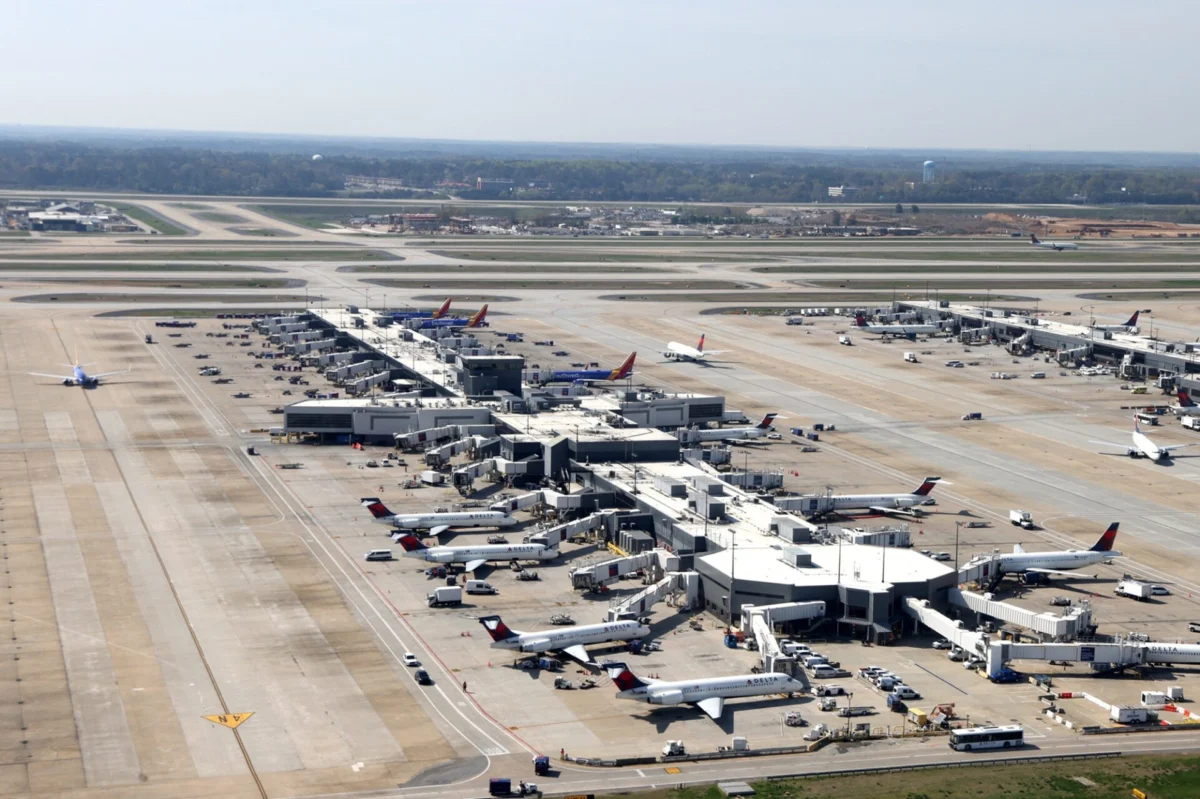
The Airports Council International (ACI) latest Annual World Airport Traffic report claims that there has been a “marked slowdown from 2025’s pace”.
On September 23, 2026, ACI said that global passenger traffic reached approximately 4.7 billion in the first six months of 2026, an increase of just 0.6% on the same period last year.
Against the backdrop of the Middle East conflict involving the US, Iran and Israel it is perhaps unsurprising that the region saw the sharpest decline, with traffic down 21%.
While North America has remained largely flat, growth continued across Africa, Europe, Latin America and the Caribbean, and Asia-Pacific, according to the report.


“Yet for all the near-term volatility, the report’s underlying message is one of confidence: the long-run drivers of aviation demand, i.e. rising populations, growing incomes, expanding connectivity and an enduring appetite for mobility remain firmly intact,” ACI stated.
Global airport traffic in 2025
Based off data from 2,817 commercial airports across more than 185 countries and territories, ACI said there was a record 9.8 billion passengers globally in 2025.
International travel drove the growth, with passenger traffic up 6.1%, comfortably outpacing domestic growth of 1.7%.
Africa scored the highest with a 9.0% rise in traffic, followed by the Middle East (6.5%), Asia-Pacific (5.1%), Latin America and the Caribbean (4.5%), and Europe (4.2%).
North America was the outlier with traffic falling 0.7% amid “softer domestic demand”.
Air cargo also reached a record 131.2 million tons over the year, while aircraft movements climbed to 103.1 million.
“The 2025 results confirm what this industry has shown year after year: long-term demand for air travel remains strong, and more capacity will be needed,” Justin Erbacci, ACI World’s Director General, said. “Meeting that demand means expanding capacity while getting far more out of the infrastructure we already have. It also means advocating for regulation that enables investment rather than blocking it and never losing sight of the fact that airports are strategic assets for their communities.”
To access the full report visit the Airports Council International website.