
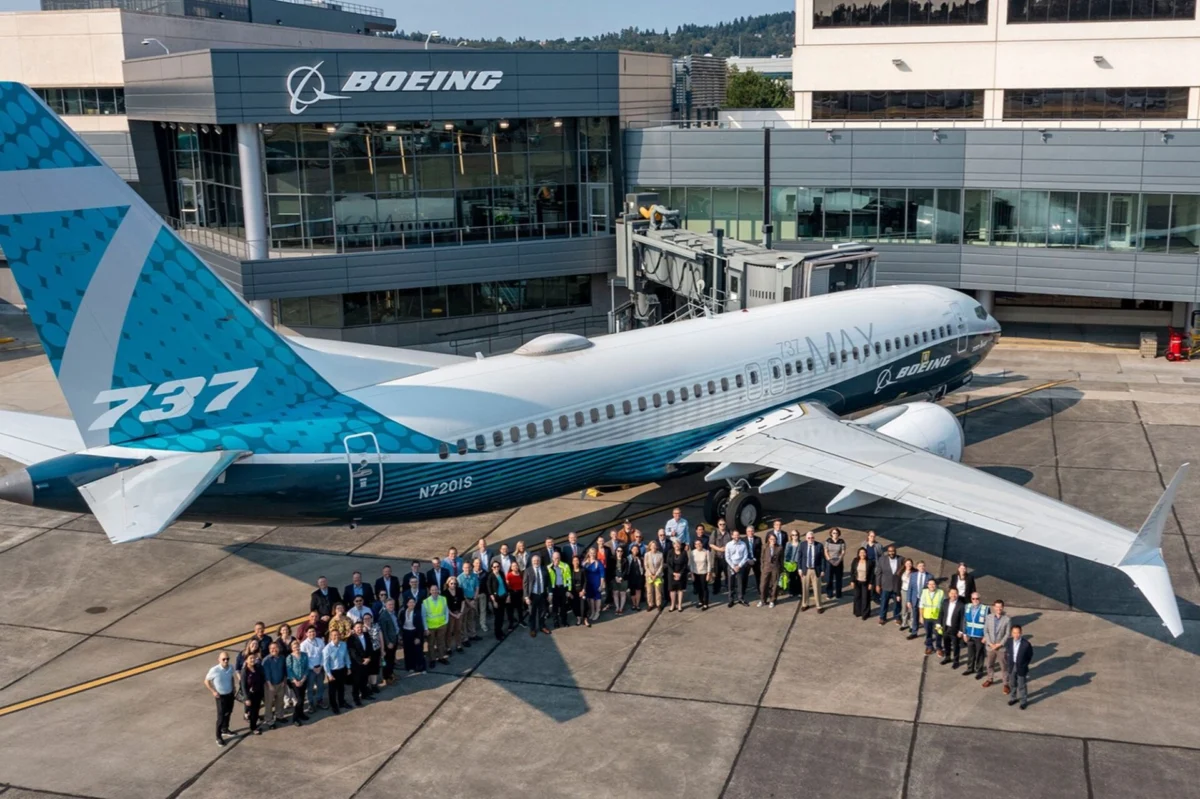
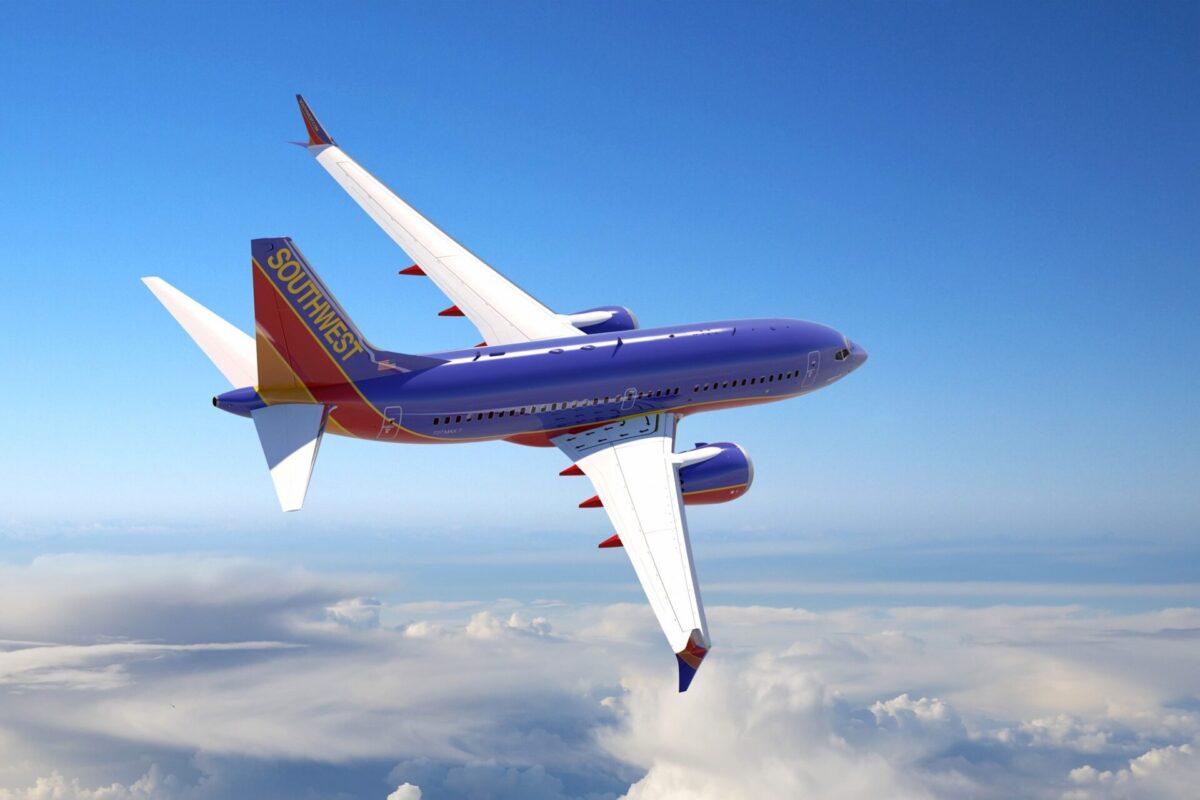
Just over 13 years ago, Boeing and Southwest Airlines came together to launch the 737 MAX 7, the third and smallest member of the 737 MAX family.
In May 2013, Boeing was riding high and, alongside its launch customer Southwest, predicted that the Dallas carrier would receive its first 737-7 delivery in 2019.
In the following years, the dynamics shifted significantly for Boeing with two fatal Boeing 737 MAX 8 crashes between 2018 and 2019.
The worldwide Boeing MAX fleet was grounded, and confidence in the company’s manufacturing and quality controls diminished.
In November 2020, the Federal Aviation Administration (FAA) finally gave Boeing ‘s 737 MAX the go-ahead to fly commercially again, but the impact on the 737-7 development had been significant.

Plans for the 737-7’s entry into service were rescheduled and even when Boeing thought they were nearly there, further complications arose during the certification process.
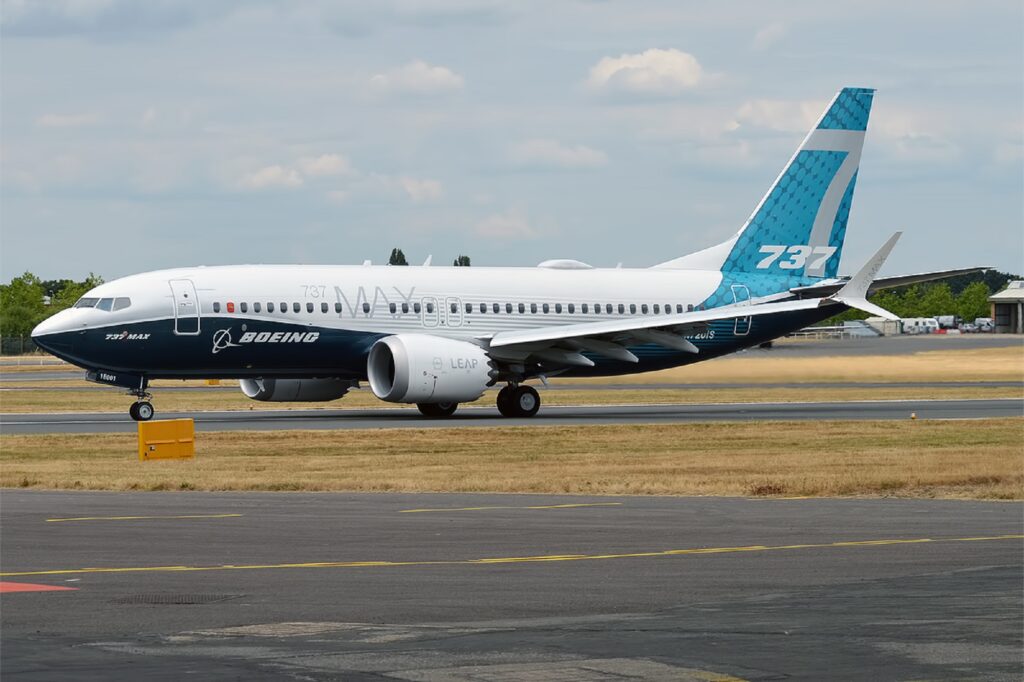
However, on August 3, 2026, Boeing finally announced the news it had been waiting to deliver for several years, confirming that the MAX 7 had secured type certification from the FAA.
“This important certification validates the rigor of our airplane’s design and recognizes the determination and resilience of our 737 MAX development team,” Stephanie Pope, President and CEO of Boeing Commercial Airplanes, said.
Since the test program began in 2018, the 737-7 has completed more than 1,000 hours of flight and ground evaluation and conducted extensive system safety analysis and human factors reviews.
During the program Boeing also updated the engine anti-ice system to address a potential condition that was discovered during flight testing.
The Federal Aviation Administration has certified the 737-7!
— Boeing Airplanes (@BoeingAirplanes) August 3, 2026
This milestone for the longest-range 737 MAX validates the rigor of the design and testing and recognizes #TeamBoeing's determination and resilience.
Certification includes more than 1,000 hours of flight and ground… pic.twitter.com/0S45IjqL3u
Boeing said that the regulatory approval “caps a multi-year certification effort” in which the company “demonstrated through comprehensive testing and analysis that the airplane meets all commercial aviation regulations”.
“Our team of dedicated engineers and test experts worked through challenges, an extended pandemic, and the transition to new certification processes,” Pope added. “Through it all, our team stayed focused on completing all requirements and delivering a safe and more capable airplane to our customers.”
The FAA on 737-7 certification process
The FAA issued Boeing an amended type certificate for the new 737-7 and a Production Limitation Record (PLR).
In a statement explaining the aircraft’s certification process, the FAA said the approval followed almost a “decade of extensive review”.
The FAA said its work involved resolving complex technical issues and completing a thorough review of the aircraft’s design and supporting safety analyses.
“Throughout the process, the FAA performed or directly reviewed significant work involving flight controls, system safety assessments, human factors, flightcrew alerting, and other novel, complex, or safety-critical areas, while also requiring testing, design changes, and additional analysis where necessary,” the FAA stated.
The FAA required Boeing to “incorporate key improvements” that address requirements in the Aircraft Certification, Safety, and Accountability Act and recommendations from the National Transportation Safety Board (NTSB).

These included updates to the flight-control software, flightcrew alerting system, and a redesigned engine anti-ice system.
“These changes provide pilots with clearer information and warnings and prevent the engine inlet from overheating and potentially weakening the surrounding structure,” the FAA said.
FAA safety inspectors will remain present at Boeing sites across the US to oversee the manufacturing process and assess the planemaker’s Safety Management System (SMS) and safety culture.
“Our Boeing team held regular and detailed discussions with the FAA to ensure Boeing understood the requirements and provided transparency of our progress,” said Mike Sinnett, Senior Vice President of Product Strategy, Product Development and Development Programs. “With this certification program, Boeing has developed a clearer understanding of the latest regulatory requirements, which is expected to accelerate future airplane development with a renewed emphasis on human factors, safety and quality.”
Focus moves to Boeing’s 737-7 airline customers
Focus will now begin to move to Boeing’s airline customers that ordered 737-7 aircraft, namely Southwest Airlines, which has purchased around 250 jets.
In response to news of the latest certification, Southwest said it was “pleased with the FAA’s certification of the Boeing 737-7 aircraft, and we look forward to the plane entering service in the coming months.”
“Certification is an important step toward continuing to modernize our all-Boeing 737 fleet with upgraded interiors and more fuel-efficient aircraft to fit our customers’ preferences and demand patterns,” Southwest Airlines added.
According to ch-aviation data, there are around 28 assembled 737-7s destined for Southwest currently in storage. The US carrier plans to introduce the aircraft in 2027.
In the most up to date ch-aviation data available, China’s Ruili Airlines has ordered two 737-7s, as had Ukraine’s SkyUp Airlines.
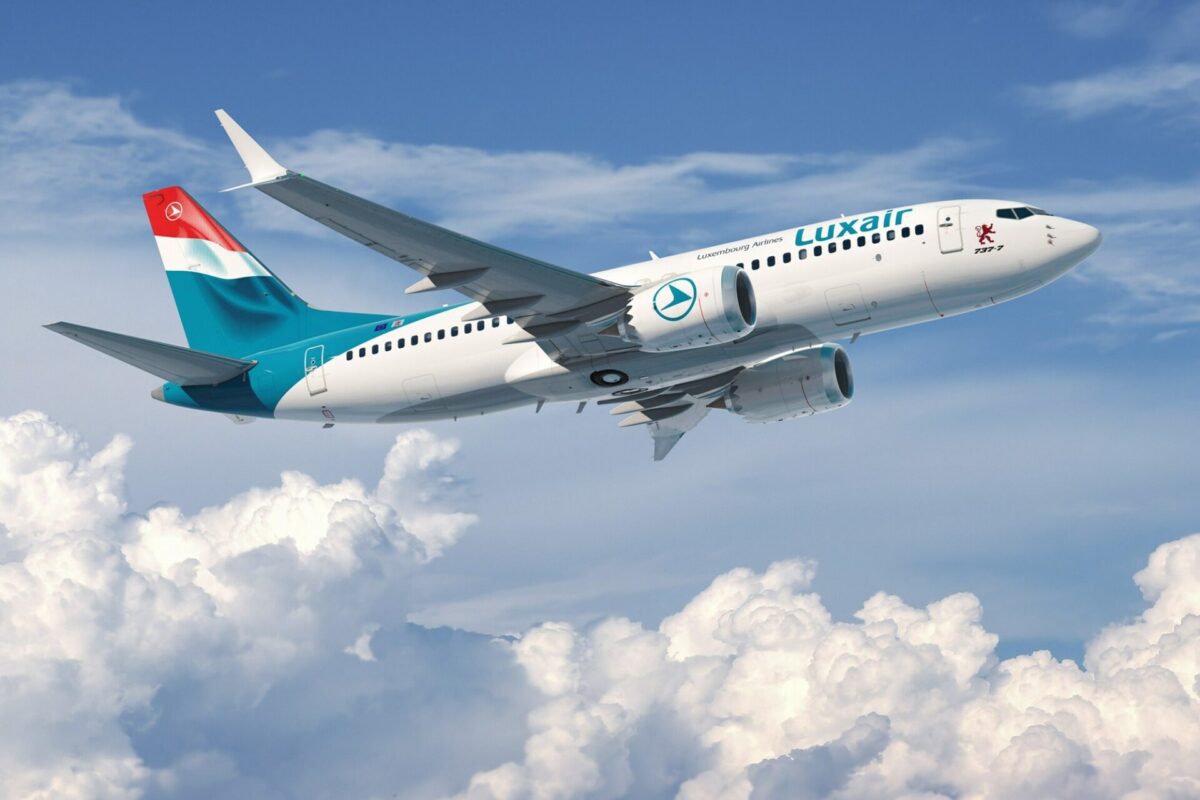
There in an order on the database for a single 737-7 from Indonesia’s Jhonlin Air Transport. Luxair, the European launch customer, also ordered four 737-7s at Paris Air Show 2023.
WestJet canceled its orders for Boeing’s smallest MAX jet as did the now defunct Canada Jetlines. Turkmenistan Airlines also canceled an order for three 737-7s.
With MAX 7 type certification now secure it remains to be seen whether more customers will be willing to purchase the aircraft.