
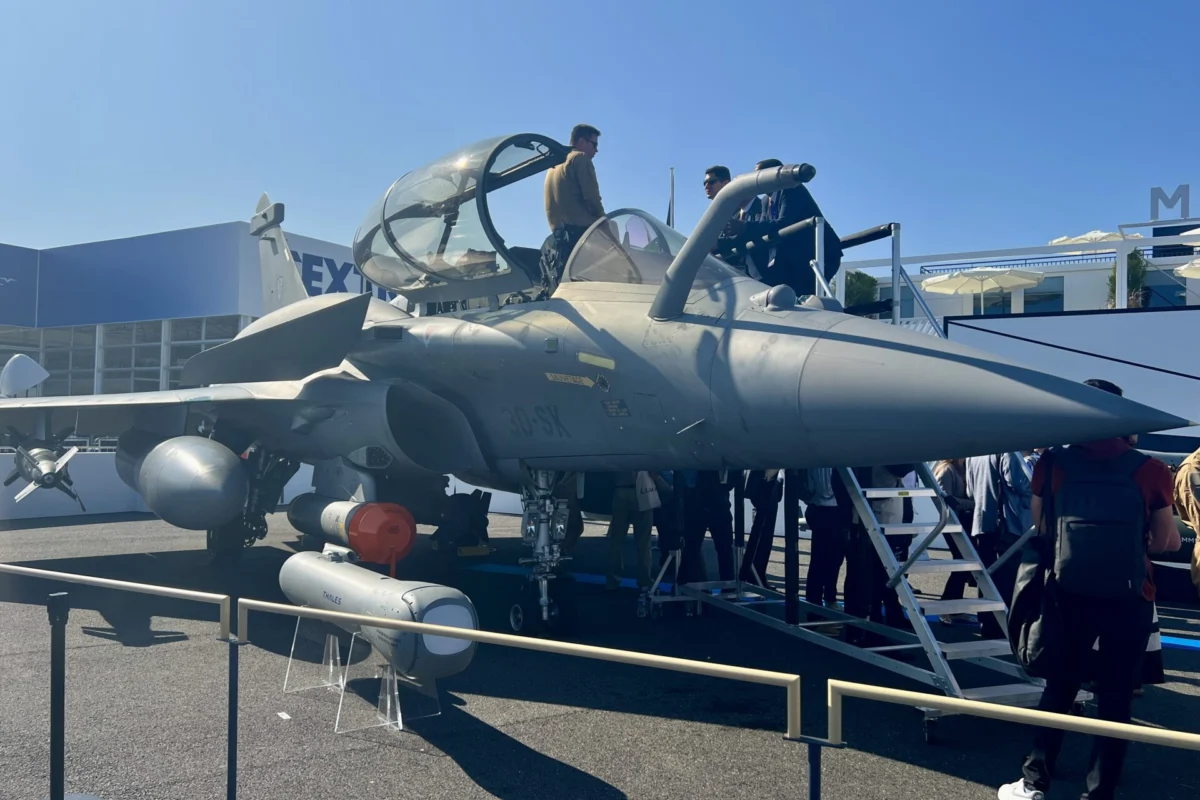
Dassault Aviation is developing the Rafale F5 standard without a foreign co-development partner and does not expect to offer the aircraft for export before 2035.
“We are working today on this super Rafale, which we call the Rafale F5,” Dassault Chairman and CEO Eric Trappier told BFM Business. “It is a request from the French armed forces.”
Asked about the schedule, Trappier said the aim was to “be ready for 2033, 2035.”
“There is no co-development with foreign countries today,” Trappier said. “It is a standard and an aircraft […] that we will be able to offer for export from 2035.”
France has been carrying the F5 bill alone since co-financing talks with the United Arab Emirates collapsed in December 2025 over technology transfer terms. Abu Dhabi had been reportedly prepared to contribute up to €3.5 billion ($3.8 billion).
Trappier renews single-prime case after FCAS split
The F5 became France’s priority combat air program after Berlin and Paris ended the manned fighter component of the Future Combat Air System (FCAS) in June 2026, following the failure of Dassault and Airbus to agree on industrial workshare.
Trappier used the interview to restate his case for a single national prime contractor.
“Why form a capital grouping to build an aircraft if we already know how to build an aircraft with a single manufacturer?” he said. He added that cooperation remained available: “We can do cooperations. That is what we will propose.”
What is the ‘super Rafale’?

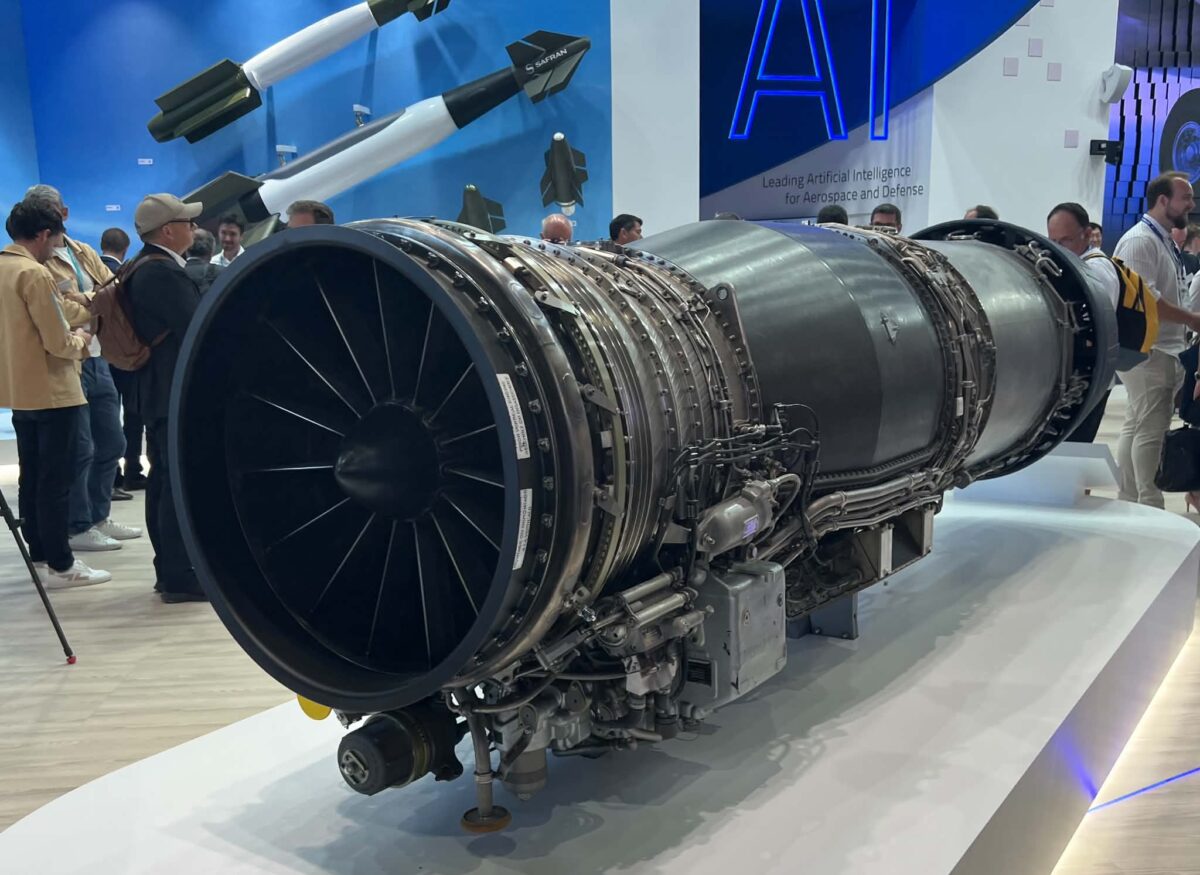
The F5 is intended to go substantially further than an incremental software and weapons update. The standard changes the Rafale’s engine, radar, electronic warfare suite and nuclear weapon, and pairs it with an uncrewed aircraft.
Safran unveiled the M88 T-REX in June 2025, targeting nine metric tons of afterburning thrust, 20% above the current M88, within the existing engine’s dimensions and modular architecture. Safran has said its qualification schedule matches the F5’s planned entry into service. The margin is meant to absorb the weight of new sensors, electronic warfare systems and heavier weapons.
The F5 is also to operate with a stealth combat drone derived from the nEUROn demonstrator. Dassault said the uncrewed aircraft would combine autonomous control with a human in the decision loop, an internal payload bay and an architecture able to evolve with the threat, flying ahead of the Rafale on reconnaissance and penetration missions from 2033. Trappier said in March 2026 that no program had yet been launched and that Dassault was looking for partners.
Dassault disclosed in July 2026 that it was developing a virtual assistant for the F5, adding onboard autonomy and artificial intelligence to the pilot interface.
The nuclear mission sets the timetable. The F5 is to carry the ASN4G hypersonic missile from 2035, replacing the ASMPA-R, and Dassault has tied its 2033 to 2035 entry-into-service target to that modernization.
France’s updated military programming law, adopted on July 1, 2026, defers delivery of about 20 Rafale from 2031-2032 to 2033-2034 so they can be built directly to F5 standard.