

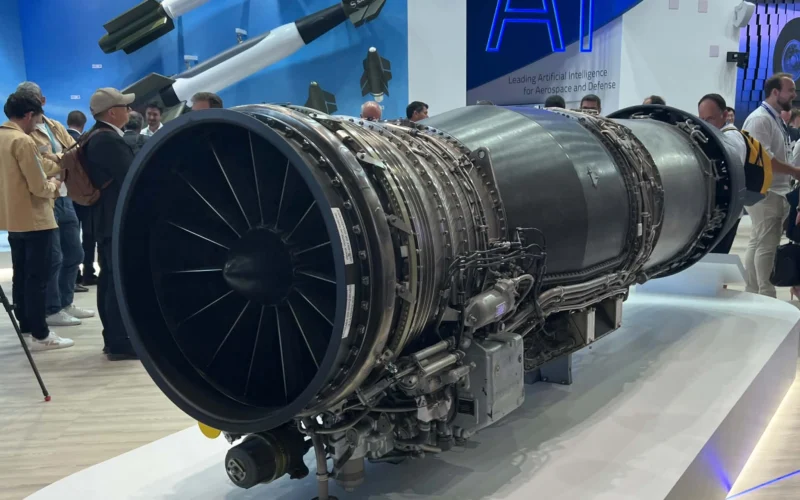
Safran will develop only one next-generation combat aircraft engine and will prioritize French requirements, Chief Executive Officer Olivier Andriès said on July 28, 2026, leaving little room for the Franco-German propulsion effort built around the abandoned Future Combat Air System (FCAS).
Speaking as the group presented its first-half 2026 results, Andriès said funding tied to FCAS will run out in September 2026.
Safran has “the resources to develop only one combat aircraft engine,” Andriès said, adding that the company would prioritize the French roadmap. The CEO also questioned whether French and German engine specifications would remain aligned, describing the point as an open question.
FCAS engine left without an aircraft
Safran Aircraft Engines and Germany’s MTU Aero Engines established EUMET, a Munich-based 50/50 joint venture, in April 2021 to serve as sole prime contractor to the three governments for the New Generation Fighter engine, with Spain’s ITP Aero as main partner. The German-law structure was the condition set by the Bundestag before it would approve funding.
The propulsion pillar was widely seen as the least contentious part of FCAS, functioning through years of workshare disputes between Dassault Aviation and Airbus Defence and Space. That advantage lost its purpose when Berlin and Paris abandoned the joint crewed fighter in June 2026, stranding the engine without an airframe.
MTU has argued the work should survive the split. Chief Program Officer Ottmar Pfänder told reporters at ILA Berlin on June 10, 2026, that the requirement for a sixth-generation fighter remained and that a framework was needed to preserve what had been achieved. Andriès said the venture’s future now depends on the direction each government chooses.
Safran puts its thrust behind T-REX
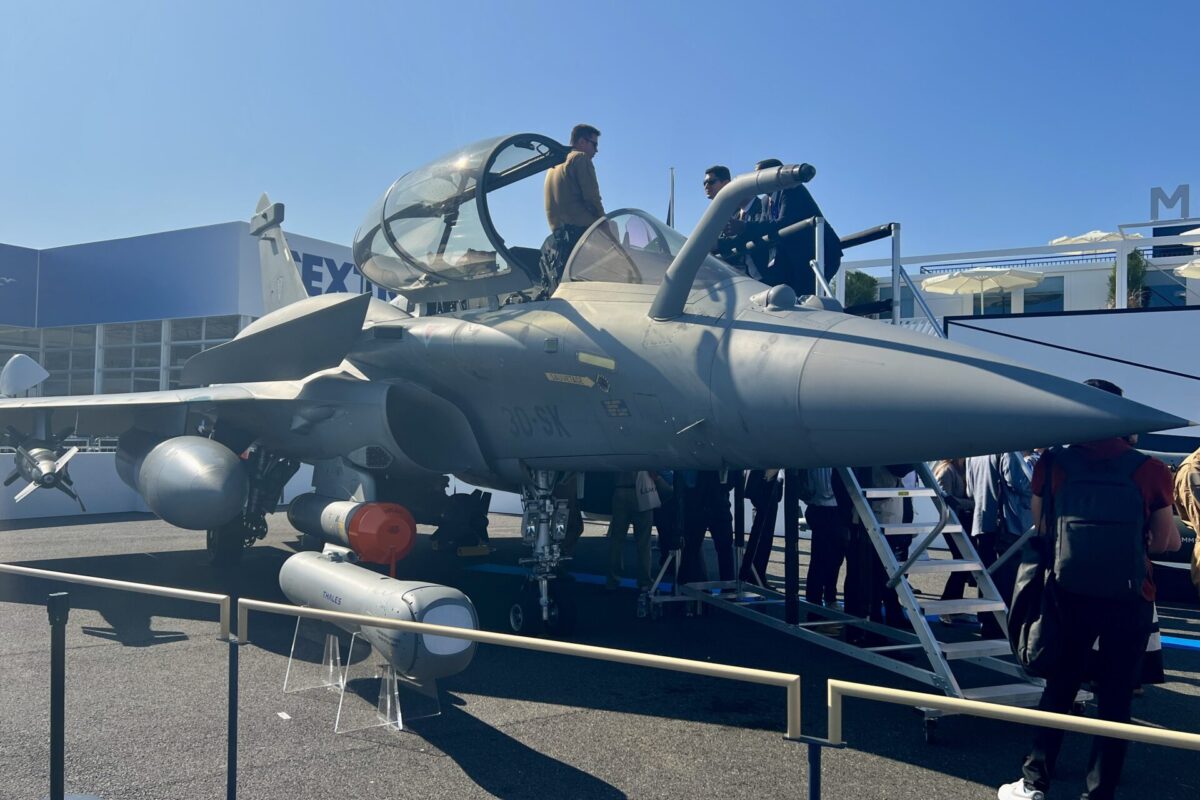
Safran’s remaining fighter engine effort is the M88 T-REX, unveiled at the Paris Air Show in June 2025 and intended for the Rafale F5 standard. It raises afterburning thrust to roughly 9 metric tons from 7.5, within the same physical envelope as the current M88. Former French General Delegate for Armament Emmanuel Chiva has described the challenge as maintaining Rafale performance in heavy configurations without eroding range.
French Air and Space Force officials have separately indicated that a sixth-generation aircraft would require around 11 metric tons of thrust.
Appearing before the French Senate on July 1, 2026, Dassault Aviation Chairman and CEO Éric Trappier argued for launching a demonstrator without delay, potentially flying in 2031 or 2032 with M88 or T-REX engines.
Germany’s response is taking shape through Team Gen 6, the Airbus-led industrial grouping announced at ILA Berlin on June 10, 2026. Although the team includes MTU Aero Engines, no propulsion architecture has been identified. Europe’s other obvious option, Rolls-Royce, is already committed to developing the GCAP powerplant with Japan’s IHI and Italy’s Avio Aero. Berlin must therefore decide whether to fund a sovereign German engine, persuade Rolls-Royce to support a rival program, or seek a partner outside Europe.