

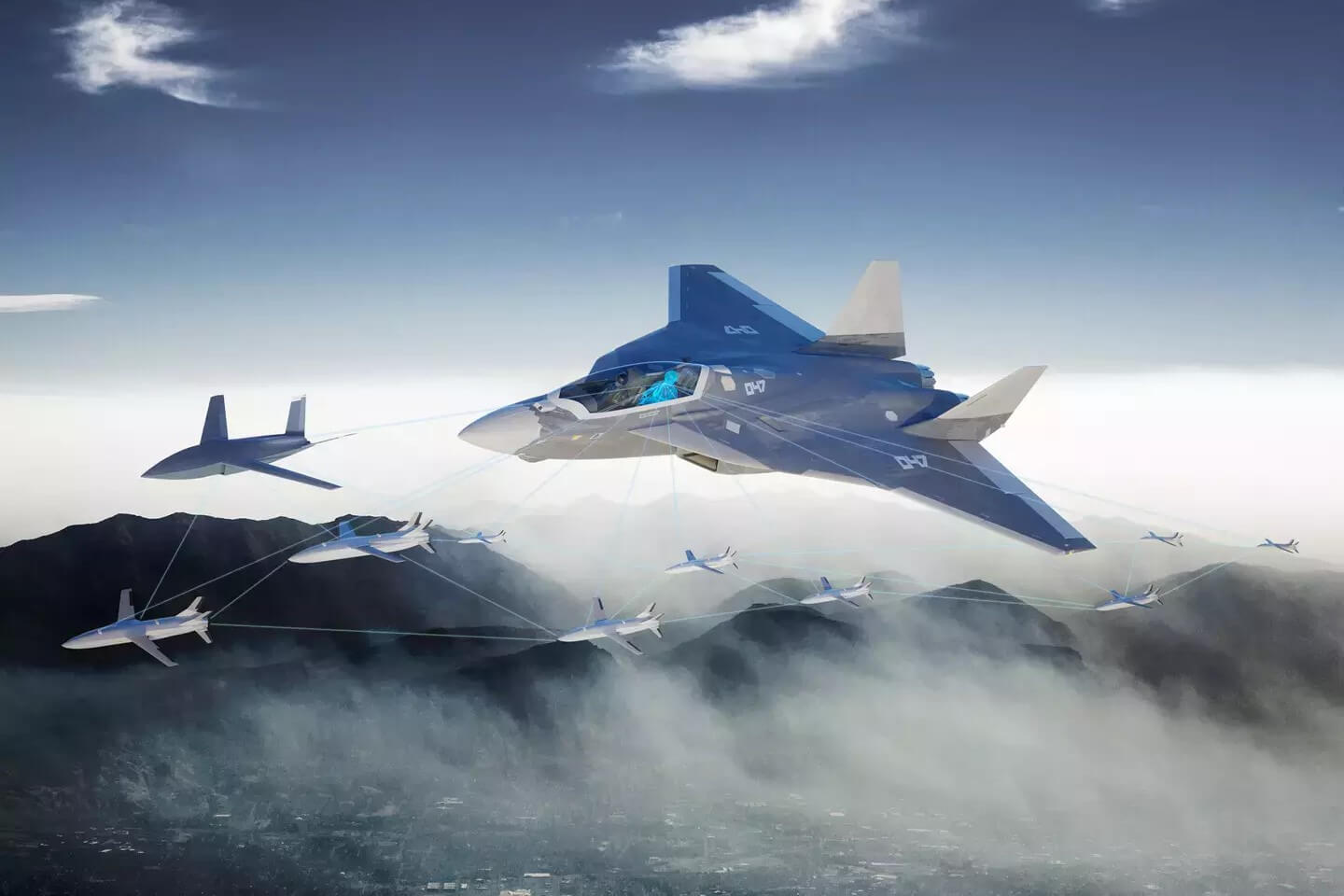
Eight German aerospace and defense companies are preparing to launch a new industrial alliance to support the development of a sixth-generation European combat aircraft, as Berlin begins to define its next steps after the collapse of the Franco-German FCAS fighter program.
The grouping combines several companies already involved in FCAS with others that were not among the publicly identified industrial partners in the program.
Companies already involved in FCAS include Airbus Defence and Space, Germany’s national industry coordinator and Airbus’ lead unit in several FCAS pillars; MTU Aero Engines, which was part of the engine pillar alongside Safran and ITP Aero; MBDA Deutschland, linked to the remote carrier pillar; and Hensoldt, Diehl Defence, and Rohde & Schwarz, which were part of the German Future Combat Mission System consortium for sensors, effectors, communications, and mission systems.
Autoflug and Liebherr were not among the main publicly identified German companies in the FCAS pillars. Their inclusion in Team Gen 6 suggests that the proposed alliance is an attempt to broaden the national industrial base for a possible future combat aircraft program.
The Financial Times reported that the companies had proposed the Team Gen 6 alliance in a letter to Merz’s office and German Defense Minister Boris Pistorius.
The grouping is intended to show that German industry is ready to develop a future combat aircraft “for Europe, in Europe,” following the breakdown of the fighter pillar of the Future Combat Air System (FCAS).
On June 8, 2026, France and Germany agreed to scrap the joint fighter project after concluding that the deadlock between the companies could no longer be resolved.
Team Gen 6 expected at ILA Berlin
The reported launch is expected to take place during ILA Berlin, Germany’s main aerospace show, which runs from June 10 to 14, 2026. It follows months of escalating doubts in Berlin, including comments by German Chancellor Friedrich Merz questioning whether France and Germany needed the same fighter profile.
However, the fighter pillar became increasingly blocked by disputes over leadership, workshare, intellectual property, and operational requirements. In March 2026, Dassault Aviation CEO Éric Trappier accused Airbus of not respecting earlier FCAS agreements, while Airbus-linked voices in Germany had already urged Berlin to clarify the program’s future.
The reported Team Gen 6 initiative also revives a debate inside Germany over whether Berlin should pursue its own future fighter path. Former Airbus CEO Tom Enders had previously warned Germany against launching a national fighter program, arguing that Berlin should prioritize drones instead.
Sweden has also been mentioned in recent reports as a possible partner for Airbus, while the United Kingdom, Italy, and Japan are already committed to the separate Global Combat Air Programme. France is expected to pursue its own path around Dassault Aviation and a Rafale successor.
The future of the non-fighter elements of FCAS remains less clear. Airbus Defence and Space CEO Michael Schoellhorn said in May 2026 that parts of the broader program, including networked systems and drones, could still continue even if the fighter track failed.