
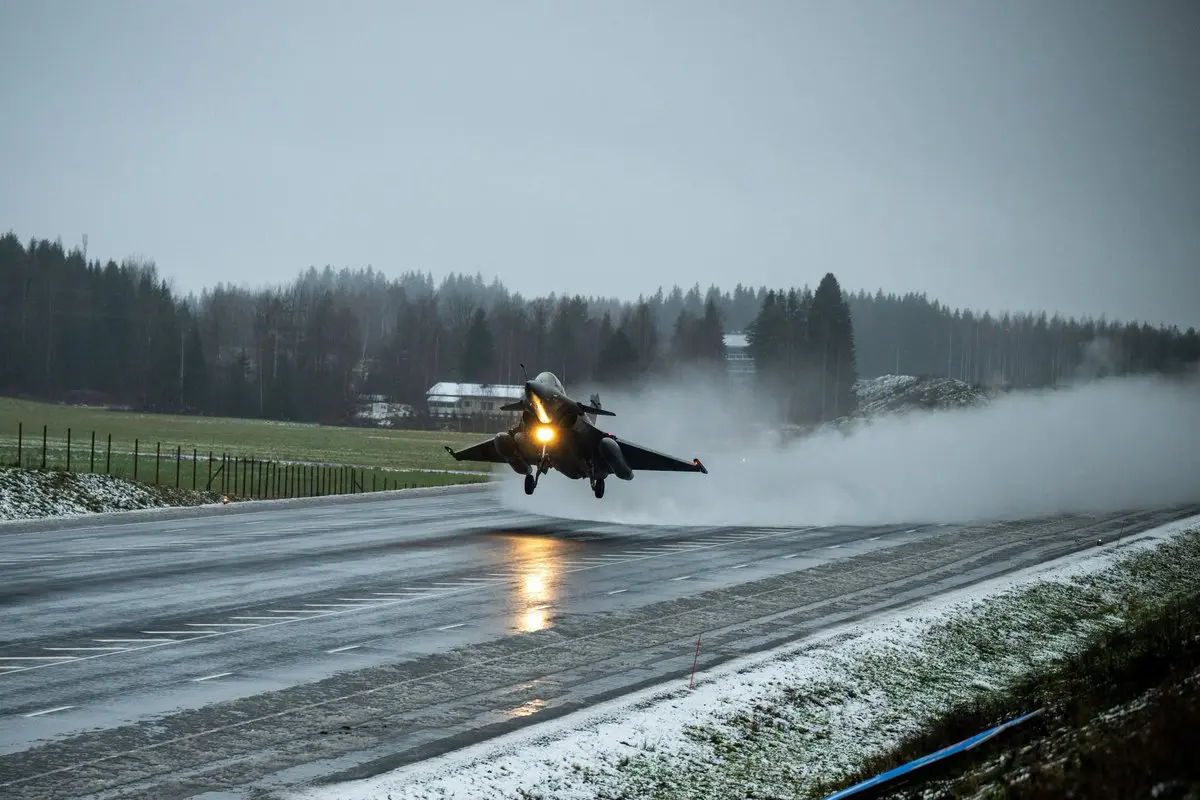
Dutch F-35As and French Rafales have operated from the Jännevirta highway strip in eastern Finland during Protective Fence 26, the Finnish Air Force’s main exercise of the year, as NATO allies practice dispersing their fighters away from conventional air bases.
The Dutch Ministry of Defense said on November 20, 2026, that several F-35As had landed on Highway 9 near Kuopio that day.
The Finnish Air Force reported that French Rafales deployed to Rovaniemi had carried out touch-and-go landings at the same location, marking the first time the French fighter had operated from a Finnish highway.
The French Air and Space Force identified the participating Rafales as aircraft from the fighter test and evaluation squadron ECE 1/30 “Côte d’Argent.”
The Jännevirta strip sits on Highway 9 near Rissala Air Base, home of the Finnish Air Force’s Karelia Air Wing. The road is closed to civilian traffic from November 18 to 25, 2026.
NATO fighters disperse across Finland during Protective Fence 26
Protective Fence 26 runs from November 19 to 27, 2026, involving more than 40 aircraft and about 4,100 personnel, including some 1,800 reservists.
The Finnish Air Force has deployed 20 F/A-18 Hornets across military bases, civilian airports and highway strips. The Dutch F-35As operate from Rissala, the French Rafales from Rovaniemi, while Swedish Gripens are based at Kallax Air Base in northern Sweden.
Finland’s own F-35As, the first two of which arrived at Rovaniemi in September 2026, are not taking part.
The exercise focuses on Agile Combat Employment (ACE), a concept aimed at keeping aircraft operational when their usual bases are threatened or unavailable. Dispersing fighters across multiple locations, including highways, makes it harder for an adversary to disrupt air operations with strikes against established airfields.
Dutch F-35s return to Finnish highway training

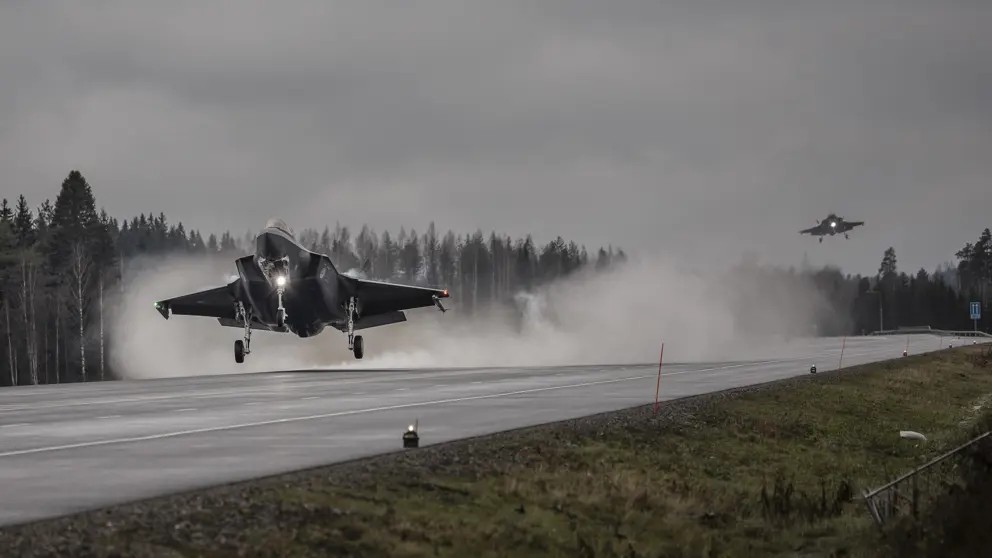
The Jännevirta landings are not a first for the Dutch fleet. Dutch F-35As previously took part in Finland’s Baana 25 highway exercise in May 2025, operating from a section of Highway 4 near Tikkakoski.
According to the Dutch Ministry of Defense, training in Finland allows its pilots to practice operations that would be difficult or impossible to conduct at home, while drawing on Finland’s extensive experience with dispersed air operations.
“We must also be able to defend our Northern European allies,” said Lieutenant Colonel Pascal Smaal, commander of the Dutch Air Force’s 322 Squadron. He also pointed to Finland’s approach to national defense, in which civilian society plays an important role.
Meanwhile, a second Dutch F-35 squadron is participating in Agile Tiger, an exercise based at Gilze-Rijen Air Base in the Netherlands. Training there includes night flying, refueling with engines running and weapons loading. Both exercises continue until November 27, 2026.
Finland expands highway operations with allied fighters
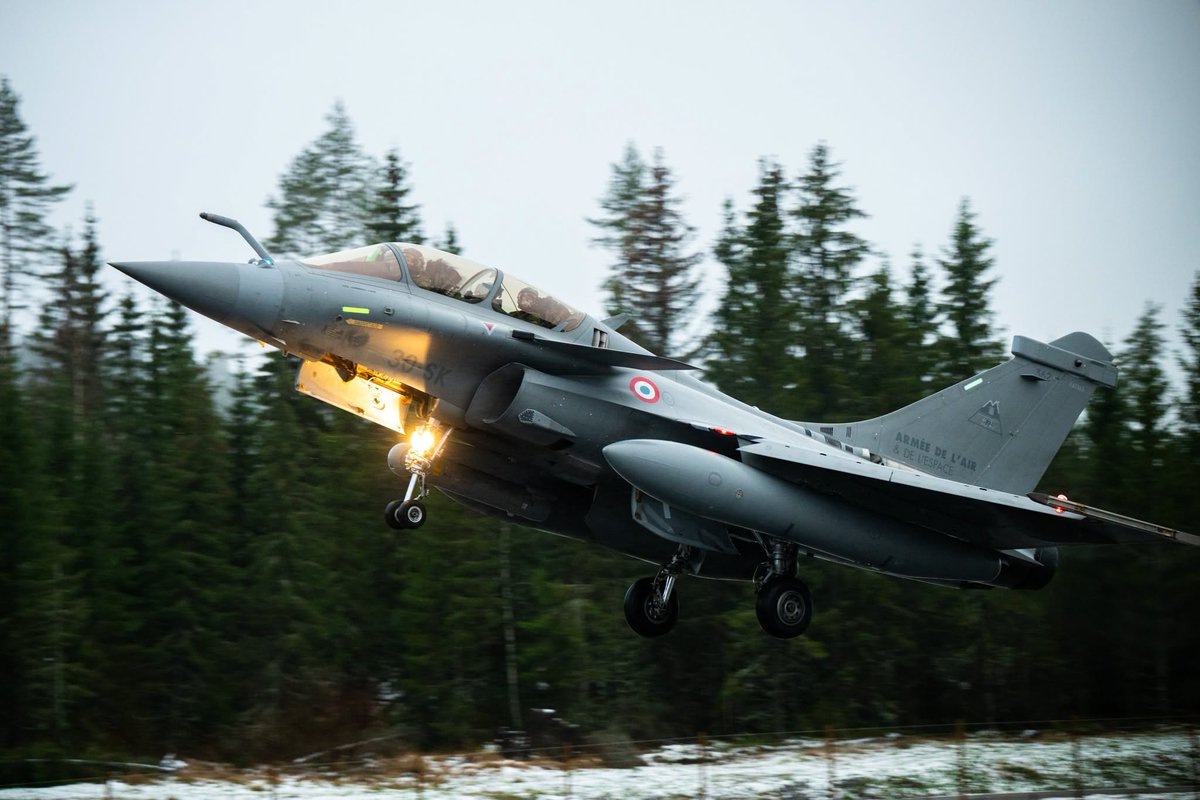
The Rafale’s debut at Jännevirta adds another allied fighter type to Finland’s highway network. During Ramstein Flag 26 in June 2026, US Marine Corps F-35Bs, along with Polish and Spanish fighters, operated from the Tervo highway strip for the first time.
France has also been expanding its own dispersed-operations training. In October 2026, the French Air and Space Force deployed Rafales to two civilian airports during its BASEX exercise, testing the ability to operate away from established military air bases.
Such capabilities have gained additional importance as NATO countries look to reduce their reliance on a limited number of major air bases, which could become targets in a conflict.
The ability to deploy Rafales abroad also features in France’s broader defense planning. President Emmanuel Macron’s ‘forward deterrence’ initiative, which Finland joined in September 2026, envisages possible temporary deployments of French strategic aircraft, including nuclear-capable Rafale B fighters, to allied countries