
France has formally launched the development of the ASN4G, the hypersonic missile that will arm the airborne component of the country’s nuclear deterrent from around 2035.
The Direction générale de l’armement (DGA), the French defense procurement agency, notified MBDA of the framework agreement and development contract for the fourth-generation nuclear air-to-surface missile (Air-Sol Nucléaire de 4ème Génération) on June 2, 2026, the agency said in a statement published on June 11, 2026.
The order, awarded to the European missile manufacturer jointly owned by Airbus, BAE Systems, and Leonardo, moves the program from preliminary studies into full-scale development. The ASN4G will replace the ASMPA-R, the upgraded ramjet-powered cruise missile currently in service, in line with the modernization of the airborne nuclear component set out in France’s 2024-2030 military programming law.
Speed chosen over stealth
According to the DGA, the performance of the ASN4G, and notably its hypervelocity, will maintain the credibility of the airborne deterrent against evolving threats. The agency described the missile as a technological break with previous systems, resting on industrial know-how that few countries in the world possess.
France weighed two competing concepts for the weapon, a stealthy ramjet-powered design and a hypersonic one, through upstream research programs conducted by MBDA and the national aerospace laboratory ONERA. The hypervelocity option prevailed, with MBDA explaining in 2023 that very high speed and maneuvering performance offered the best way to delay detection, complicate radar tracking, and disrupt interception attempts.
Official performance figures remain classified, but the ASN4G is expected to use scramjet propulsion and fly significantly faster than the ASMPA-R, which reaches around Mach 3 over a range generally estimated at 500 kilometers.
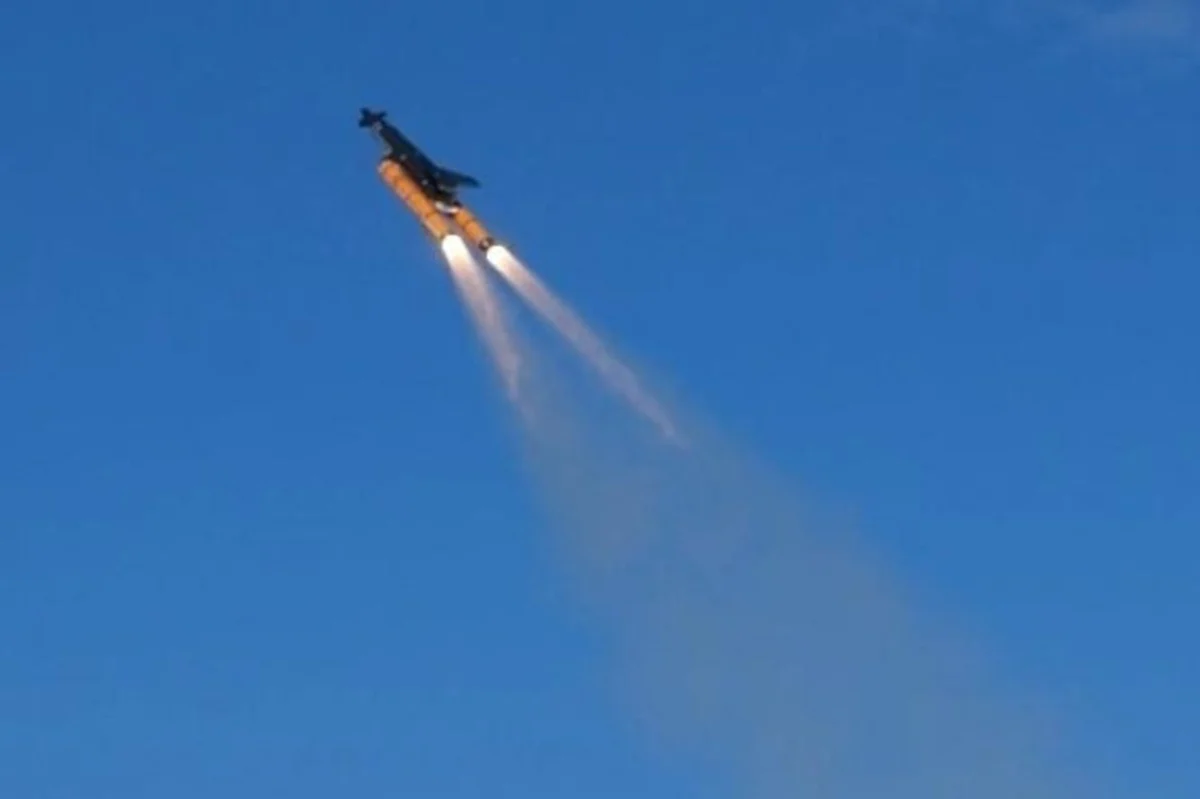
The DGA illustrated the announcement with a previously unpublished image showing a winged vehicle climbing under two booster rockets, captioned as a flight of the Thémis technology demonstrator. The agency did not say when or where the flight took place, and the program, unrelated to ArianeGroup’s reusable rocket stage of the same name, has never been publicly detailed. France moved dual-mode ramjet flight experiments to the United States after a planned cooperation with Russia ended in 2014, according to a 2021 ministry answer to parliament.
Rafale F5 for two nuclear forces

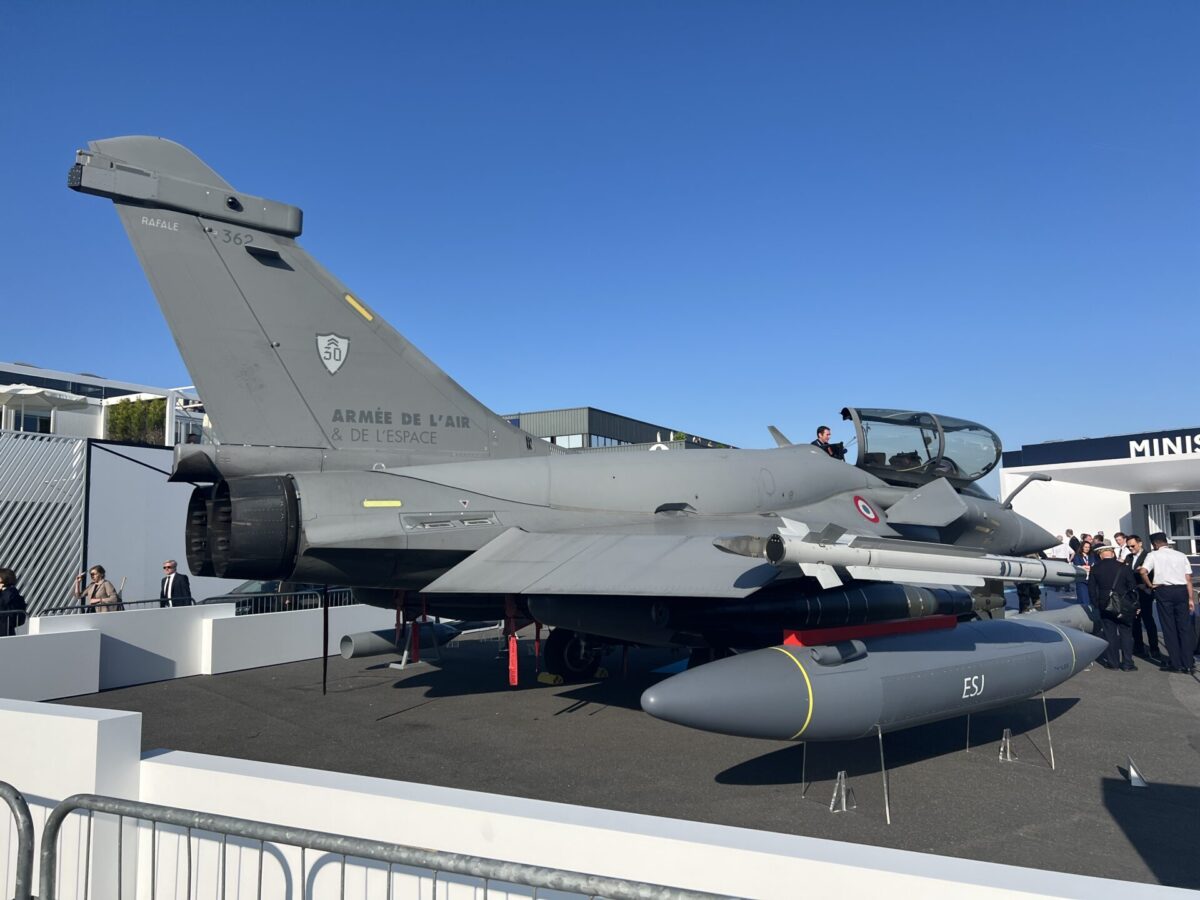
The missile will be carried by the Rafale F5, the next standard of the Dassault Aviation fighter expected around 2030, which France decided to fund alone after co-financing talks with the United Arab Emirates collapsed in December 2025.
The ASN4G will be operated by both the Forces Aériennes Stratégiques (FAS), the French Air and Space Force’s nuclear arm, and the Force Aéronavale Nucléaire (FANu), whose Rafale M fighters operate from the aircraft carrier Charles de Gaulle.
The contract comes as the airborne component takes an increasingly prominent place in the European security debate. President Emmanuel Macron’s forward deterrence concept, unveiled on March 2, 2026, envisions deploying nuclear-capable Rafale jets to allied bases across the continent, while the FAS is set to double its number of nuclear-capable squadrons by 2035 with the reactivation of a nuclear mission at Luxeuil Air Base.