
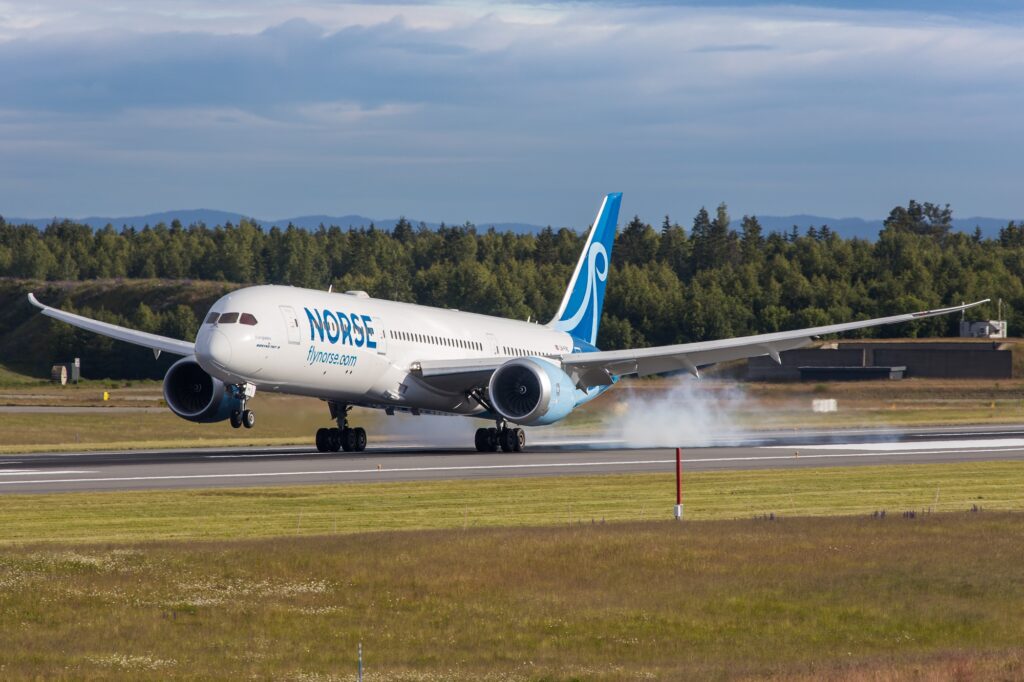
Norse Atlantic Airways is looking for new work for six Boeing 787-9s after Indian carrier IndiGo agreed to return the aircraft early, just as the Norwegian airline begins a formal process that could lead to a sale, merger or partnership.
IndiGo said it will discontinue its widebody operations on October 25, 2026, and conclude its lease agreement with Norse on October 31. The airline cited a challenging operating environment caused by geopolitical tensions. Norse said higher fuel prices, airspace disruptions and longer routes resulting from the Middle East conflict had hurt the commercial case for the arrangement.
IndiGo’s Mumbai-Amsterdam route will switch to the Airbus A321XLR on October 25, while service to London Heathrow will be suspended until the airline begins receiving its Airbus A350-900s.
IndiGo began taking the six Dreamliners from Norse in 2025 as a bridge to its future A350 fleet. The arrangement allowed IndiGo to begin long-haul widebody operations before the arrival of its own aircraft.
Under the lease agreement, Norse supplied the aircraft and flight crews, while IndiGo provided cabin crews.
One of the six 787s was already scheduled to return to Norse at the end of August following IndiGo’s decision to close its Manchester, UK, route. The remaining five will return when the wider agreement ends.
Norse said it is already speaking with several airlines about placing up to five aircraft under new aircraft, crew, maintenance and insurance agreements.
The carrier also plans to use some of the returning capacity on its own network during the winter, including additional flights from Europe to Orlando and New York.
“The return of these six aircraft opens up strategic opportunities that were not available to us before,” Norse Atlantic CEO Eivind Roald said.
Roald said the airline was seeing strong demand for modern long-haul aircraft and opportunities to use additional capacity within Norse’s scheduled network.
The end of the IndiGo agreement marks a major change for Norse. The airline completed its shift to a split business model early in 2026, with six aircraft flying for IndiGo and six serving Norse’s scheduled network.
Norse had said the arrangement would provide more predictable revenue and reduce the risks associated with relying entirely on its own scheduled flights.
That strategy came under pressure after fighting in the Middle East pushed up fuel costs and forced airlines flying between India and Europe to use longer routes around restricted airspace.
“There is no doubt that the elevated fuel prices, airspace disruptions and longer flight routes resulting from the Middle East conflict have affected the commercial viability of the arrangement for both parties,” Roald said. “We have therefore jointly concluded that alternative deployment of the aircraft will be more commercially beneficial to both parties.”
The aircraft are returning as Norse moves ahead with a formal review of its future.
Norse previously hired JPMorgan to conduct a strategic review after receiving interest from potential partners, according to media reports. The airline has now said the level of interest was strong enough for its board to begin a formal process.
That process may result in a sale, merger or partnership. Norse has not identified any potential buyer or partner or said when the process might end.
It was reported in May that Norse was considering a sale as part of the earlier strategic review.
The airline has also been cutting costs and raising money as it tries to weather higher fuel prices and continued disruption to long-haul travel. In April, Norse announced plans to raise $110 million through a rights issue and arranged a $70 million bridge loan. Its Project Falcon cost-cutting program is targeting annual savings of up to $50 million.
Norse operates a total of 12 Boeing 787-9s.