
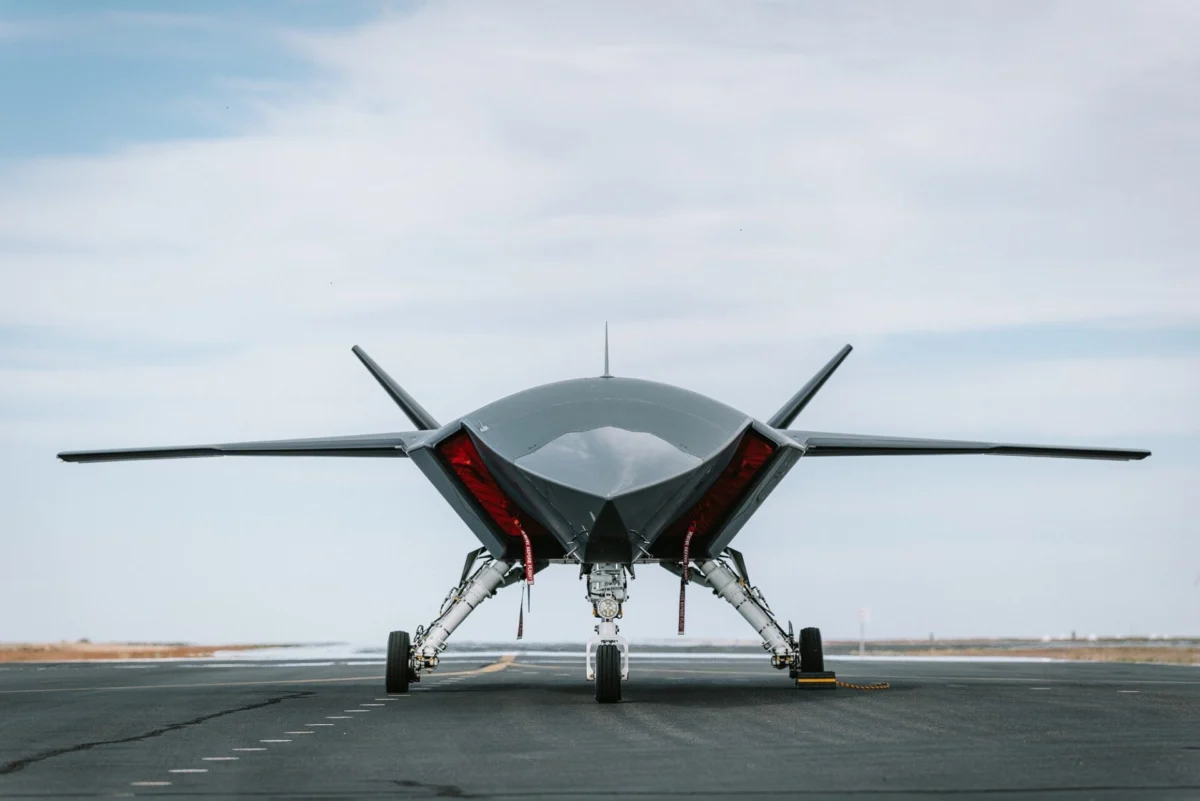
Germany’s interest in acquiring the MQ-28 Ghost Bat has moved from diplomatic signals to a formal industrial partnership in a matter of days, as Rheinmetall announced on March 31, 2026, that it had agreed with Boeing Australia to jointly offer the uncrewed aircraft to the Bundeswehr.
The announcement came four days after German Defense Minister Boris Pistorius, visiting Australia on March 27, 2026, publicly said the Ghost Bat was “under consideration” for the Luftwaffe. Pistorius, speaking at Australia’s National Press Club, also indicated that Germany’s procurement approach would be flexible and would avoid traditional long-term contracts, citing recent strike UAV purchases in which capabilities were tested progressively before further commitments were made.
Under the partnership, Rheinmetall would serve as system manager for the MQ-28 in Germany, handling integration into Bundeswehr command and weapons systems, national adaptation, and in-country maintenance and logistics. The company cited revenue potential in the three-digit millions of euros range.
The MQ-28A Ghost Bat

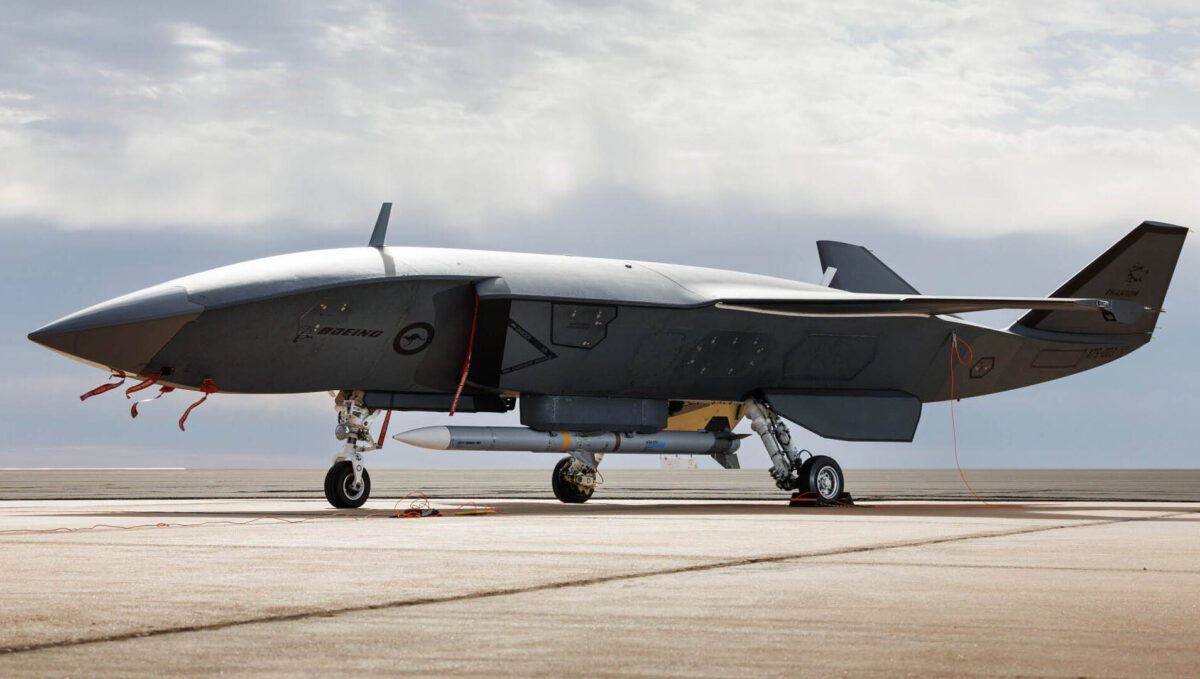
On December 8, 2025, an MQ-28A conducted its first live firing of an AIM-120 AMRAAM against a Phoenix target drone at RAAF Base Woomera, with the aircraft acting as a loyal wingman to a RAAF E-7 Wedgetail and an F/A-18F Super Hornet. According to Boeing, that test marked the first time an unmanned aircraft had fired an AIM-120.
The following day, the Australian government announced an additional investment of approximately A$1.4 billion into the program and signed contracts for six Block 2 operational aircraft and the development of an enhanced Block 3 prototype.
The Block 3 variant, detailed by Boeing global program director Glen Ferguson at the Singapore Airshow in February 2026, will add internal weapons bays capable of carrying missiles, including the AIM-120 and Small Diameter Bomb, and will expand the wingspan from six meters to 7.3 meters to increase fuel capacity and range.
What Rheinmetall brings
Rather than a direct purchase of Australian hardware, Rheinmetall’s partnership would establish a dedicated digital engineering environment in Germany, where engineers from both countries would develop, test, and validate new software and hardware.
Rheinmetall had been in talks with both Boeing and Lockheed Martin on collaborative combat aircraft options for Germany before a partnership was finalized. Lockheed Martin unveiled its Vectis stealth combat drone in September 2025.
On June 18, 2025, at the Paris Air Show, Rheinmetall also announced it had partnered with Anduril Industries to offer a European version of the YFQ-44 Fury.
“The partnership established in June 2025, which also covers Barracuda cruise missiles and is aimed at European armed forces in general, remains in place,” a Rheinmetall spokesperson told AeroTime.
A crowded competition
The Ghost Bat enters a competition that is not settled. Germany’s accelerated program to field a reusable combat drone by 2029, driven by the Luftwaffe’s Tornado retirement timeline, has attracted several competing offers.
Airbus is preparing two XQ-58A Valkyrie aircraft at Manching for their first flights in Germany with a European mission system installed. General Atomics has outlined a CCA offer based on the YFQ-42A with an industrial footprint at Oberpfaffenhofen, near Munich. Pistorius stressed that no final decision had been made and that Germany was keeping its options wide.
The Ghost Bat is also drawing attention from other partners. Ferguson noted at the Singapore Airshow that conversations with “a lot” of potential customers were ongoing and highlighted an agreement between Australia and Japan to collaborate on the program, struck at a bilateral defense ministers’ meeting in September 2025.