

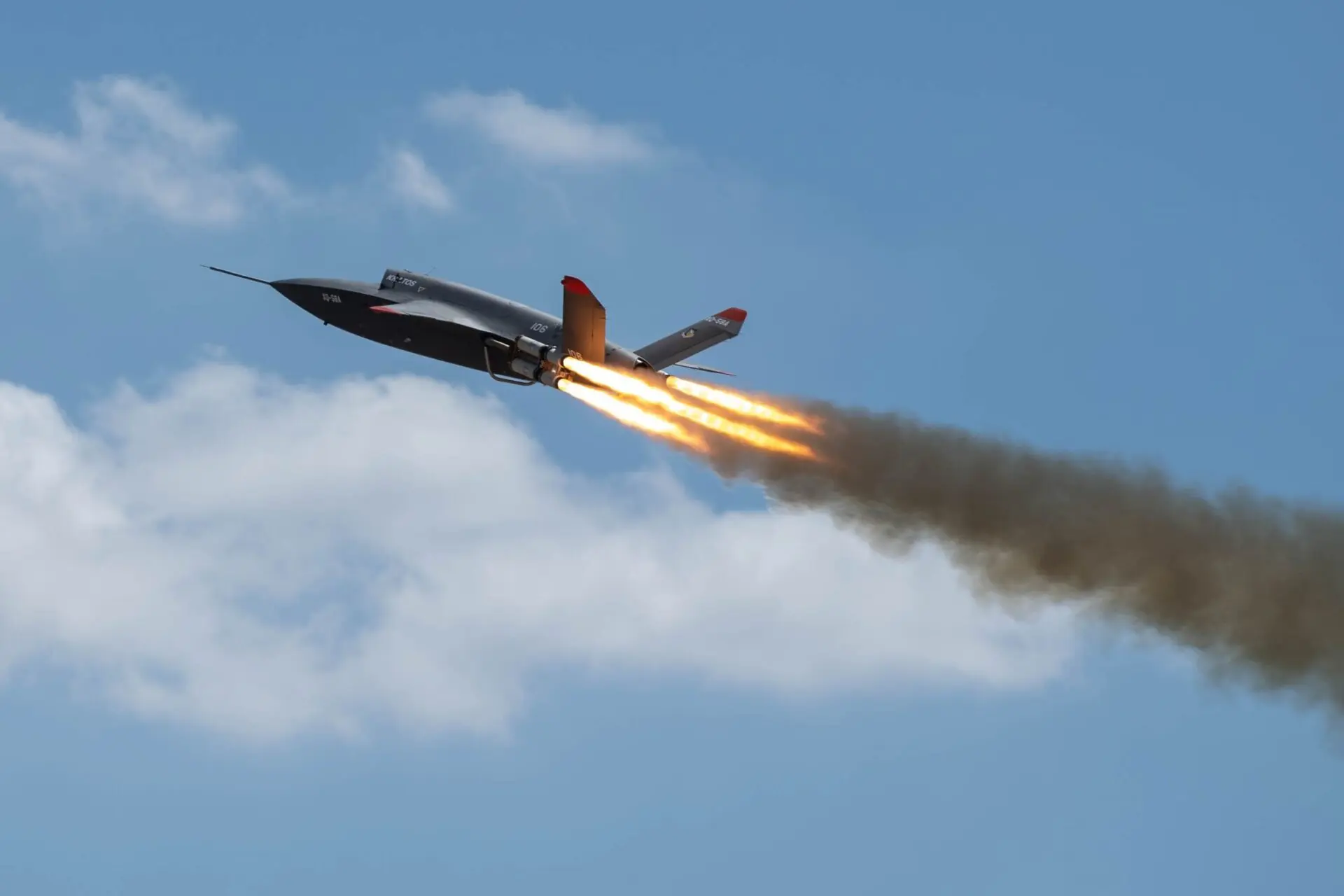
A German fast-track effort to give the Luftwaffe a reusable, jet-powered deep-strike drone by 2029 is showing signs of slowing. The procurement effort only surfaced publicly in August 2025, when German reporting described an accelerated timeline aimed at fielding an initial capability by 2029.
Hartpunkt now reports that the selection process has gained an extra review round, with a direct award currently off the table. Officials have introduced an additional review round involving three candidates for further evaluation.
Germany’s push for a “Jagdbomberdrohne” is part of the Luftwaffe’s Tornado transition, a broader effort to preserve deep-strike and electronic attack options as the aging fighter-bomber fleet heads toward retirement around 2030, with its missions shifting to the F-35A Lightning II and Eurofighter Typhoon fleets.
The German publication identified Boeing’s MQ-28 Ghost Bat and the XQ-58A Valkyrie, which Airbus offers to the German armed forces through its partnership with Kratos Defense & Security Solutions. The outlet also reported that two XQ-58A air vehicles have been stationed in Manching since 2025.
The third candidate remains unidentified.
Other signals that help map the field
Although the Harpunkt report does not disclose the third aircraft, recent industry announcements and public proposals outline the most plausible options Germany may be considering for a combat drone ready by 2029.
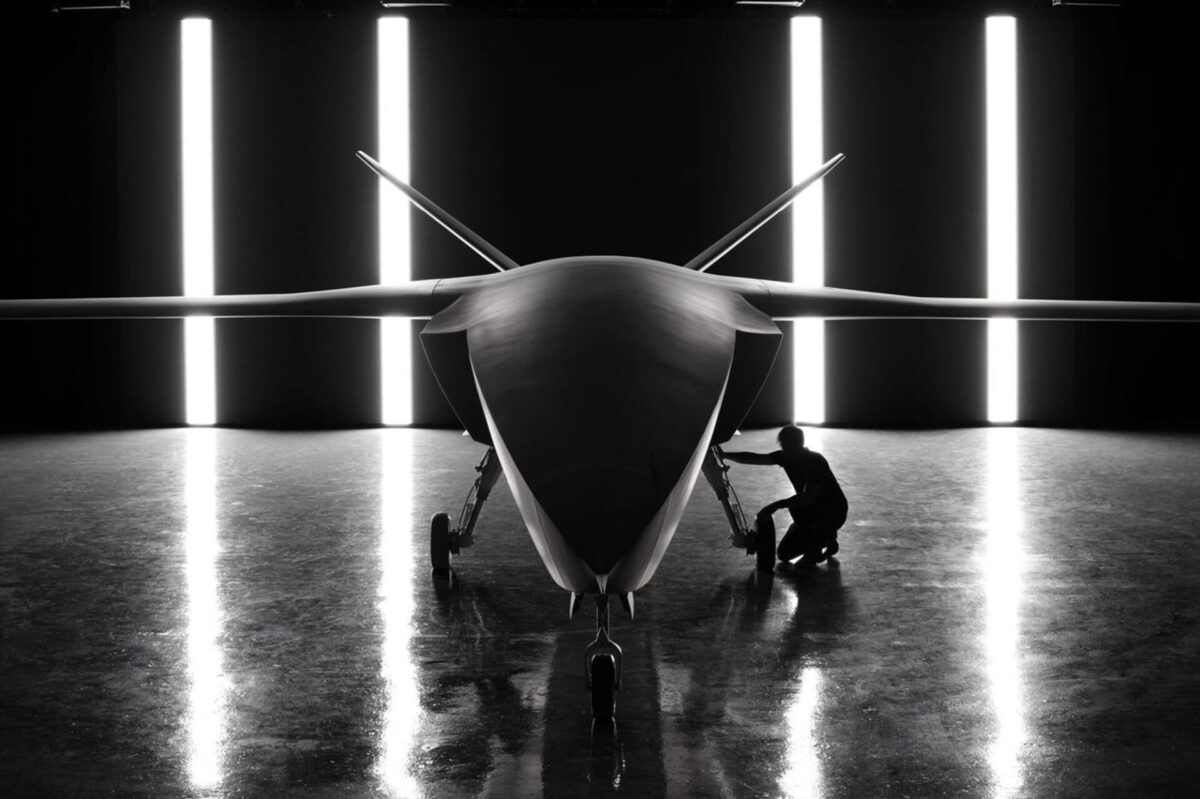
Additional US-derived designs are being proposed for the European market after being developed under US Air Force initiatives, most notably the Collaborative Combat Aircraft (CCA) program.
General Atomics has outlined plans to adapt a YFQ-42A-derived concept for European customers, establishing a German industrial footprint focused on final assembly and mission system integration at Oberpfaffenhofen. This positions the project as a “Europeanized” option based on a US prototype.
Rheinmetall’s collaboration with Anduril Industries has been presented as a pathway to introduce the YFQ-44A Fury.
Separately, Helsing has unveiled a native European route with its CA-1 Europa concept, linked to its acquisition of Grob Aircraft and pitched as a mass-producible autonomous combat jet in a lower weight class.
A near-term program with big implications
If Germany is aiming for an initial operational capability around 2029, as Hartpunkt reports, the program is years ahead of Europe’s sixth-generation fighter timelines.
The immediate procurement choice will shape German doctrine and industrial roles for manned-unmanned teaming well before the longer-horizon Future Combat Air System debates settle. It will also signal how far Berlin is willing to go in “Europeanizing” US-origin platforms versus backing a homegrown European design.
That near-term “strike drone” decision is unfolding as Berlin’s longer-horizon air combat debate shifts toward the manned versus unmanned question. German Chancellor Friedrich Merz publicly questioned whether Germany still needs a crewed sixth-generation fighter. Airbus CEO Guillaume Faury warned that an overly aggressive bet on an unmanned-only future could leave Europe with a capability gap.