
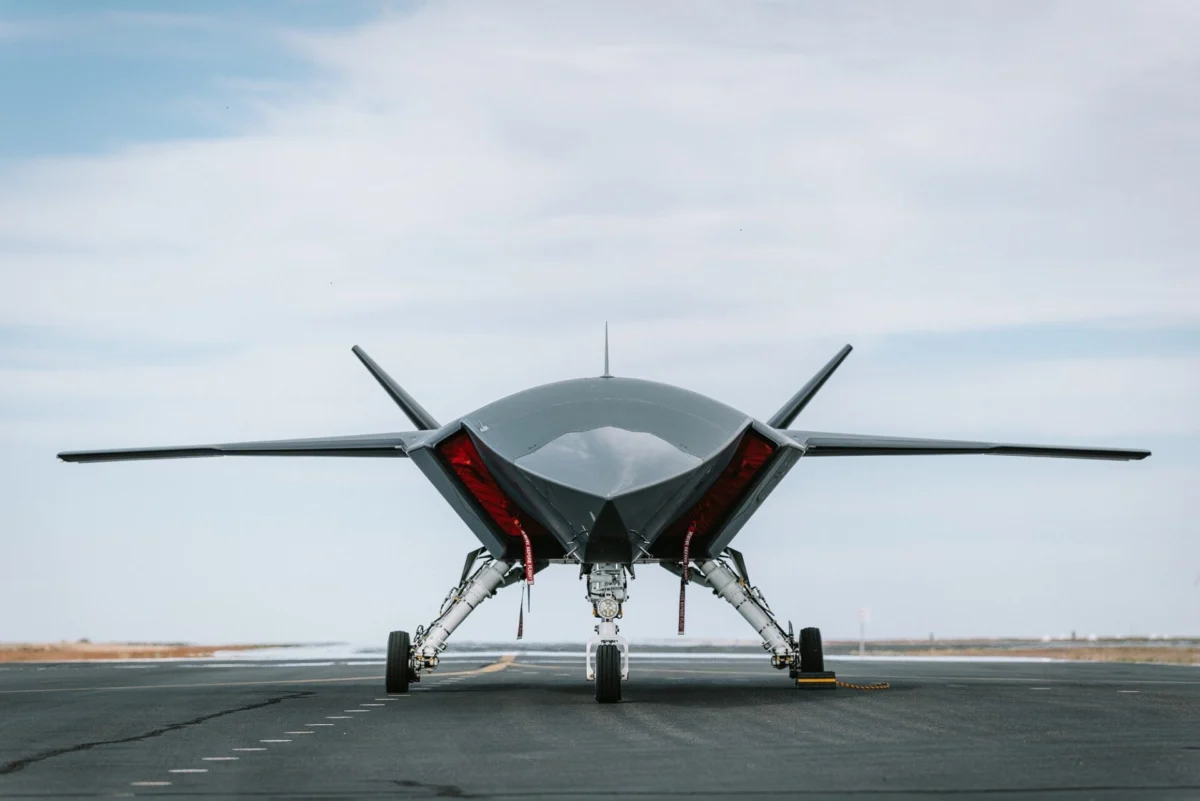
Rheinmetall said on August 10, 2026, that it is establishing an independent system integration capability for the Boeing MQ-28 Ghost Bat in Germany, marking the first concrete industrial commitment from the Boeing-led team competing for the German Air Force’s collaborative combat aircraft (CCA) requirement.
The Düsseldorf-based group has served as Boeing’s German system integration partner since the two companies announced their partnership on March 31, 2026.
Rheinmetall said software development, mission integration and intellectual property associated with a German version of the MQ-28 would remain within the country’s industrial base, with national sensors, weapons and mission software integrated domestically.
“Germany does not have to choose between speed and independence,” said Mike Schmidt, CEO of Rheinmetall’s Air, Uncrewed and Space business unit, arguing that adopting the MQ-28 would allow the German Air Force to bypass the development phase of an entirely new aircraft and move directly to fielding the capability.
A tight deadline shapes Boeing’s case
Boeing built its case around the calendar. Glen Ferguson, global director of the MQ-28 program at Boeing Defence Australia, said meeting a 2029 in-service target requires work on tactics, training, force structure and sovereign technology integration to begin now. Ferguson also said the aircraft’s modular design would allow air-to-ground roles to be added without requiring a retrofit.
Both companies pointed to the platform’s flight-test record. The MQ-28 fired an AIM-120 AMRAAM at a target drone in December 2025, completed radar cross-section testing announced on June 1, 2026, and participated in Exercise Valiant Shield in June 2026 alongside US Air Force F-15EX fighters and other coalition aircraft. Boeing described the deployment as the first time a CCA had participated in a multinational exercise.
German partners line up behind Ghost Bat
The German industrial team supporting the offer now includes Rheinmetall, Rohde & Schwarz, Diehl Defence and HENSOLDT, which signed a memorandum of understanding with Boeing at the Farnborough International Airshow in July 2026.
The German Air Force requirement, estimated at up to 400 aircraft with deliveries beginning in 2029, falls under the Combat Fighter System Nucleus (CFSN) program, the national effort established by Berlin after the collapse of the New Generation Fighter (NGF) pillar of the Future Combat Air System (FCAS) with France and Spain.
The Bundestag budget committee cleared funding for CFSN on July 8, 2026, as part of a defense package worth more than €9.5 billion ($11 billion).
A crowded race for up to 400 aircraft
The competition remains crowded. Airbus is preparing Europeanized XQ-58A Valkyrie aircraft with Kratos at Manching, Helsing is offering the CA-1 Europa, and General Atomics Aeronautical Systems has proposed a derivative of its YFQ-42A with final assembly in Germany.
Rheinmetall is also retaining a separate partnership with Anduril Industries covering a European version of the YFQ-44A Fury. Asked in March 2026 whether the Boeing agreement changed that arrangement, a Rheinmetall spokesperson told AeroTime: “The partnership, […] aimed at European armed forces in general, remains in place.”