
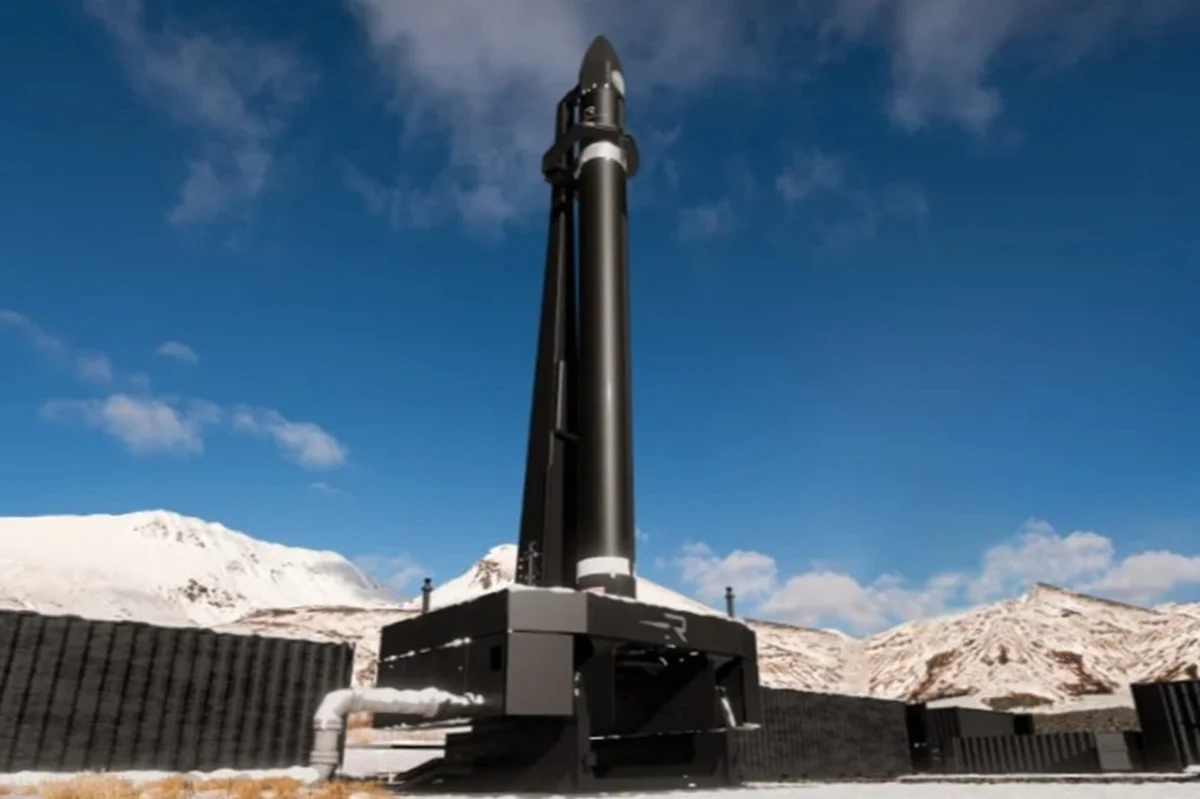
Rocket Lab has unveiled a containerized launch system designed to fly its Electron and HASTE rockets from new locations, starting with a two-pad complex in Alaska in 2027.
Announced on August 10, 2026, GHOST (short for Global Hypersonic & Orbital Spaceport Technology) packages rockets, launch infrastructure, ground support equipment, and range control systems inside standard shipping containers.
Rocket Lab said the modular system could be shipped worldwide to establish orbital or suborbital launch capacity for multi-launch campaigns and time-sensitive national security missions, a market it has already targeted with record-setting responsive launches for the US Space Force.
Introducing GHOST.
— Rocket Lab (@RocketLab) August 10, 2026
We’ve mastered the art of building launch sites. Now we’re making them deployable worldwide.
GHOST = Global Hypersonic & Orbital Spaceport Technology. A containerized, deployable launch site system that enables Electron and HASTE launches anywhere,… pic.twitter.com/6Za05Ov2Nn
Two new pads planned at Kodiak
The first GHOST installation will form Rocket Lab Launch Complex 4 at the Pacific Spaceport Complex-Alaska on Kodiak Island, where the company plans two pads for simultaneous or closely spaced launch operations. Rocket Lab expects the system’s operational debut to be a suborbital launch from Alaska in 2027.
The two Kodiak pads would expand Rocket Lab’s network to six across two hemispheres. It operates Electron pads at Launch Complex 1 in New Zealand and Launch Complex 2 in Virginia, while Launch Complex 3 at the same Virginia spaceport is being prepared for the Neutron rocket.
“We’ve been leading the field in small launch for missile defense and national security for years,” founder and CEO Peter Beck said, presenting GHOST as a way to open new trajectories and give allied countries their own launch capacity without building a permanent spaceport.
The company did not say how long activating GHOST at a new site takes or how much fixed infrastructure it requires.
One system, two rockets
GHOST supports both Electron, Rocket Lab’s small orbital launch vehicle, and HASTE, its suborbital derivative built for hypersonic and missile defense testing. Because the two share much of their design and ground infrastructure, one installation could host satellite launches and test flights alike.
HASTE uses Electron’s carbon composite structure and Rutherford engines but swaps the orbital kick stage for one tailored to suborbital payload release. It can carry up to 700 kilograms (1,540 pounds) and deploy them at velocities of more than 7.5 kilometers per second, in configurations for air-breathing, boost-glide, and ballistic reentry payloads.
The rocket first flew from Virginia in June 2023 and has since lofted payloads including Australia’s DART AE scramjet demonstrator.
Alaska buildout follows $266 million US Space Force award
Rocket Lab did not identify the customer for GHOST’s first mission, but the Alaska development follows a $266 million US Space Force contract awarded in July 2026. The agreement covers 12 suborbital launches, with options for six more, primarily from Kodiak.
Rocket Lab called it the largest launch contract in its history and said the missions would support US missile defense development, a segment where it is also working with Raytheon on a space-based interceptor for Golden Dome.
Rocket Lab is also establishing Rocket Lab Germany GmbH in Munich to support European satellite manufacturing and Electron and Neutron launch services, building on its acquisition of laser communications firm Mynaric.