
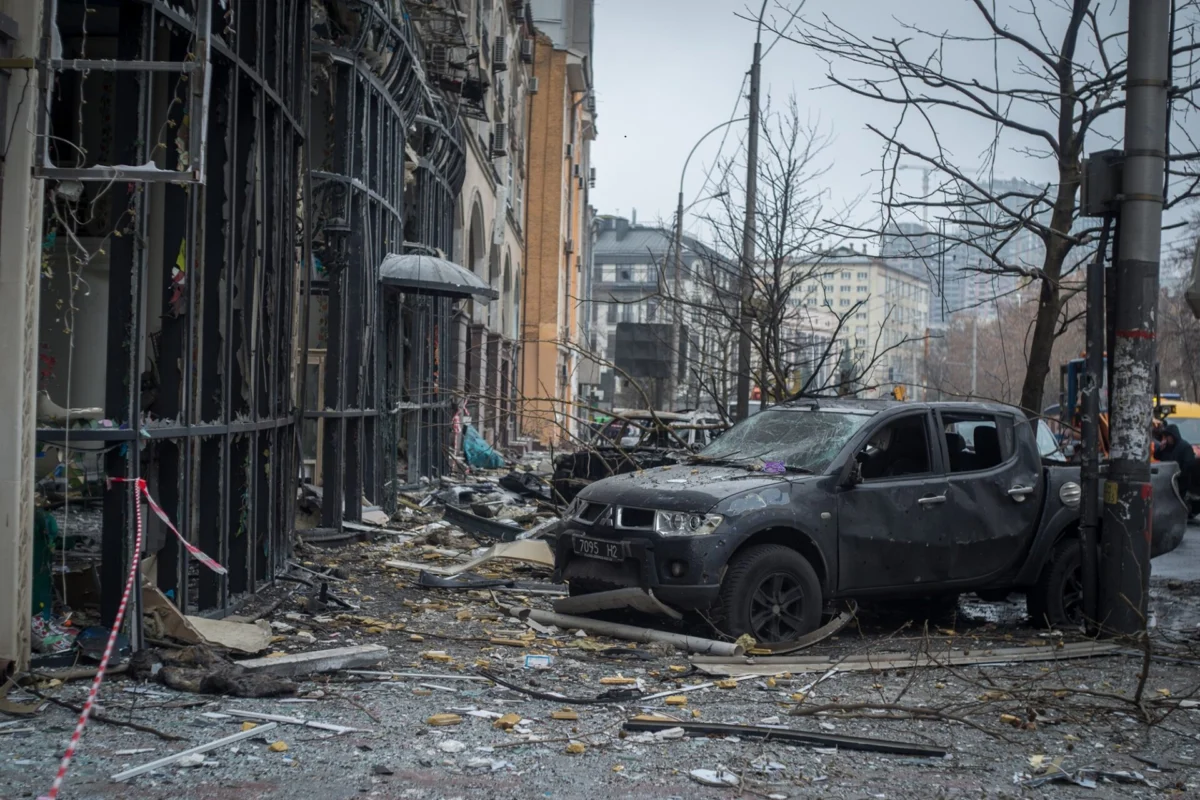
Russian attacks have damaged about 4,000 of Kyiv’s roughly 12,000 buildings, or nearly one in three, since the full-scale invasion of Ukraine began in February 2022.
Kyiv Mayor Vitali Klitschko gave the damage figure to Novyny.LIVE on August 20, 2026, adding that each Russian attack costs the city budget about 500 million hryvnias (roughly $11.2 million).
The remarks followed a mass Russian missile and drone attack on Kyiv overnight into August 20, 2026, that killed at least 15 people, according to the Kyiv City Military Administration. More than 30 people were reported injured in early updates, a figure that had risen to 39 by the evening.
Ballistic and cruise missiles combined with drones
According to the Ukrainian Air Force, Russia launched an unspecified number of Oniks, Tsirkon, Iskander-M and S-400 missiles on ballistic trajectories, along with 36 Kh-101, Iskander-K and Kh-59 cruise and air-launched missiles, eight Kalibr cruise missiles and two Banderol loitering munitions. Russia also launched 168 Shahed, Gerbera and Parodiya drones, nearly half of them jet-powered, a design shift Russia has leaned on to outrun Ukraine’s low-cost interceptor drones.
Ukrainian air defenses shot down or suppressed 186 targets in total, including 41 cruise missiles and loitering munitions and 145 drones, the Air Force declared. Strikes were recorded at 28 locations, with falling debris reported at two more.
City officials recorded damage in three districts of Kyiv, with the heaviest concentrated in Solomianskyi, where a nine-story residential building, neighboring structures, a school and a children’s medical facility were damaged.
A later drone strike deliberately targeted critical infrastructure, the city said, raising the risk of hot water interruptions in the Desnianskyi and Dniprovskyi districts.
Ukraine stops publishing ballistic missile intercept figures
The Ukrainian Air Force did not disclose how many ballistic missiles were launched or intercepted. Ukraine’s military command stopped publishing these figures in mid-August, Air Force spokesperson Yurii Ihnat said, after officials grew concerned that reports showing few or no interceptions were being amplified by Russian channels.
Ihnat announced that Ukraine currently has no interceptor missiles left for its Patriot batteries, its only reliable defense against ballistic threats. Ukrainian President Volodymyr Zelenskyy pressed Washington to expand Patriot production after a July 2, 2026, attack killed at least 13 people in Kyiv.
in late July, the Center for Strategic and International Studies estimated that US stocks of Patriot PAC-3 MSE interceptors had fallen from more than 2,300 before Washington’s operations against Iran to roughly 800, while THAAD inventories had nearly halved.
On August 2, 2026, Zelenskyy claimed that Ukraine had received only a third as many air-defense interceptors this year as during the same period in 2025. CNN reported on August 17, 2026, that a Patriot battery it visited had not fired in six weeks.
Kyiv accelerates shelter and heating plans
According to Klitschko, Kyiv is attacked with missiles and drones almost twice a week, part of a broader pattern of mass strikes on the capital that has included a July 2, 2026, attack that killed at least 13 people and prompted Ukrainian President Volodymyr Zelenskyy to press Washington for Patriot production licenses.
The city plans to install mobile shelters at its most critical locations by the end of the year. It has also completed more than half of a backup heating system meant to keep Kyiv warm if the main network is damaged again, with some sites nearing completion.