
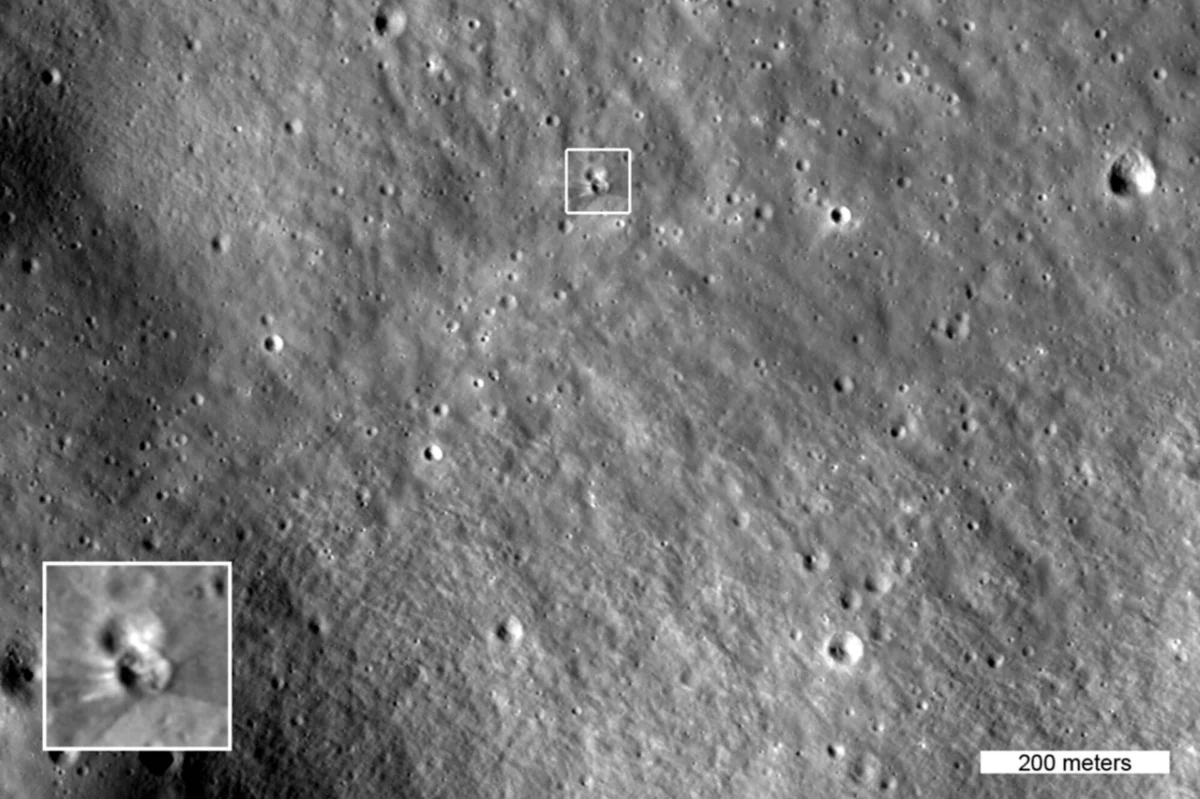
NASA published images showing the crater left on the Moon by a spent SpaceX Falcon 9 upper stage, and put the feature at roughly 60 feet (18 meters) across and less than 10 feet (three meters) deep.
The agency’s Lunar Reconnaissance Orbiter (LRO) collected the images between August 11 and 12, 2026, six days after the stage struck the surface on August 5, 2026. NASA said engineers tilted the spacecraft so that its Narrow-Angle Camera pointed at the site on each pass, about 60 miles above the surface at a ground speed of one mile per second. A timing error of 10 seconds in either direction would have thrown the target 10 miles off center.
The camera resolves features as small as three feet. NASA measured the width from frames in which the crater rim stood clear of the surrounding terrain and derived the depth from the length of the shadow it cast.
Falcon 9 crater comes in shallower than NASA expected

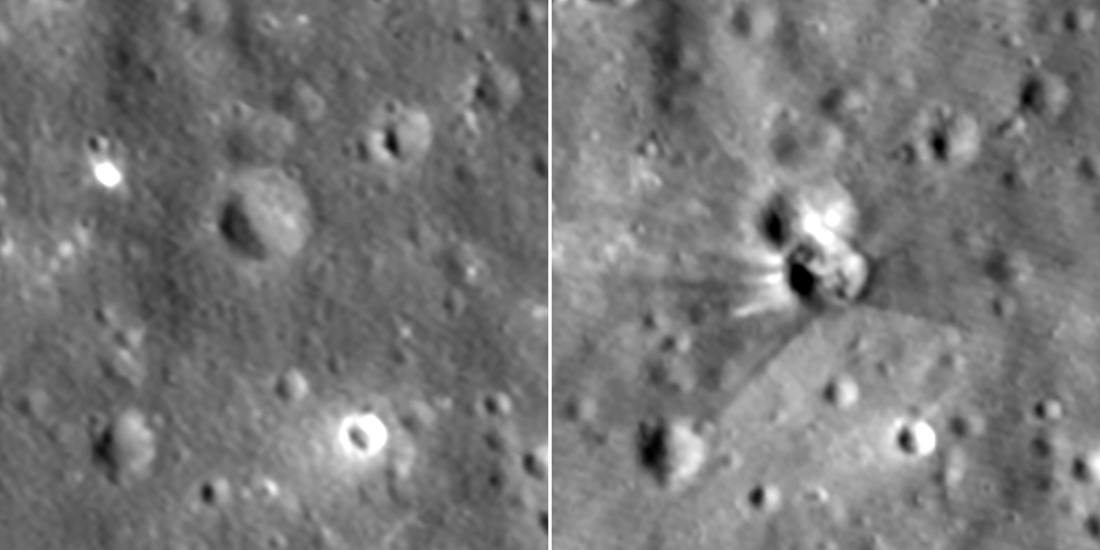
The measurement is a partial check on NASA’s own pre-impact work. In a statement issued on August 4, 2026, the agency said the stage was expected to excavate a crater about 60 feet wide and 12 feet deep.
Varying sun angles across the imaging passes brought out two distinct ejecta deposits. NASA said the darker material fanning out from the crater was excavated from about 1.5 feet down and has been altered over long periods by solar wind, galactic cosmic rays, and micrometeorite impacts. The brighter rays nearer the rim are fresher material thrown up from deeper below.
Danuri guides LRO to the Falcon 9 impact site
The search for the site drew on independent trackers. NASA said independent astronomers first worked out the stage’s trajectory from publicly available data, after which its Center for Near Earth Object Studies at the Jet Propulsion Laboratory refined the solution and passed a predicted impact point to the team operating South Korea’s Danuri orbiter.
Danuri imaged the crater hours later with its LUTI camera, showing the prediction had been accurate to about 0.6 miles. The Korean team returned coordinates to the LRO team, which used them to target the follow-up sequence. NASA has since placed the crater center at 19.4759 degrees north, 266.7138 degrees east.
Why the Falcon 9 stage ended up on the Moon

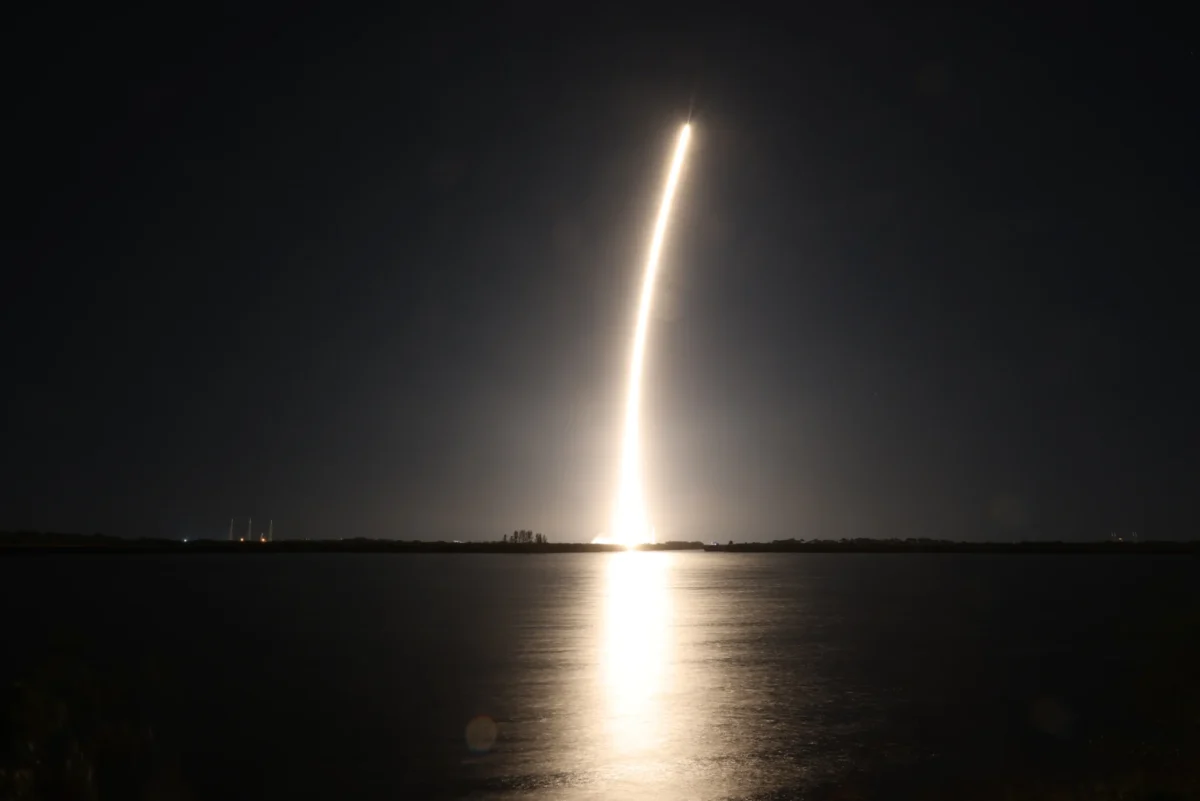
The stage launched Firefly Aerospace’s Blue Ghost 1 lander on January 15, 2025, under NASA’s Commercial Lunar Payload Services (CLPS) initiative. NASA attributed the unplanned return to solar activity and gravitational forces.
Deliberate disposal of upper stages on the lunar surface is an accepted practice, the agency said, and is sometimes the only workable option for missions in low lunar orbit.