
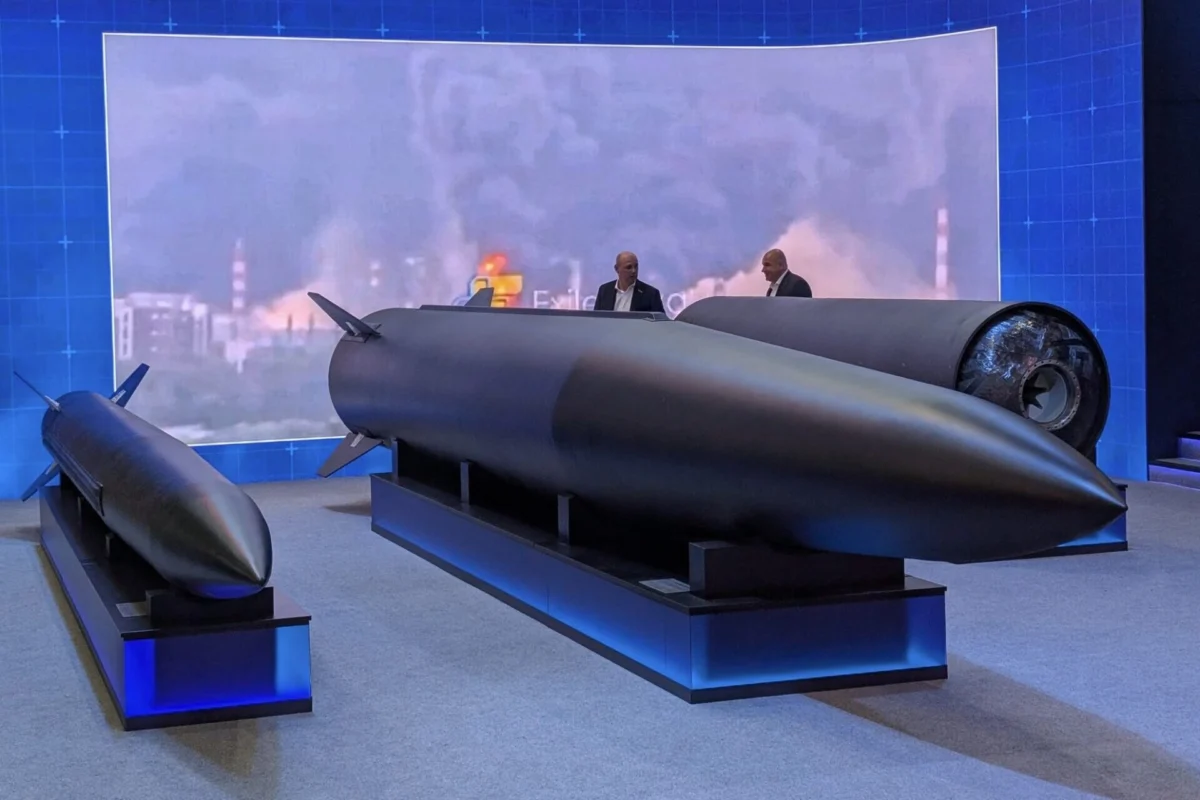
Ukraine’s domestic ballistic missile program has produced test results showing “strong potential,” President Volodymyr Zelenskyy said in his evening address on August 6, 2026, while making clear the design has yet to become a fielded weapon.
Zelenskyy did not name the missile, its manufacturer, or when the tests took place, and offered no performance figures. He said the outstanding task was to turn the tested design into an operational weapon.
The breadth of institutions involved shows the importance Kyiv attaches to the capability: it takes in the National Security and Defense Council, Ukraine’s intelligence agencies, the prime minister, the foreign and defense ministries, the Ukrainian Air Force, and the Brave1 defense technology cluster.
Sapsan, FP-7 or another missile?
The address left the question open regarding which of Ukraine’s ballistic missile efforts was being referred to. The state-developed Sapsan, built by the KB Pivdenne design bureau and adopted into service as the 1KR1, entered serial production in 2025 following combat testing in May of that year.

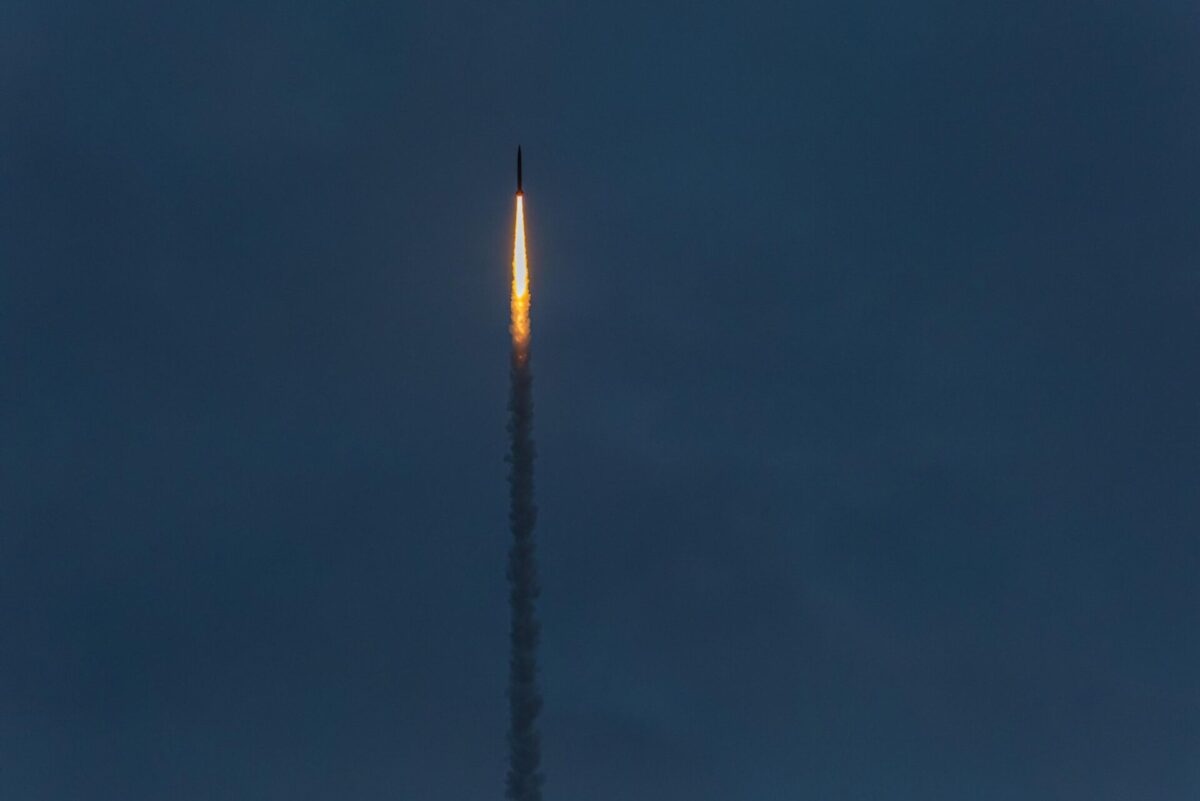
Separately, the private manufacturer Fire Point has been developing the FP-7 tactical ballistic missile and the larger FP-9, both revealed in late 2025 and displayed at Eurosatory 2026 in Paris. Fire Point published photographs on July 29, 2026, showing an unidentified missile in powered flight that may have been an FP-7 or its FP-7.x interceptor derivative.
Zelenskyy last addressed the program publicly on July 15, 2026, in his Ukrainian Statehood Day address, when he described some Ukrainian ballistic missiles and deep-strike systems as already operational, citing a reach of 2,884 kilometers (1,792 miles), the distance to the Omsk refinery in Russia.
FREYJA results sought by early 2027
Zelenskyy also called for faster progress on FREYJA, the European anti-ballistic system initiated by Fire Point and launched in Paris on July 13, 2026. He declared that ten countries are now involved and that Ukraine will supply the interceptor and the launcher, with European partners contributing radars, sensors and other components. He set the turn of 2026 to 2027 as the point at which he expects “concrete results,” noting that comparable systems elsewhere took decades to develop.
This push comes as Ukraine struggles to source interceptors capable of engaging Russian ballistic missiles. Zelenskyy suggested that Ukrainian diplomats and defense officials should identify where PAC-2 and PAC-3 rounds for Patriot batteries are available worldwide, a search complicated by the diversion of Ukraine-bound interceptors to the Persian Gulf earlier in 2026.
The threat itself continues to grow, with a North Korean missile unit deploying to western Russia with up to 120 ballistic missiles.