
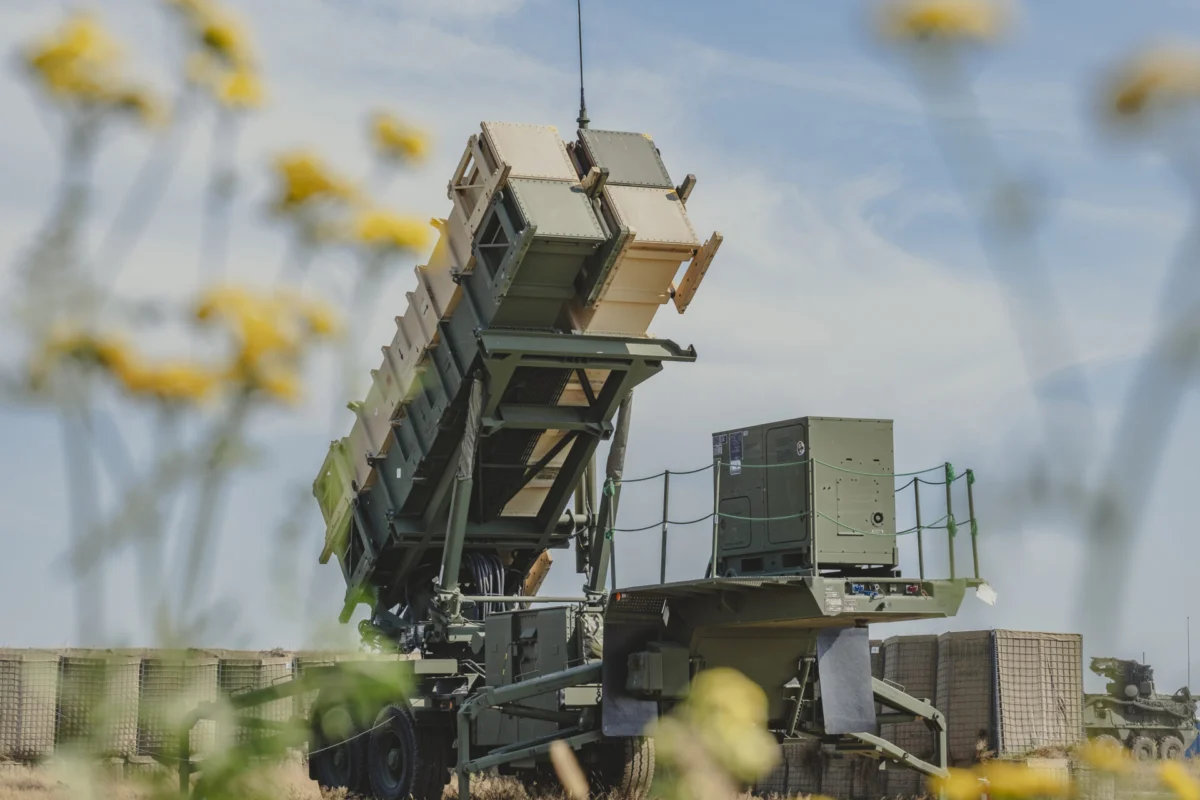
The United States has informally asked Poland to consider redeploying one of its two Patriot air defense batteries to the Middle East and to transfer PAC-3 MSE interceptors already in Polish military possession, Polish daily Rzeczpospolita reported on March 31, 2026, citing sources familiar with the discussions. Poland’s defense minister rejected the idea the same day.
“Our Patriot batteries and their armaments serve to protect Polish skies and NATO’s eastern flank. Nothing is changing in this regard and we are not planning to move them anywhere,” Defense Minister Władysław Kosiniak-Kamysz wrote on X on March 31, 2026.
Nasze baterie Patriot i ich uzbrojenie służą do ochrony polskiego nieba i wschodniej flanki NATO. Nic w tej kwestii się nie zmienia i nigdzie nie planujemy ich przemieszczać! Nasi sojusznicy dobrze wiedzą i rozumieją jak ważne mamy tu zadania. Bezpieczeństwo Polski jest…
— Władysław Kosiniak-Kamysz (@KosiniakKamysz) March 31, 2026
The approach was made in unofficial conversations between US and Polish officials, according to the report. Poland reached full operational readiness with both Patriot batteries in late 2025. The systems include 16 launchers capable of engaging targets at distances of up to 100 kilometers. The PAC-3 MSE interceptors now in Polish hands were acquired through a contract signed in 2019 for approximately 200 missiles, most of which have already been delivered.
Prime Minister Donald Tusk had previously stated, more than two weeks before the report’s publication, that Poland would not send its troops to Iran, though his remarks left the question of equipment transfers unaddressed.
PAC-3 consumption outpacing production
The reported US request reflects the scale of munitions expenditure since the start of Operation Epic Fury. The PAC-3 MSE is in particularly high demand because it is the only Patriot interceptor capable of reliably defeating ballistic missiles at range, making it irreplaceable in a theater where Iran has employed ballistic missiles alongside drone swarms.
According to estimates by the Royal United Services Institute, the US and Gulf states fired over 1,800 Patriot interceptors in the first 16 days of the conflict, including at least 1,285 PAC-3 rounds by Gulf partners alone, with US and Saudi forces accounting for a further 519 rounds across PAC-3 and PAC-2 variants.
Lockheed Martin produced roughly 600 PAC-3 MSE rounds in 2025. At that output, replacing what was expended in the opening two weeks of the conflict alone would take more than two years. Reaching an annual production rate of 2,000 interceptors is projected to take seven years.
The Pentagon is considering whether to redirect Ukraine-bound Patriot interceptors to the Middle East, where Operation Epic Fury has strained US stockpiles.
Broader delivery delays likely for Poland
The Rzeczpospolita report also flags a wider risk to Poland’s arms procurement schedule. A second Patriot contract, signed in autumn 2023 for six additional batteries and approximately 600 PAC-3 rounds, has not yet entered the delivery phase. Those shipments are expected to begin in 2027, but Polish military officials privately consider schedule slippage highly probable given current production pressures.
Beyond Patriot, deliveries of other US-made weapons procured by Poland may also face disruption. More than 400 AIM-120 air-to-air missiles of various variants have been expended in recent weeks; Poland has ordered the same type. Similar concerns apply to AGM-158 JASSM-ER cruise missiles and APKWS guided rockets, both on order for Polish platforms including AH-64E Apache helicopters.
The structure of Foreign Military Sales agreements leaves Poland with limited recourse. Under FMS rules, no penalty clauses apply to delivery delays, regardless of how long they extend.
Switzerland faces a similar challenge, with a wait of at least five years for its Patriot batteries and a cost increase of up to 50% after Washington informed Bern of multi-year delivery delays. In response, Switzerland froze its Patriot payments. The US nonetheless redirected funds from Bern’s separate F-35 acquisition account to cover the amounts, a mechanism made possible by the pooled structure of FMS financial arrangements.
Poland accelerates domestic production capacity
Poland signed a contract on March 31, 2026, for a CAMM-ER missile maintenance and production center to be built within the Military Electronics Works, part of the Polish Armaments Group.
The CAMM-ER is a medium-range surface-to-air missile developed by MBDA, which Poland is procuring as part of its Narew short- and medium-range air defense program. The facility carries an investment value of over 100 million Polish zloty (~$25 million).
The Polish government has also committed nearly 4 billion zloty (~$1 billion) to recapitalize the PGZ Narew consortium, which is focused on short- and medium-range air and missile defense.