
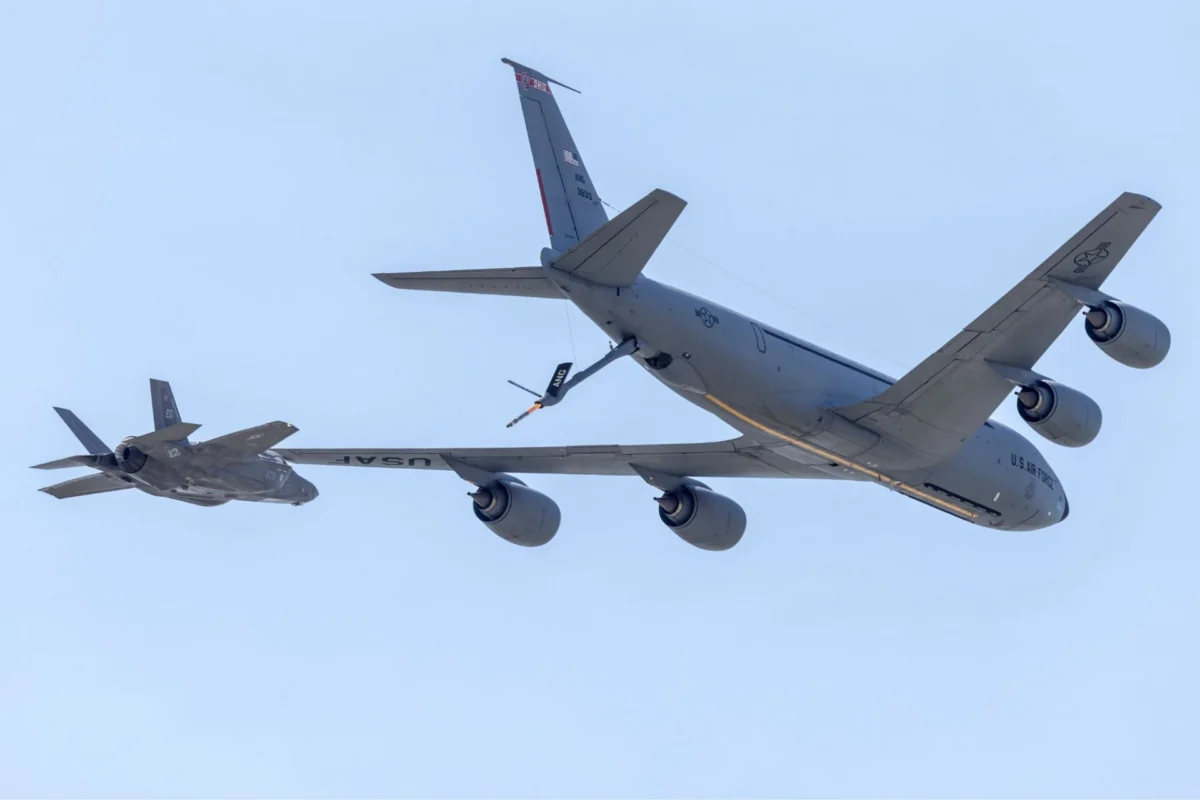
The US Air Force has withdrawn two KC-135 Stratotanker refueling aircraft from Bulgaria’s Bezmer Air Base, ending a deployment that had drawn sharp criticism from Iran.
The tankers departed on August 21, 2026, weeks ahead of their authorized expiration in early October 2026, according to Bulgarian Defense Minister Dimitar Stoyanov, as reported by the Bulgarian News Agency.
US Air Forces in Europe-Air Forces Africa confirmed the departure over the weekend, saying the tankers left to support “other operational requirements.”
A defense official also confirmed the withdrawal to US military independent outlet Stars and Stripes on August 24, 2026.
Deployment authorized through October 2026, cut short by weeks
The KC-135s, air-to-air refueling tankers based on the Boeing airframe, had arrived in Bulgaria on July 31, 2026, following a request from the US Embassy in Sofia to support American operations in the Middle East.
Bulgaria’s Parliament approved the deployment on July 22, 2026, authorizing up to eight KC-135s and 250 personnel to be stationed at Bezmer Air Base, located in the southeastern part of the country, for a period running from July 24, 2026, through October 1, 2026.
The United States has withdrawn two KC-135 aerial refueling aircraft from Bulgaria's Bezmer Air Base, nearly a month after their deployment to the NATO member state. Bulgarian Defence Minister Dimitar Stoyanov confirmed aircraft's departure, saying all flights during deployment pic.twitter.com/PYdVTIQf9o
— Shogri (@shogri786) August 24, 2026
While in Bulgaria, the tankers were limited to training missions conducted in allied airspace to the west and northwest.
In a statement, an Air Force spokesperson said US military aircraft routinely transit and are hosted by allied and partner nations, including Bulgaria, under existing access, basing, and overflight agreements.
“We are grateful for Bulgaria’s support in regional security and we look forward to our continued partnership, remaining always vigilant in our collective defense,” the spokesperson said.
Iran warned Bulgaria against “complicity” before withdrawal
The deployment drew immediate criticism from Iran, which argued that Bulgaria would be complicit in “aggression and war crimes” by hosting the aircraft.
Tehran characterized the move as an act of aggression under international law and signaled in early August 2026 that American military installations in Europe, including those in Bulgaria, could become targets if the US continues to escalate the nearly six-month-old conflict.
Following the tankers’ departure, Iranian foreign ministry spokesman Esmail Baghaei said Tehran would not allow the war to end on “the terms of the aggressor,” according to the Islamic Republic News Agency.
Addressing the withdrawal directly, Baghaei said Iran hopes “other countries that have in some way made their bases and facilities available to the United States… will also take necessary action.”
Broader tensions with Iran
The tankers’ exit comes as the US prepares to escalate economic pressure on Iran.
Treasury Secretary Scott Bessent said in a post on X that the US would unveil what he called “the single greatest financial offensive ever” against Iran, describing the sanctions as targeting “every economic lifeline that sustains the tyrannical regime until Tehran stands alone.”
In the Second World War, D-Day marked the historic beginning of a campaign with our allies to target and drive the enemy from its positions, including those in third countries. Today, in that same spirit, we are launching an economic onslaught against Iran’s financial connections… pic.twitter.com/1fLyobUucu
— Treasury Secretary Scott Bessent (@SecScottBessent) August 24, 2026
President Donald Trump said earlier in the week that he intends to impose tougher economic measures on Iran, as well as on any country that continues to trade with or otherwise support it, though it remains unclear how broadly those measures might apply to nations such as China and Russia.
A 60-day ceasefire window between the US and Iran expired the week prior, and commercial shipping through the Strait of Hormuz remains disrupted.