

The presidents of Estonia, Latvia, and Lithuania issued a joint statement on May 21, 2026, urging NATO to transition its Baltic Air Policing mission into a full air defense mission and to reinforce the alliance’s eastern flank with additional counter-drone capabilities.
The declaration by Alar Karis, Edgars Rinkēvičs, and Gitanas Nausėda follows a week of escalating airspace incidents along the EU’s external border, including the shootdown of a drone over Estonia by a Romanian Air Force F-16 on May 19, 2026, and simultaneous air danger alerts in Lithuania and Latvia the following day. Latvia is now issuing drone-related warnings to its border regions on an almost daily basis.
From air policing to air defense
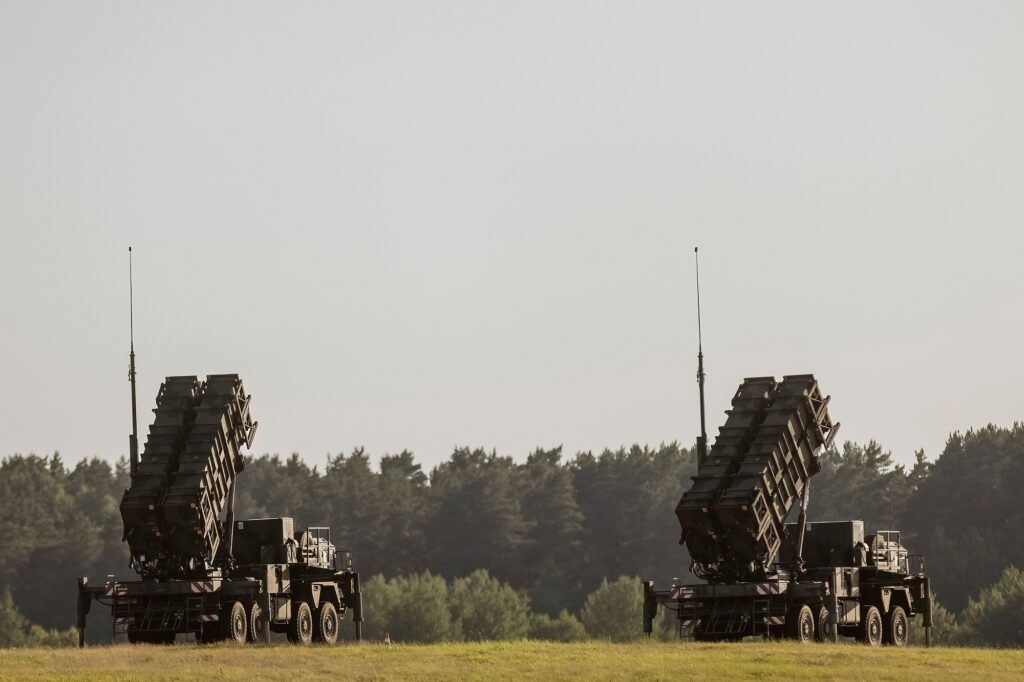
The three heads of state called for “transitioning from an air policing to an air defense mission and enhancing the current Allied presence in our countries with counter-drone capabilities,” according to the text published by the Estonian presidency.
NATO Baltic Air Policing has provided Quick Reaction Alert coverage over the airspace of Estonia, Latvia, and Lithuania since 2004, with rotating fighter detachments from allied air forces. The current rotation is led by the French Air and Space Force, with Rafale B fighters deployed at Šiauliai Air Base in Lithuania alongside a Romanian Air Force F-16 contingent. Portuguese F-16Ms operate from Ämari Air Base in Estonia.
The presidents also called on NATO allies to reinforce the alliance’s enhanced Vigilance Activities, Eastern Sentry, and Baltic Sentry, with additional capabilities. Launched in September 2025 after Russian drone incursions into Poland, Eastern Sentry has pooled fighter, frigate, and ground-based air defense assets from several NATO members. Karis, Rinkēvičs, and Nausėda further underlined the importance of the Baltic Defence Line and the EU’s Eastern Flank Watch initiative as part of a wider hardening of the bloc’s eastern border.
Pushback on Russian narrative
The joint statement also rebutted Moscow’s accusations that Baltic territory had been used for drone attacks on Russian targets, a claim Russia made at the UN Security Council on May 19, 2026, after a Ukrainian drone struck an oil depot in Rēzekne, Latvia, earlier in the month. The Rēzekne incident has already cost Latvian Defense Minister Andris Sprūds his job.
“As responsible NATO Allies, the Baltic States have never allowed their territories and airspace to be used for drone attacks against targets in Russia,” the three presidents wrote, describing Russian statements as a “disinformation campaign” intended to divert international attention from the war in Ukraine.
The leaders also called for a permanent NATO fighter jet presence in the Baltic States as a long-term deterrent, building on the more than two decades of rotational coverage since 2004.