

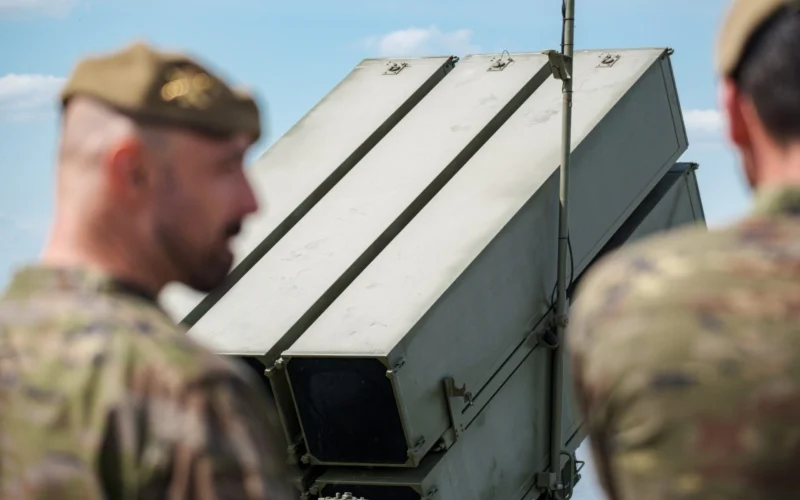
Andris Spruds resigned as Latvia’s defense minister on May 10, 2026, shortly after Prime Minister Evika Silina publicly demanded he step down over the country’s response to a Ukrainian drone that struck an oil storage facility in Rezekne three days earlier.
Silina named Latvian Army Colonel Raivis Melnis, currently serving as the Latvian Defense Ministry’s representative in Ukraine, as Spruds’ successor.
Melnis has served in the Latvian National Armed Forces since 1998 and obtained his military education in London. He has international service experience and on February 13, 2026, he also joined the prime minister’s office as a freelance, unpaid adviser on military cooperation.
Silina argued that the defense portfolio now required a professional at its head, saying Melnis’s service in the armed forces, military education abroad, and current work in Ukraine inspired confidence that the national defense would be led competently, purposefully, and outside pre-election rhetoric. A coalition meeting on the appointment was expected on May 11, 2026.
The prime minister announced her demand in a statement on X on May 10, 2026, shortly before Spruds was due to hold his own press conference, at which the defense minister confirmed his resignation.
The resignation has since triggered a broader political crisis: Silina’s Jauna Vienotiba (New Unity) faces challenges from within and outside the coalition, with the opposition National Alliance calling for a new government and Spruds’ Progresivie (The Progressives) weighing whether to remain in the coalition at all.
Trust lost over Rezekne incident
In her statement, Silina said the defense minister had lost her trust and the trust of society, adding that “the drone incident that occurred this week clearly demonstrated that the political leadership of the defense sector has failed to fulfill its promise of safe skies over our country.” She argued that the failure was particularly unacceptable given that Latvia’s defense budget had been raised to nearly 5% of GDP, the highest level in the country’s history.
The Latvian military had received advance indications overnight on May 7, 2026, that drones could enter Latvian airspace and had activated mobile air defense groups in response, according to Māris Tutins, a spokesperson for the National Armed Forces. However, the drones were not intercepted.
The prime minister also criticized the ministry’s pace in absorbing Ukraine’s operational experience with counter-drone systems, saying Kyiv had been ready to share its know-how but that practical steps were only now being planned, with the involvement of the prime minister’s office and the foreign ministry. She added that the engagement of Latvia’s domestic defense industry in capability development had been too slow and said the country could no longer afford to buy what was available rather than develop what its security required.
Silina also noted recent management instability at the ministry, including the resignation of its state secretary on April 22, 2026, the second person to leave that post in a relatively short period.
Political realignment looms
In his press conference on the evening of May 10, 2026, Spruds said he had not been informed by Silina before her statement was published and accused the prime minister of misrepresenting how the decision had been communicated. He said the two had instead been scheduled to meet on the afternoon of May 11, 2026, to discuss the issues at hand.
Spruds said in a separate statement on X that he had decided to step down “in order to protect the Latvian army from being dragged into a political campaign,” and said the defense sector had done, and would continue to do, much to protect the country’s airspace and ensure a sense of security for citizens.
In the days following the Rezekne strike, Spruds had already publicly acknowledged that he was prepared to take responsibility for the failure to intercept the drones.
The resignation has set off a political crisis that extends well beyond the defense portfolio. Latvian opposition lawmaker Edvards Smiltēns publicly challenged Spruds in the aftermath, arguing that the civil defense warning system had either failed or responded too slowly, and calling on the minister to answer to parliament for Latvia’s ability to protect its citizens.
Par droniem Rēzeknē un aizsardzības ministra Sprūda centimetru!
— 🇱🇻 Edvards Smiltēns (@EdvardsSmiltens) May 7, 2026
Šī ir jau trešā reize, kad aizsardzības ministram Andrim Sprūdam mēs uzdodam jautājumu – cik garš ir Jūsu pasludinātais centimetrs?
“Katru gaisa telpas pārkāpēju ir jāspēj nekavējoties notriekt!” (Andris Sprūds -… pic.twitter.com/6PTOPTxx9a
On May 11, 2026, the National Alliance, an opposition party that had called for Spruds’ departure, announced it was ready to form and lead a national security government until the next Saeima (parliamentary) elections due in October 2026, and said it would invite the United List, the Green and Farmers Union, and New Unity to talks on forming a workable government. Party leader Ilze Indriksone said New Unity had exhausted its ability to govern, arguing that the current coalition had long since run its course and was creating serious risks to Latvia’s security and future.
The Progressives, Spruds’ party, and a junior coalition partner said they would decide within days whether to remain in the coalition. Their decision will be critical: if they leave, Silina’s government loses its majority, making the National Alliance’s push for a reshuffle considerably harder to ignore.
A pattern of overspill across the Baltics
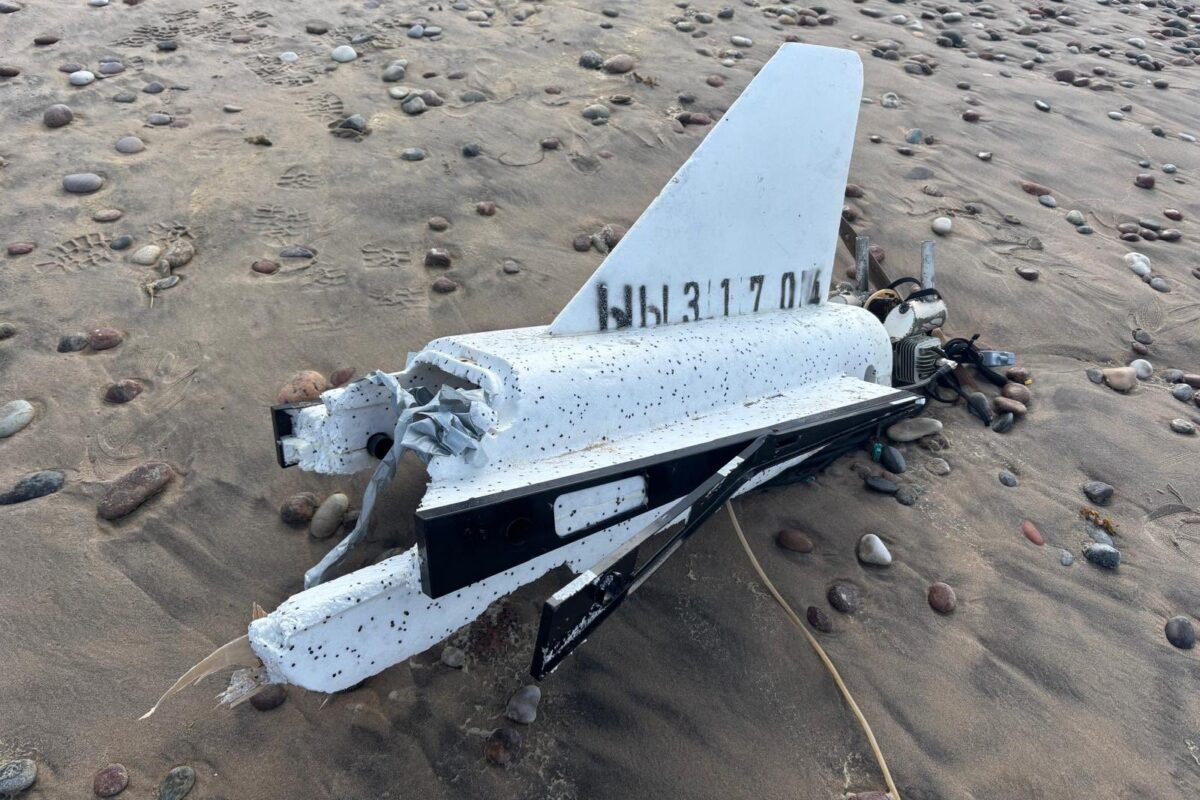
The Rezekne strike was the latest in a growing series of drone incidents along NATO’s eastern flank.
Two drones entered Latvian airspace from Russian territory overnight on May 7, 2026 and crashed in the eastern Latgale region. One was confirmed to have struck the oil storage facility in Rezekne, damaging empty tanks. Latvian police later said both drones may have hit the same depot, with the investigation continuing into whether what had initially been treated as a single strike actually involved two separate impacts.
The confusion around the incident’s precise details was compounded by the spread of false claims online, including reports that a Ukrainian drone had crashed on a passenger train on the Riga-Daugavpils rail line near Nicgale-Vabole. The Latvian State Police issued a formal rebuttal, warning that deliberately spreading false and harmful information that constitutes a provocation is a criminal offense under Latvian law. There were no injuries.
Ukrainian Foreign Minister Andrii Sybiha said on May 10, 2026, that investigations had confirmed the drones were Ukrainian and that Russian electronic warfare had diverted them from their intended targets inside Russia.
NATO Baltic Air Policing fighters were scrambled during the incident, with French Rafale and Spanish Eurofighter Typhoon detachments currently deployed to Siauliai air base in Lithuania. Latvian cell broadcast warnings were activated again overnight into May 9, 2026, in response to several unmanned aerial vehicles detected near the country’s eastern border, although none were reported to have crossed into Latvia or come down on Latvian soil.
The change of leadership in Riga comes as the three Baltic states continue to press NATO and the European Union for additional ground-based air defense systems, low-altitude radar coverage, and counter-drone capabilities, citing the limitations exposed by the recent string of incidents.
| Incident | Date | Location |
| Russian Shahed-type drone crashes in Latvia | September 2024 | Gaigalava parish, Latvia |
| Russian Gerbera drone overflies Vilnius with active warhead | July 2025 | Vilnius, Lithuania |
| Russian Gerbera drone debris washes ashore in Latvia | September 2025 | Ventspils, Latvia |
| Ukrainian drone crashes in Lithuania | March 23, 2026 | Varena district, Lithuania |
| Ukrainian drone crashes in Latvia | March 25, 2026 | Kraslava district, Latvia |
| Drone strikes power plant chimney in Estonia | March 25, 2026 | Auvere, Estonia |
| Two Ukrainian drones crash in Finland | March 29, 2026 | Kouvola, Finland |
| Two Ukrainian drones strike oil depot in Latvia | May 7, 2026 | Rezekne, Latvia |