
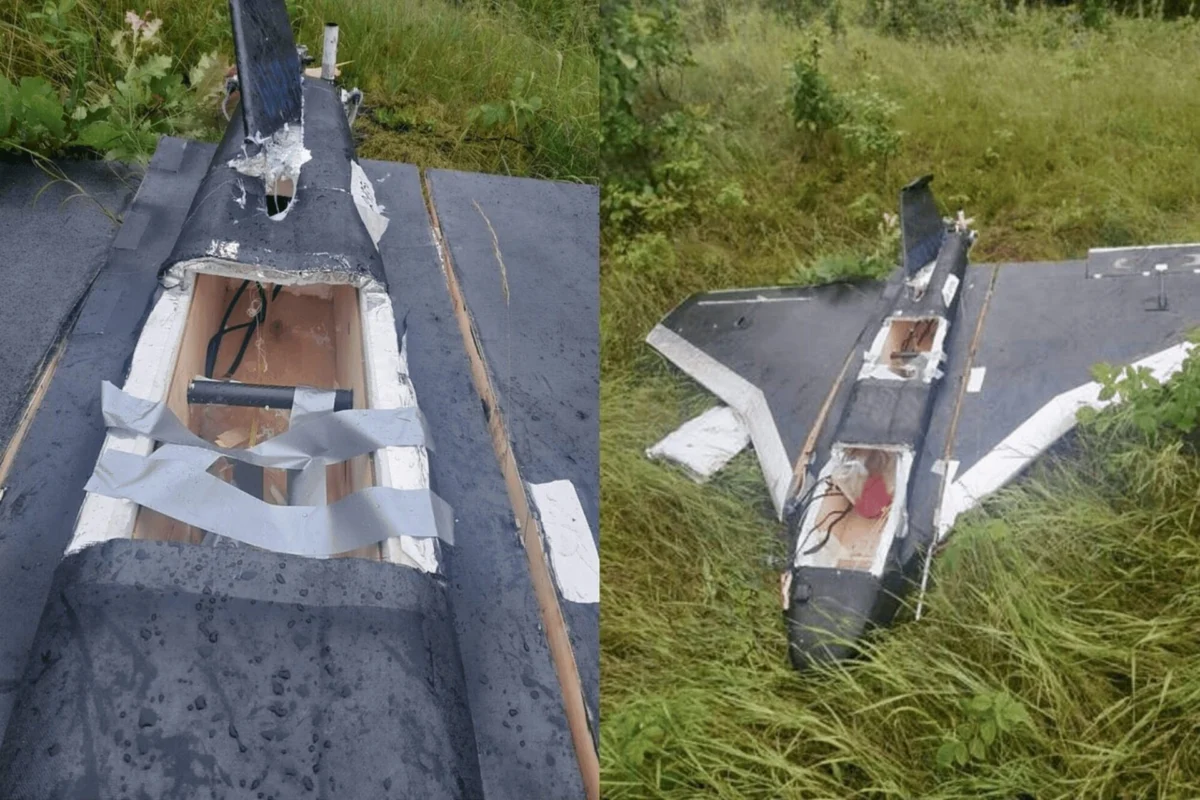
Latvia’s Air Force has identified a foreign unmanned aerial vehicle entering the country’s airspace from Russia before crashing in the southeastern Krāslava district, according to the Latvian Ministry of Defence and the National Armed Forces.
Early warning systems detected what officials described as a sound resembling an explosion, and authorities later found drone debris at the scene. The ministry said no civilians were injured, no civilian infrastructure was damaged, and no further threat to Latvian airspace or the population had been identified.
Units from Latvia’s armed forces, state police, and border guard were deployed to the site, while an investigation into the circumstances of the incident is now underway. Krāslava municipality has also been informed, the ministry said.
❗️Latvijas gaisa telpā ielidojis un nokritis drons.
— Aizsardzības ministrija (@AizsardzibasMin) March 25, 2026
Gaisa spēki ir identificējuši ārvalsts bezpilota lidaparāta ielidošanu Latvijas gaisa telpā no Krievijas. Agrīnās brīdināšanas sistēmās konstatēta eksplozijai līdzīga skaņa Krāslavas novadā.
Notikuma vietā atrodas…
Object tracked after crossing border
Latvian public broadcaster LSM, citing Egils Leščinskis, deputy chief of the Joint Staff of the National Armed Forces, reported that military radar detected signs of an unidentified aerial object approaching Latvian territory and crossing the state border at 2:19 a.m. He said the object was also picked up by acoustic sensors, prompting the dispatch of an air defense unit. According to Leščinskis, the object detonated at around 2:30 a.m. near the village of Dobročina in Krāslava district.
Leščinskis said the military was continuing to search for all parts of the drone in order to build a clearer picture of the incident. He also said that, at the time of his remarks, the manufacturer and country of origin of the object itself had not yet been identified, an important nuance, even as Latvian authorities said the drone entered the country from Russian airspace.
LSM also reported that Latvian sensors detected another object earlier in the night, around 12:50 a.m., entering from the Belarusian side before turning back and heading into Russia. Asked whether the incidents could have been coordinated, Leščinskis said that was unlikely, adding that the drone that crashed may have gone off course or been affected by electronic warfare while operating around what he called technically important objects.
Crashed drone identified as Ukrainian aircraft
Latvian President Edgars Rinkēvičs said the drone that entered Latvian airspace from Russia and crashed in Krāslava district was a Ukrainian drone involved in a coordinated operation against targets in Russia.
Deputy Chief of the National Armed Forces Joint Staff Egils Leščinskis said the drone detonated near Dobročina at around 2:35 a.m. and had been equipped with explosives. He added that there was no evidence or suspicion that the drone had been intentionally directed at Latvia, suggesting instead that such aircraft may have strayed off course or been affected by electronic warfare.
Latvijā nokritušais drons identificēts kā Ukrainas izcelsmes
— NBS (@Latvijas_armija) March 25, 2026
Naktī uz trešdienu, 25. martu, Latvijas gaisa telpā ielidojušais bezpilota lidaparāts, izvērtējot atrastās atlūzas, ir identificēts kā Ukrainas izcelsmes drons.
Nacionālie bruņotie spēki turpina sadarbību ar Valsts… pic.twitter.com/pEUmLdC4D2
Latest incident in a growing pattern
The crash is not Latvia’s first such incident since Russia’s full-scale invasion of Ukraine. In September 2024, Latvian authorities identified a Russian Shahed-type drone that had entered Latvian airspace from Belarus and crashed in Gaigalava parish. The defence ministry later said the drone had lost control, likely due to Ukrainian countermeasures, and confirmed there were no casualties or damage to third-party property.
Exactly a year later, drone debris washed ashore near Vārve parish in Ventspils municipality, on the northwest coast of Latvia, along the Baltic Sea. The wreckage, identified as part of the vertical stabilizer of a Russian Gerbera decoy drone, was spotted on the beach and reported to authorities.
Latvia has since tightened parts of its eastern airspace regime. In October 2025, the country said it would maintain partial airspace restrictions along its borders with Russia and Belarus during the night, arguing that the measures would support more detailed surveillance, counter-drone simulations, and the deployment of mobile combat units.
The incident in Latvia coincided with an overnight drone-related incident in neighboring Estonia, where a drone entering from Russia struck the chimney of the Auvere power plant. Estonian authorities said no one was injured and that the drone did not damage power infrastructure.
Two days earlier, Lithuania reported that a military drone had entered its airspace and crashed into a lake near the Belarus border. Lithuanian authorities later said the drone had in fact come from Ukraine and had been intended to strike Russia’s Primorsk oil export terminal before going astray.