
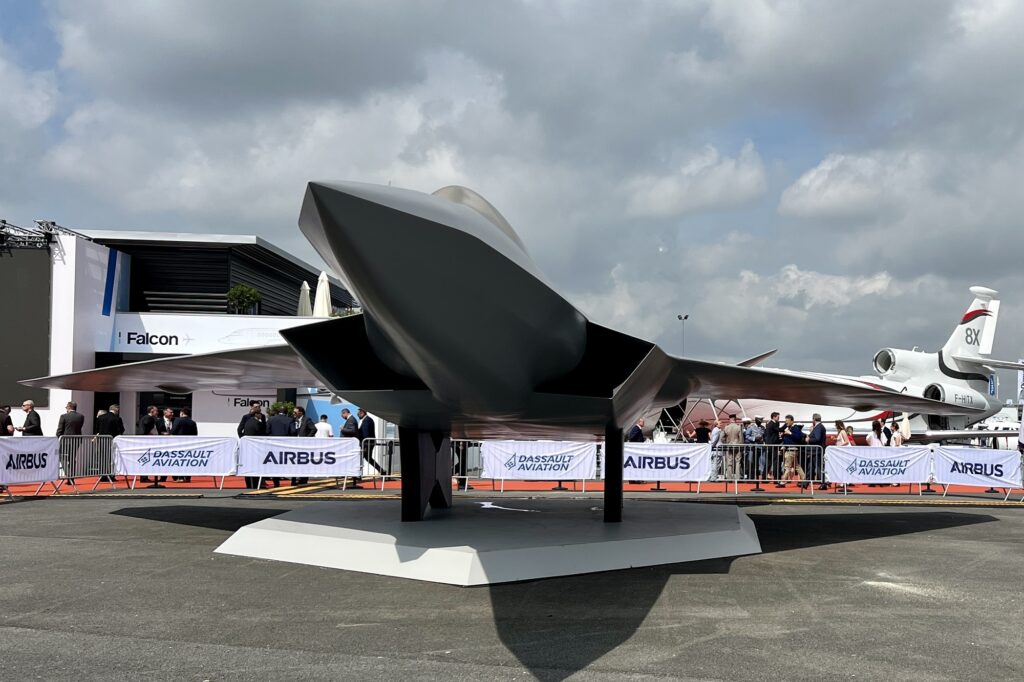
India’s Ministry of Defence has told a parliamentary committee that it has started work on joining the French-led Future Combat Air System (FCAS), two months after the collapse of the Franco-German fighter that sat at the center of the program.
The disclosure came in the Standing Committee on Defence’s Twenty-Fifth Report, presented to the Lok Sabha and laid in the Rajya Sabha on August 7, 2026.
Answering a recommendation on sixth-generation planning, the ministry said in a single sentence that it had “initiated efforts in a concerted manner to co-join” the sixth-generation fighter aircraft development program, identifying it as FCAS and describing it as spearheaded by the French government.
The reply offered no further detail, leading the committee to request a detailed status report on the development and acquisition of sixth-generation aircraft, any roadmap prepared, and a tentative timeline for acquisition. It also asked for a status report on the indigenous Advanced Medium Combat Aircraft (AMCA), which the Indian Air Force has described to the committee as an inflection point for self-reliance.
A recommendation overtaken by events
The recommendation the ministry was answering was written before the European program broke apart. The committee’s Twentieth Report, presented on March 18, 2026, described two consortia pursuing sixth-generation aircraft: the GCAP, grouping the United Kingdom, Italy and Japan, and the FCAS, with France and Germany [the report omits Spain – ed. note]. It recorded that the Indian Air Force would try to join forces with one of them and begin considering a sixth-generation fighter immediately, so as not to fall behind.
By the time the ministry furnished its replies in July 2026, the second of those consortia no longer existed in the form described. France and Germany abandoned the joint fighter on June 8, 2026, after years of unresolved disputes between Dassault Aviation and Airbus Defence and Space over leadership, workshare and intellectual property. Berlin has since moved toward a national program backed by German industry. The ministry’s reply refers to FCAS as a French-led effort rather than a Franco-German one.
Dassault Aviation Chairman and CEO Eric Trappier told a French Senate committee on July 1, 2026, that the company remained open to cooperation, provided the rules were agreed at the outset, and did not exclude a non-European partner.
Presenting half-year results on July 22, 2026, Trappier said he personally favored such an arrangement but that the decision rested with the French state. Dassault said discussions were under way with the French government on a demonstrator for a future combat aircraft, either on a national basis or in cooperation.
Converging requirements

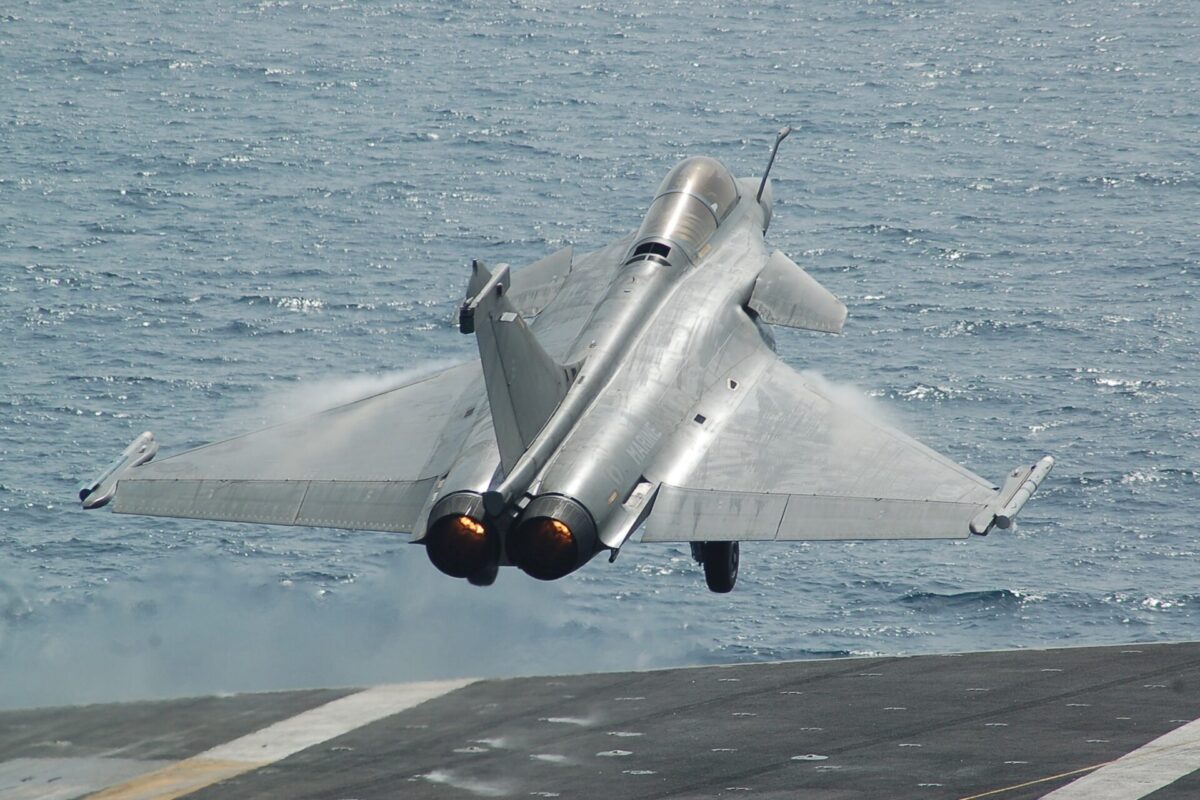
Two of the operational requirements that proved most divisive between Paris and Berlin are shared by New Delhi. France and India both maintain an airborne component of their nuclear deterrent and operate fixed-wing aircraft carriers. Germany does neither.
Franco-Indian industrial ties have also deepened. India’s Defence Acquisition Council granted Acceptance of Necessity in February 2026 for 114 Rafale fighters under the MRFA program, which the ministry told the committee is being pursued both to close a capability gap and to expand manufacturing capacity in India.
A joint statement issued during President Emmanuel Macron’s visit to New Delhi from February 17 to 19, 2026, established a Joint Advanced Technology Development Group and elevated the relationship to a “Special Global Strategic Partnership.”
China adds urgency
India’s interest is also driven by the pace of Chinese development, measured against the state of its own fighter programs. The People’s Liberation Army has fielded the fifth-generation Chengdu J-20 and Shenyang J-35, while prototypes of two apparent sixth-generation designs, the J-36 and J-50, have already flown.
India, meanwhile, is still struggling to ramp up production of the Tejas Mk1A, whose broader program traces its origins to the 1980s. Deliveries were due to begin in February 2024 but have been held up by shortages of General Electric F404-IN20 engines, leaving around 30 airframes built or at various stages of assembly and testing while awaiting powerplants. The Tejas Mk2 and AMCA remain under development, with the ministry telling the committee that the latter is targeted for 2035.
A Franco-Indian program could therefore offer something to both countries. India would gain access to a sixth-generation project aligned with its carrier and nuclear requirements, reducing the risk of falling further behind China if the AMCA schedule slips. France, in turn, could replace some of the funding, industrial capacity and prospective order volume lost with Germany.
Whether that alignment can survive negotiations over leadership, workshare and intellectual property, the same issues that fractured the original partnership, would be the decisive question.