
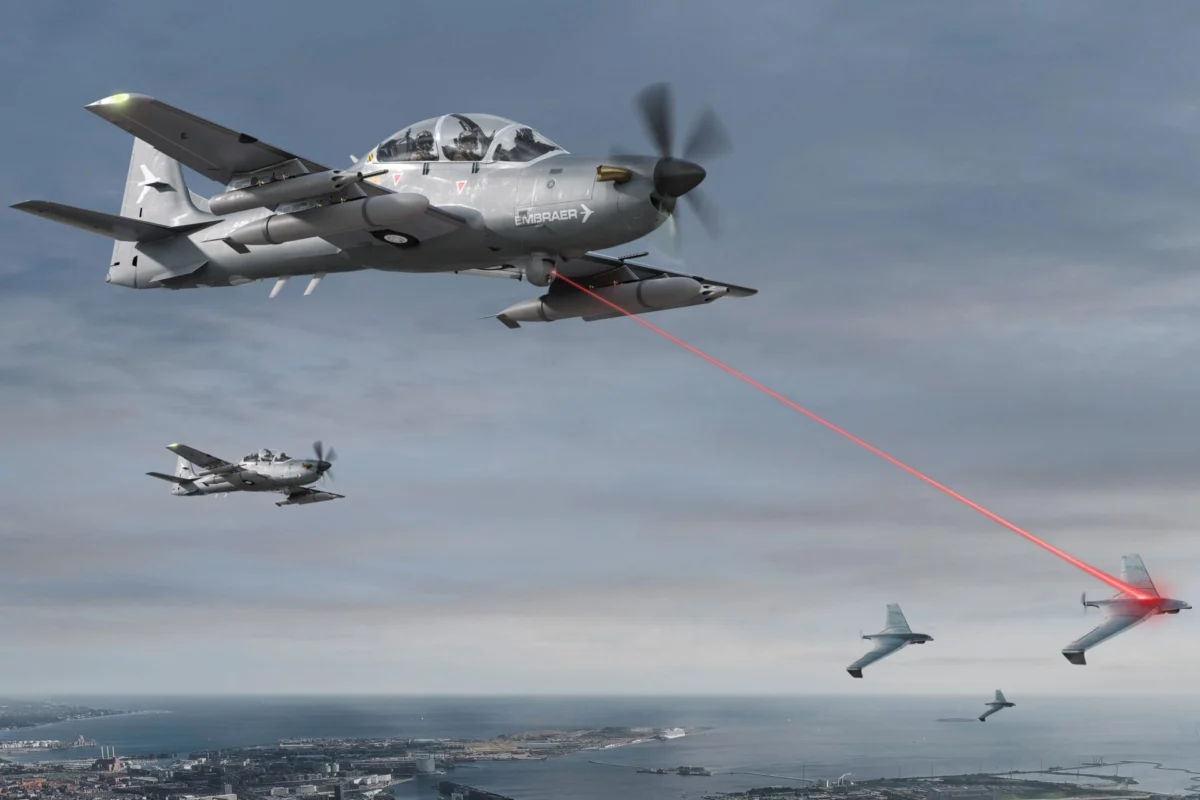
Latvia’s Air Force is assessing whether to acquire light combat aircraft capable of intercepting drones, with Embraer’s A-29 Super Tucano named as one of the platforms under consideration, the outgoing commander of the service has said.
Colonel Viesturs Masulis attended the Global Air and Space Chiefs’ Conference in London in mid-July 2026, where he met defense industry representatives to discuss the acquisition of light combat and training aircraft, according to Sargs.lv, the Latvian defense ministry’s news portal.
Institutional steps already taken
Masulis said the Latvian Air Force had received a tasking from the National Armed Forces Joint Staff to identify the most effective solutions, and that manufacturers had already been approached. Latvia is now awaiting financial and delivery estimates from industry, after which a detailed analysis and a possible course of action would be prepared.
He described the acquisition of such aircraft as a real option, while cautioning that any aviation solution requires substantial funding. The Latvian government has committed more than €1 billion to strengthening air defense, built on an additional €200 million a year between 2023 and 2027, and Masulis said air-based solutions could form one component of that wider system. The envelope covers air defense procurement as a whole and has not been earmarked for aircraft.
Masulis, who is handing command to Colonel Edmunds Svenčs, said he would encourage his successor to treat the type primarily as an airborne air-defense asset against slow-flying targets and drones, adding that the aircraft could also support Latvia’s Land Forces.
Latvia does not operate armed fixed-wing aircraft. Fighter cover over the three Baltic states is provided by allied detachments under NATO’s Baltic Air Policing mission, which shot down a drone over Latvian territory on June 8, 2026, after air threat warnings were issued in the country’s eastern municipalities.
An A-29 acquisition would therefore establish a national combat aviation capability from a standing start, with associated demands on pilot training, basing, weapons stocks and sustainment.
Why Latvia sees a role for a turboprop drone hunter
Interest in the A-29 reflects a wider argument that scrambling fast jets or expending surface-to-air missiles against cheap one-way attack drones is economically unsustainable.
Embraer made that case when it announced a partnership with US firm Valkyrie Aero in March 2026 to integrate the company’s Gunslinger artificial intelligence suite with the aircraft’s sensors and weapons. The system is intended to support the detection, tracking and engagement of unmanned threats using guns, guided rockets and other effectors.
The manufacturer argues that the A-29’s endurance and ability to match the speed of one-way attack drones make it well suited to the mission, although the configuration has not been demonstrated operationally against Shahed or Geran-type drones.
The aircraft offers patrol endurance exceeding six hours, electro-optical and infrared sensors, built-in .50-caliber machine guns, compatibility with precision-guided munitions and air-to-air weapons, and the ability to operate from short or unprepared runways.
Embraer launched the NATO-configured A-29N in 2023 with avionics and communications tailored to alliance standards. Portugal ordered 12 aircraft for €200 million in December 2024 and became its first operator when five were handed over a year later. Poland has also examined the type, with a delegation led by Major General Ireneusz Nowak visiting Embraer’s Brazilian facilities in January 2026.
Regional exposure
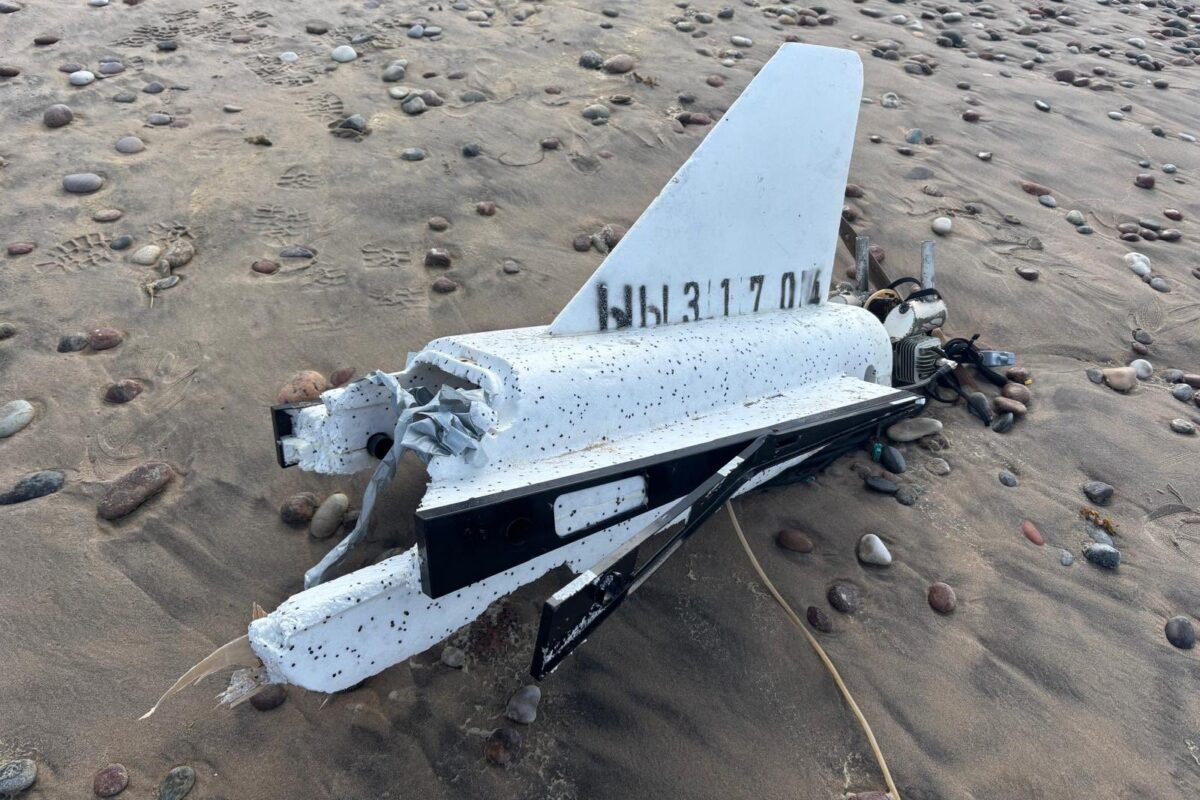
Latvia has repeatedly faced drone incursions linked to the war in Ukraine. Two drones entered Latvian airspace from Russia overnight on May 7, 2026, and crashed in the eastern Latgale region, one of them striking an oil storage facility in Rēzekne. The response cost Latvian defense minister Andris Sprūds his post and triggered a coalition crisis in Riga.
A further object entered from Russia and crashed near Krāslava in March 2026, while Latvia and Lithuania issued simultaneous air danger alerts on May 20, 2026.
Latvian officials have generally attributed such incidents to drones straying off course or being affected by electronic warfare rather than to deliberate attack.
Regional governments are nevertheless preparing for the possibility that a future incursion is deliberate. Lithuanian intelligence warned in August 2026 that Russia was considering a false-flag attack on Baltic critical infrastructure using Ukrainian-made drones. Poland and the three Baltic states have since stepped up protection at dams, power plants and gas facilities, with Latvian measures covering the Daugava dam near Riga and the Inčukalns underground gas storage site. Russia denies planning clandestine attacks and casts the warnings as a pretext for Western militarization.