
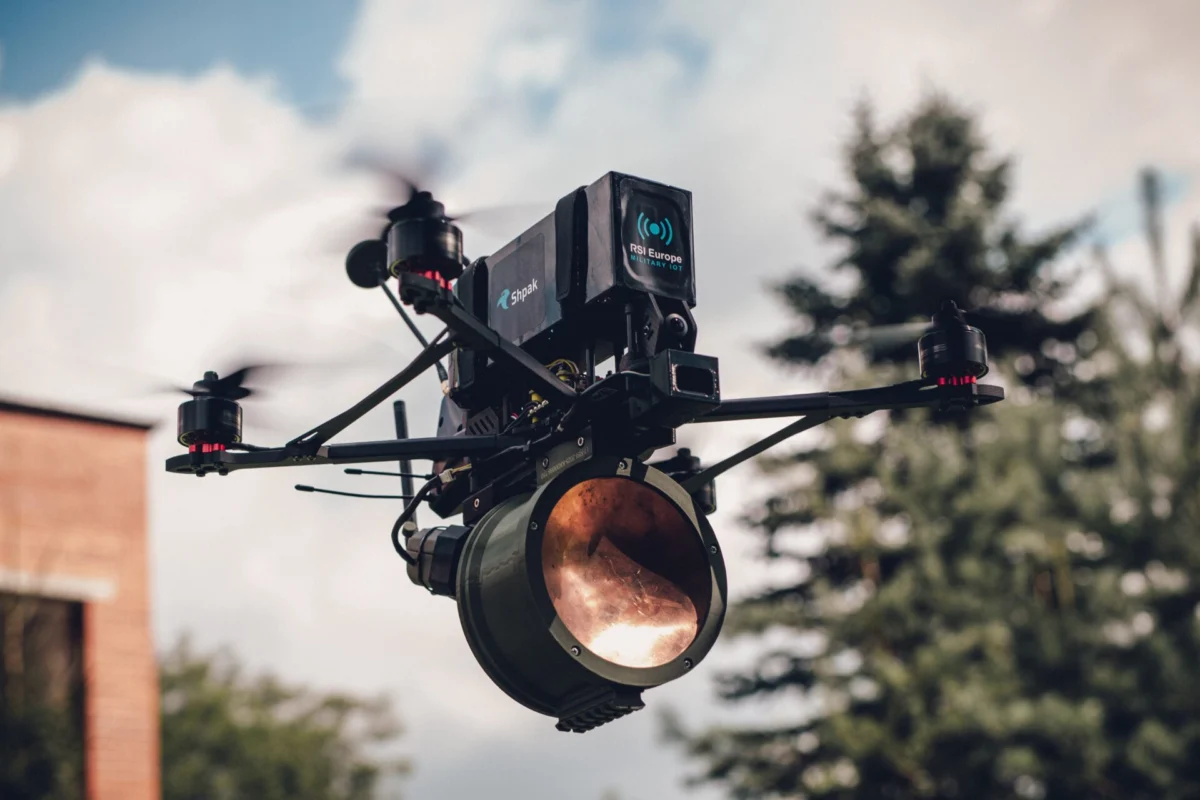
Vilnius-based drone manufacturer RSI Europe has completed delivery of 9,500 Shpak first-person view (FPV) systems for an undisclosed NATO member state, with most of the airframes transferred onward to the Ukrainian Armed Forces, the company announced on May 26, 2026.
The six-month program is by some distance the largest single contract in RSI Europe’s history. The company described the deal as a trilateral arrangement involving the firm, an unnamed trade partner and the purchasing government, neither of which it identified. A smaller share has been retained by the buyer’s armed forces for training and doctrine development, while the bulk has gone to Ukrainian units already operating the type in combat.
RSI Europe’s previous benchmark was the €4 million August 2024 procurement by Lithuania’s Defence Resource Agency, covering 5,000 drones for Ukraine and 2,300 for the Lithuanian Armed Forces. A smaller fiber-optic batch was delivered to Ukraine in July 2025.
Three variants and remote initiation sets

The new delivery covered three Shpak configurations. The Shpak FH uses frequency-hopping communications for contested electromagnetic environments. The Shpak FO carries fiber-optic spools of up to 15 km for control under heavy electronic warfare pressure. A third thermal-imaging variant is built for low-light and night operations.
The package also bundled in RISE-1 remote initiation sets, lightweight units with a 25 km line-of-sight range designed for combat engineers, explosive ordnance disposal teams and FPV loitering-munition strike groups.
From RISE-1 to volume FPV production

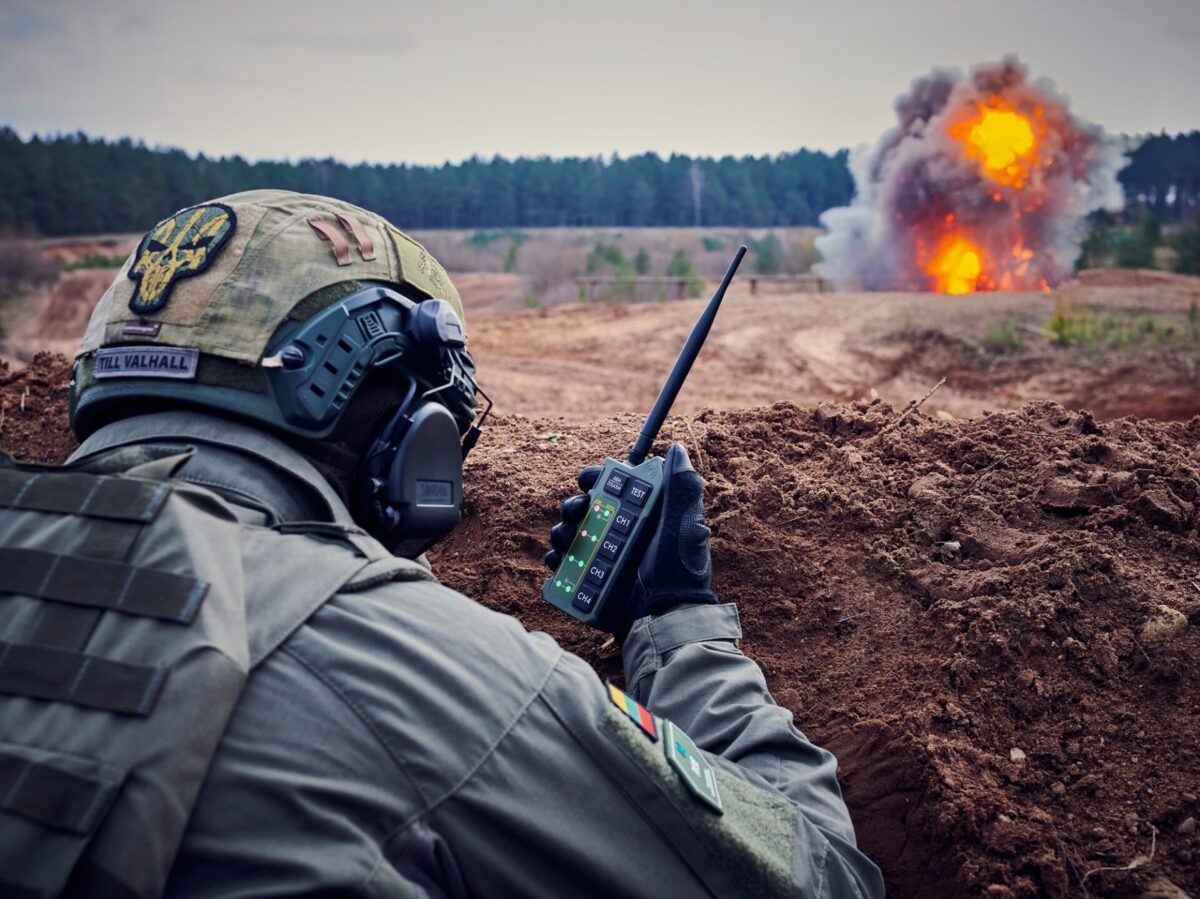
RSI Europe was founded in April 2022 in direct response to Russia’s full-scale invasion of Ukraine. It initially focused on remote-initiated electronics, the basis of the RISE-1 family, before pivoting to FPV strike drones as quadcopters became the dominant tactical class on the front lines.
Revenue reached €15.5 million in 2025, up roughly 80 percent year-on-year. RSI now counts 12 NATO and allied countries as users of its systems, with operator training publicly acknowledged for the Lithuanian Armed Forces, the Bundeswehr and the Belgian Armed Forces since June 2024.
Production tripled to 120,000 units
The contract has prompted RSI Europe to triple annual production capacity, from about 40,000 to 120,000 units a year. The 120,000 figure was first advertised in February 2026 at Enforce Tac in Nuremberg, alongside an NDAA-compliant Shpak variant now anchoring a US market push.
In May 2026, RSI entered into a partnership with Maryland-based WGS Systems to offer Shpak for US Department of War procurement. WGS was among 48 invitees to the Phase 2 Qualifier of the Pentagon’s Drone Dominance Program.
The Office of the Secretary of War’s $1.1 billion initiative aims to field hundreds of thousands of one-way attack drones by 2027, with Phase 2 alone committing at least $300 million for 60,000 drones, capped at $5,500 per FPV unit.
Baltic ecosystem draws EU attention
The expansion reflects a broader pattern across the Baltic states, where domestic firms are building an indigenous drone-strike ecosystem as the region absorbs stray drone incursions along the Ukraine-Russia flight path.
Two Latvian manufacturers have won Drone Coalition contracts to supply Ukraine with around 12,000 drones worth €17 million, while Estonia’s effort tilts toward counter-UAS, where Tallinn-based Frankenburg Technologies has seen its Mark 1 anti-drone missile become the first weapon fired from the Airbus Bird of Prey interceptor.
European Commission President Ursula von der Leyen is in Vilnius on May 26, 2026, to meet Baltic leaders and coordinate a response to the recent drone incidents, joined by European Commissioner for Defense and Space Andrius Kubilius.
I’m in Vilnius to send a clear message:
— Ursula von der Leyen (@vonderleyen) May 26, 2026
Europe stands in full solidarity and unity with Estonia, Latvia and Lithuania.
And we are stepping up our support.
Because when Baltic States are being tested, Europe as a whole is being tested. pic.twitter.com/5llHs7nsrW
The visit is also expected to address the expansion of EU funding mechanisms for collective defense capability. Ahead of her arrival, Von der Leyen said that “Russia’s public threats against the Baltic states are completely unacceptable.”