
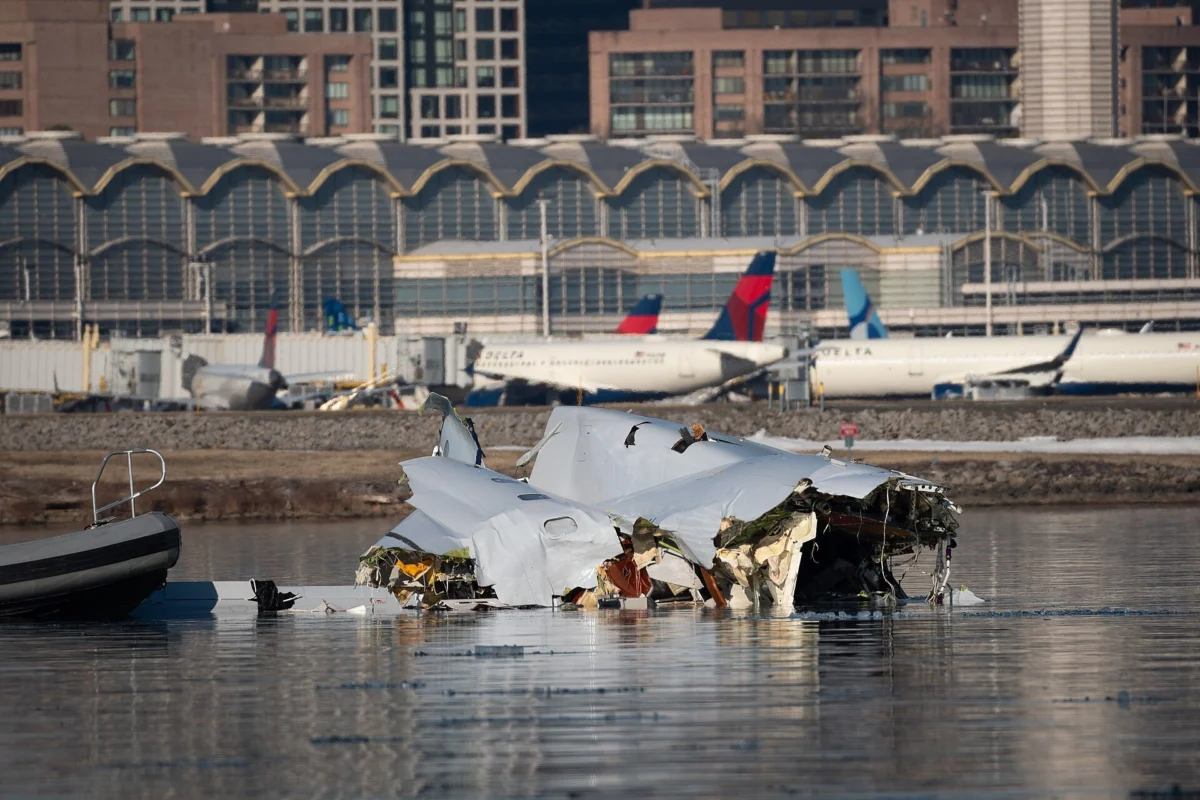
FAA Administrator Bryan Bedford told US lawmakers the agency is carrying out a “sweeping” reorganization aimed at closing safety gaps exposed by the fatal 2025 midair collision near Ronald Reagan Washington National Airport between a jetliner and Army helicopter.
Bedford also acknowledged direct FAA responsibility for missed warning signs before the crash, telling lawmakers the agency had data that should have prompted action but failed to interpret and act on it quickly enough.
“Our airspace system was providing warning signals prior to that tragic evening. The issue was not a lack of data — it was a failure to translate that data into action,” Bedford said in written testimony to a US Senate Commerce subcommittee. “That is the gap we are urgently closing.”
The restructuring includes streamlining leadership roles and eliminating internal silos that hinder transparency and information sharing, according to Bedford’s testimony reported by Reuters on May 18, 2026.
The January 2025 crash involved an American Airlines regional jet and a US Army Black Hawk helicopter near Reagan National. All 67 people on board the two aircraft were killed.
The National Transportation Safety Board has blamed the crash in part on systemic FAA failures, including helicopter routes that placed aircraft too close to airline traffic around one of the most complex airport environments in the US. Investigators also cited the agency’s failure to act on safety data and prior recommendations.
The FAA’s reorganization was first outlined in January 2026, when the Department of Transportation and FAA announced what they described as the largest structural overhaul in the agency’s history. The new structure included a centralized Aviation Safety Management System office, an Airspace Modernization Office and an Office of Advanced Aviation Technologies.
At the time, officials said the changes were intended to improve safety oversight, increase transparency and help the agency respond more quickly to emerging risks.
The FAA has already taken several steps since the accident. The agency imposed new restrictions on helicopter operations around Reagan National and moved to end the use of visual separation between helicopters and fixed-wing aircraft at major airports. The FAA has also identified thousands of separation incidents at Reagan National in recent years, including dozens of near-miss events.
In March 2026, the FAA expanded radar-based separation requirements for helicopters and airplanes at more than 150 of the busiest US airports, citing the DCA crash and other recent close calls involving helicopters and fixed-wing aircraft.