

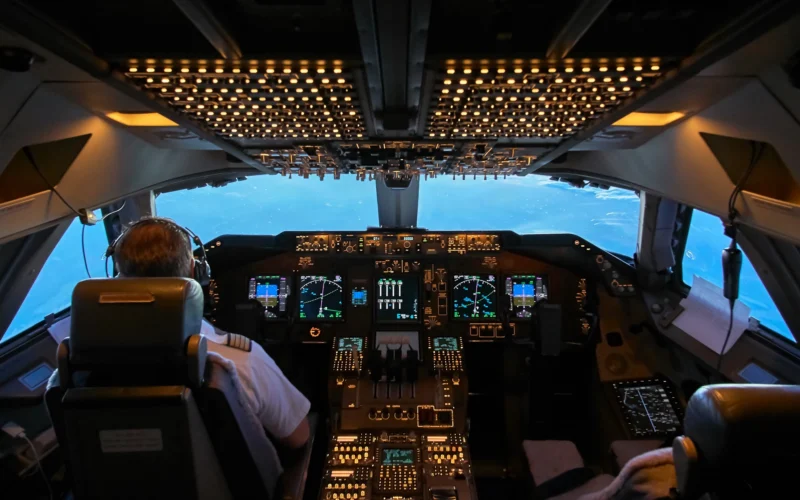
Aviation is not short of contentious issues, but none seem to fire up passions quite like that of the implementation of single pilot commercial operations.
It’s a subject on which many businesses and organizations within the aviation industry have a strong opinion, though others would clearly rather duck for cover and stay out of it.
At its most basic, the question being asked is whether commercial aircraft could be flown by a single pilot in the future, rather than two as is now the norm.
However, there are many complexities surrounding the discussion, mainly focused around safety. Perhaps the key driver here is whether passengers will ever have enough confidence to step on a flight knowing that only one person is sitting at the controls.
According to a 2023 report by the European Aviation Safety Agency (EASA), there are two new concepts of operations (CONOPs) in play when considering single pilot operations.
The first is Extended Minimum-Crew Operations (eMCOs), the other Single-Pilot Operations (SiPOs).
eMCOs are defined as “operations where the flight time is extended by means of rest in flight with the minimum flight crew”. On the other hand, SiPOs are end-to-end single-pilot operations.
In practice, eMCOs would enable only one pilot to be at the aircraft controls during the cruise flight phase, then two in place during takeoffs and landings, which are more demanding.
According to EASA, “ground assistance, advanced cockpit design with workload alleviation means [and] pilot incapacitation detection” would be used to compensate for one less pilot during cruise flight.
Likewise, EASA stated that SiPOs are bound by conditions and limitations and the landscape would have to evolve through “ground assistance, advanced cockpit design with workload alleviation means, capability to cope with pilot incapacitation” to reach safety equivalence of having two pilots at the controls.
While EASA appears to be tackling the issue head on, the Federal Aviation Administration (FAA) seems more muted about the subject, with US airlines leading the conversation instead.
Earlier this year, it was reported that Delta Air Lines and United Airlines pilot contracts make clear that single pilot operations would not be adopted by the carriers.
According to Forbes, the Delta contract, through the Air Line Pilots Association (ALPA) union, stated that “no aircraft performing company flying will operate with fewer than two pilots”. Meanwhile, United ALPA terms stipulate that no commercial flights can operate “unless the minimum crew on such aircraft consists of two pilots”.
In a stark rejection of single pilot operations, Delta’s CEO Ed Bastian has previously told CNN that he “will never get on a plane unless there’s two Delta pilots, at least two Delta pilots”.
What are the advantages of single pilot operations?
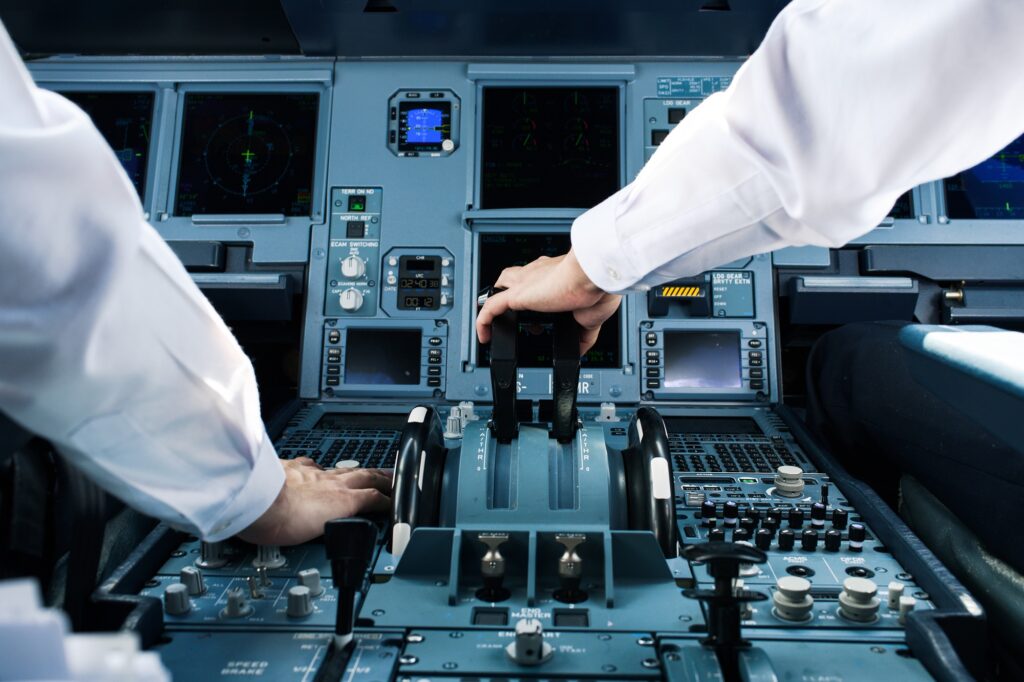
Such is the concern about the impact of single pilot operations that US unions have worked in partnership with their European counterparts
There are worries that EASA seems warmer to the idea, and that this will then act as a stepping stone to its introduction in the US.
ALPA, the European Cockpit Association (ECA) and the International Federation of Air Line Pilots’ Associations (IFALPA) recently teamed up for the ‘Safety Starts with 2’ campaign, making a stand against the “erosion” of current standards.
The campaign argued that eMCOs would mean an “increased workload” for the remaining pilot and the “elimination of a critical layer of monitoring, cross-checking, and operating redundancy provided by a second pilot on the flight deck”.
“Currently, every aspect of flight safety is deliberately designed for a team with shared responsibilities working together on the flight deck,” the campaign said.
But what would be the advantages if eMCOs and SiPOs were implemented? Is it simply about profits?
In Boeing latest industry forecast, released on July 22, 2024, the planemaker highlighted that global airlines will need 674,000 new pilots to fly and maintain the global commercial fleet over the next 20 years.
If the technology was in place for SiPOs, it could fundamentally shift pilot recruitment back in the airlines’ favor, while also reducing operational costs.
Airbus has said that eMCO systems would enable the flight crew to “better organize their presence in the cockpit during the cruise phase, thanks to additional automated functions”.
“Pilots can thus achieve a better balance between working and resting time on long-range flights,” the European planemaker claimed.
However, perhaps the real advantage of eMCOs is they act as the gateway to SiPOs. They offer a more comfortable path via which passengers can adapt to the notion of single pilot operations: the softly-softly approach.
Airbus and Boeing positions
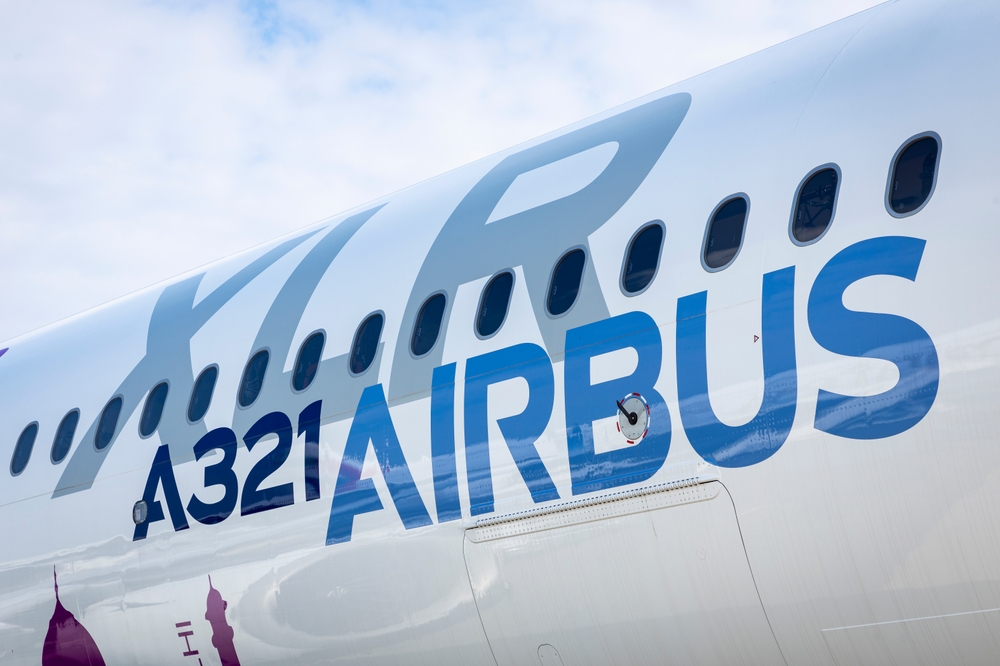
Without the commitment of the world’s key aircraft manufacturers, though, the advent of autonomous planes is likely to remain a pipe dream.
While Airbus appears to be firmly embracing the idea of some sort of single pilot operation in the future, Boeing seems far less committed.
According to Aviation Week, when speaking at an ALPA conference last year, Boeing Chief Pilot and Vice President for Flight Operations Craig Bomben said that the company was looking at failure scenarios one by one to see how automation could help.
Bomben said: “There is a lot of technology being developed out there right now being touted as the technology required to go to reduced crew ops. Boeing is not going to support an effort that doesn’t meet an equal or greater level of safety.”
“I’m not saying we’re not going to get there at some point. But I’m telling you right now there are a lot of questions that need to be answered,” Bomben added.
Airbus is not so shy about its position, hosting a webpage dedicated to the thorny issue of automation with the opening line, “towards a world of more autonomous air travel”.
“Over the last 100 years, as the aerospace industry has emerged, evolved and improved, automation and autonomous technologies have played a key role in helping us increase the safety of our products and their operational efficiency,” the webpage continues.
In 2019, before he became CEO of the Commercial Aircraft business at Airbus, Christian Scherer declared that, let alone one pilot. the planemaker had already developed the technology to fly without them entirely.
“When can we introduce it in large commercial aircraft? That is a matter we are discussing with regulators and customers, but technology-wise, we don’t see a hurdle,” Scherer explained to the Associated Press at the time.
In June 2021 it was revealed that the manufacturer had been working with Cathay Pacific on ‘Project Connect’, a program to develop the technology to reduce the number of crew members needed on long-haul flights from three or four down to just two.
What does the public think?
A study conducted on behalf of ALPA in 2018 asked 1,109 adults from the US whether they would be “comfortable as an airline passenger on an airplane that was completely pilotless”.
The response was revealing. Only 15% said they would be comfortable, while 81% said that they would be not very/not at all comfortable.
In 2019, Coventry University published research on ‘Passenger Attitudes to Flying on a Single-Pilot Commercial Aircraft’.
Four focus groups, each with 18 participants, were asked about their thoughts and feelings regarding flying on an aircraft with only one pilot at the controls.
According to the researchers, “overall nine people indicated that they would be willing to fly in a single pilot aircraft: three indicated that they were unsure if they would be a passenger and a further six suggested that they would not fly on this type of aircraft given a choice”.
Concerns across the groups included a lack of trust in the technology to keep them safe, the psychological state of the pilot (following events such as the 2015 GermanWings pilot murder-suicide), plus issues around the pilot’s health, including heart attacks.
“Although there was a lack of trust in computers, participants felt more comfortable when the computer was operated by somebody on the ground, so if something happened there was human control from the ground,” the report said.
Where we might see single pilot operations first
In 2023, EASA indicated that it had ruled out single pilot operations before 2030, but that Extended Minimum-Crew Operations could be allowed by 2027.
According to Reuters, proposals from Airbus and Dassault Aviation included barring pilots with medical conditions from being left alone at the aircraft controls.
The test bed for such technology is sure to be cargo and freighter aircraft, where there is no risk to human passengers.
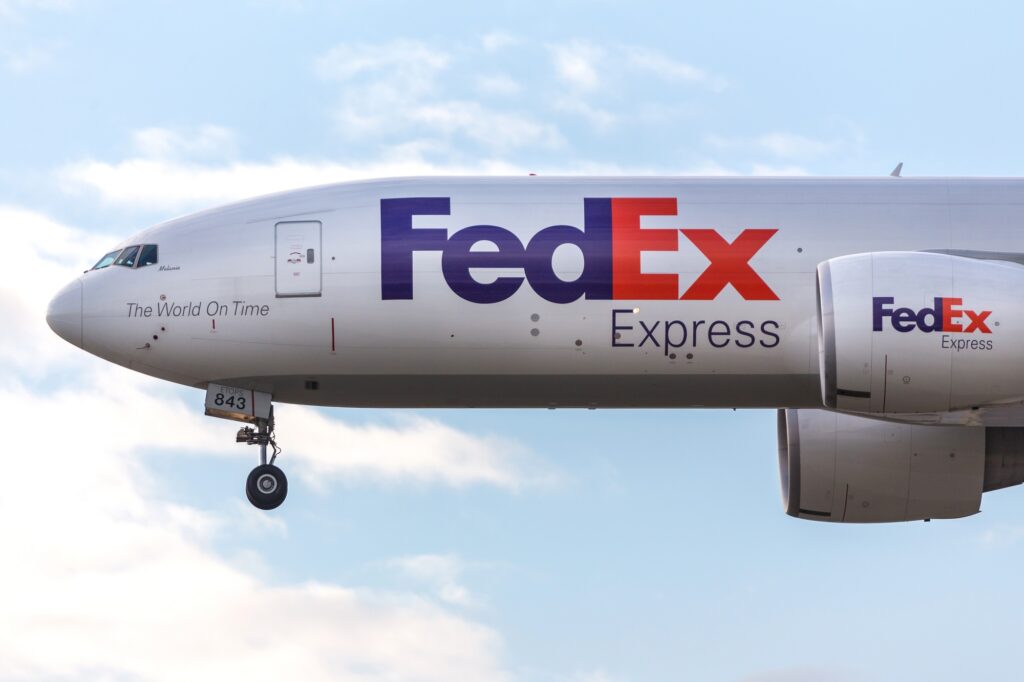
According to a 2023 article in Aviation Week, Airbus put forward a proposal to FedEx for an A350F which was approved for eMCO in 2022 as part of ‘Project Morgan’.
However, the project is said to be not progressing as quickly as Airbus had hoped due to regulatory restrictions.
Nevertheless, the reality is that, if eMCOs are eventually introduced on cargo flights, all bets will be off. It could become the first stepping stone towards the realization of single pilot operations on commercial jets.
Prepare for things to heat up.
10 comments
It’s stupid think for single pilot 😞
Good Morning,
I have just read you article discussing the possibility of single pilot crew for airlines. I was surprised that nowhere did you appear to mention the response of the aviation insurance market. For a short period several years ago I worked for a large broking firm in the London Aviation Insurance market and I can assure you that almost all underwriters were not interested in single pilot operations at all and the few that showed a flicker of interest thought that the additional insurance premium required for hull, liabilities and passenger liabilities would be substantially more than the cost of employing two pilots rather than one. Personally I think the single pilot suggestion is dead in the water and it amazes me that companies are wasting their money on researching the idea.
Kind regards,
Stuart Robertson-Fox.
All two pilot aircraft can be flown by one; required in certification.
However; what is the point?
EASA has given us the “Multi Crew Licence”; someone who cannot fly an airplane alone can be part of a crew.
An Airbus which was perfectly flyable crashed into the ocean because no one in the crew knew how to fly!
The issue was an not understood loss of automation that required basic flying knowledge the crew didn’t have.
A ground operator would have had no more success, because of loss of automation (envelope protection)
Pilots are not the most expensive part of airline operations.
One suspects that a look at the CEO’s salary ratio to worker salary would provide more than enough surplus to cover the cost of the pilot group.
Safety 1st: in a crisis, 2 heads, and sets of experience are always better than 1 as are more hands available or to do, whatever needs done. Computers cannot be programmed for the unforeseen. Neither can humans, but humans CAN draw on stored information about past experiences and training applicable to the current event, machines cannot.
Then there is the health issue, as older and older pilots continue flying, especially post mandated mRNA jabs, and having zero pilots flying the plane.
The issues of pilots going rogue (Egypt Air, German Wings, FedEx, to name a few) where even with 2 pilots aboard, the outcomes were not real great, over all.
Toss in, now, too, the issue of manufacturing snafus, and /or training and safety corners being cut, AND the upcoming generations of effectively uneducated and unqualified DEI hires, creating less, not more, safe planes,flight crews, and flights. Losing that “cockpit mentor” training time under more experienced pilots, before being placed in charge, has immeasurable value! Don’t allow cutting costs dictate cutting safety!
This is an interesting theoretical discussion, but we all seem to forget in the rush to save money, that airliners are weapons of mass destruction. German Wings flight 9525 should have ended this discussion forever. Just as nuclear weapons are never allowed to be handled by just one person, alone. No airline cockpit should ever be a ‘no lone zone”.
Completely Agree with you Skipper!
As usual, corporate greed and lobby pressure make us forget and ignore: German Wings 9525 is ONLY the tip of the Ice Berg, and mental health is still a taboo subject at ANY civil aviation authority.
There is a reason why there are ALWAYS two officers in a nuclear missile silo! Think about it!
Being both a Boeing 747 captain and having two engineering degrees I only have one question – gee, what could possibly go wrong?!? The answer to that is – everything!
I can’t even tell you how many examples I’ve seen where problems and contingencies could have been avoided had they simply asked an engineer first. Boeing’s current predicament is an example of that. Engineers are paid to be skeptical and to uncover everything that could possibly go wrong before something actually leaves the drawing board. In this particular case, hmmm, a rogue pilot burying the airplane in a field, inability to fly and solve problems when problems invariably pop up, ground operations – catching one another’s mistakes (which pilots do a surprising amount of the time), etc. Having over 17,000 hours as a pilot, I couldn’t possibly even recount the number of times when something happened when I needed 2+ pilots onboard. One of those times was caused because we didn’t have SATCOM. The idea of going to single pilot operations is that you can always get ahold of company and have someone there “virtually” in case something goes wrong. Guess what, you’re not going to have that “back-up” pilot with you if you’re having ACARS issues! Again, collectively one of the worst ideas possible.
I have operated a single-pilot corporate jet for years. It is a busy cockpit environment for sure. But it is not an impossible task, just boring as you get used to it to talking to yourself a lot:-) all briefing and checklists, Arrivals, approaches, and NOTAMS, and no response back..It is quite a bit boring for sure:-) We are certified to operate a single-pilot cockpit if the type of airplane is approved for single-pilot ops, and the pilot is trained and completes check-ride as a single pilot in a sim. The fact is that insurance did not change a lot if anything.
Remembering MCAS, system of taking controlled in the stabilizer and sensor angle of attack of extremely event? Trial taking control of pilot in action, wait ICAO, FAA further analyzing required.