

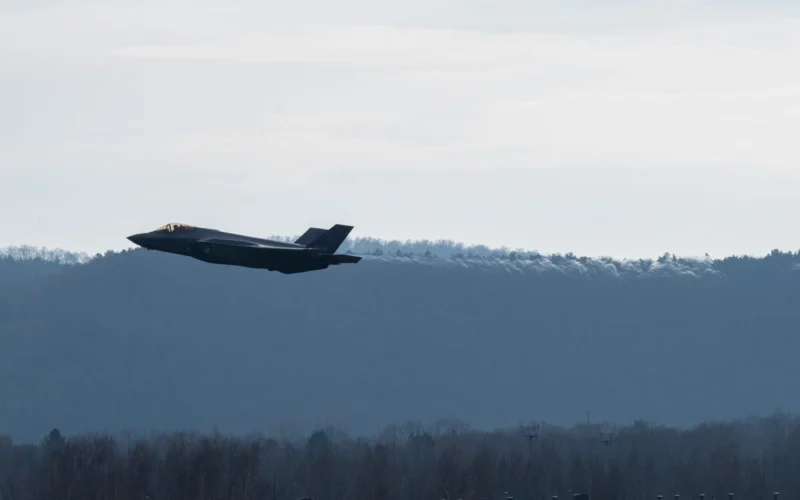
Germany is reportedly preparing to order 15 additional Lockheed Martin F-35A fighter jets for about €2.5 billion ($2.9 billion).
The German magazine Spiegel reported, citing parliamentary sources, that a confidential submission has been presented to the Bundestag’s budget committee outlining an “additional procurement” of 15 F-35As.
While the Ministry of Defence had denied plans for a follow-on order earlier in 2025, the proposal comes amid a renewed push to expand Germany’s defense budget under the Zeitenwende policy. According to Spiegel, the extra aircraft could be financed from the remaining funds in Germany’s €100 billion special defense package.
The new batch would complement the 35 F-35As officially ordered in 2022 to replace the Luftwaffe’s aging Panavia Tornado fleet. The Tornado, which has been in service since the 1980s, currently performs the NATO nuclear-sharing mission from Büchel Air Base in Rhineland-Palatinate.
Preparations to host the F-35A are already underway at Büchel Air Base, including hardened shelters, communications systems, and nuclear security infrastructure upgrades. Germany expects to receive its first aircraft in the second half of 2026, with full operational capability planned by the end of the decade.
A follow-on order would still need to be reviewed and approved by the Bundestag’s budget committee before negotiations with Lockheed Martin and the US government can proceed. If approved, the 15 additional aircraft would likely be delivered in the early 2030s.
Parallel investment in Eurofighter program
The Spiegel report comes just days after Berlin confirmed an order for 20 additional Eurofighter Typhoons, bringing Germany’s total commitment to more than 160 aircraft. The new Tranche 5 jets will be built in Manching, near Munich, between 2031 and 2034, while a separate €1.2 billion ($1.4 billion) contract with Sweden’s Saab is being prepared for the Eurofighter EK electronic-combat variant.
German Defense Minister Boris Pistorius has repeatedly emphasized the need to strengthen Germany’s deterrence capabilities and NATO commitments following Russia’s invasion of Ukraine. The prospective order would bolster those objectives, ensuring sufficient aircraft availability for training, maintenance, and nuclear-sharing readiness.
However, the move could reignite debate about Germany’s growing reliance on US platforms at the expense of European autonomy, particularly as Berlin remains a key partner in the Franco-German-Spanish Future Combat Air System (FCAS) program to develop a new fighter jet along with uncrewed platforms.